Weeknight Lamb Keema with Peas and Warm Chapati
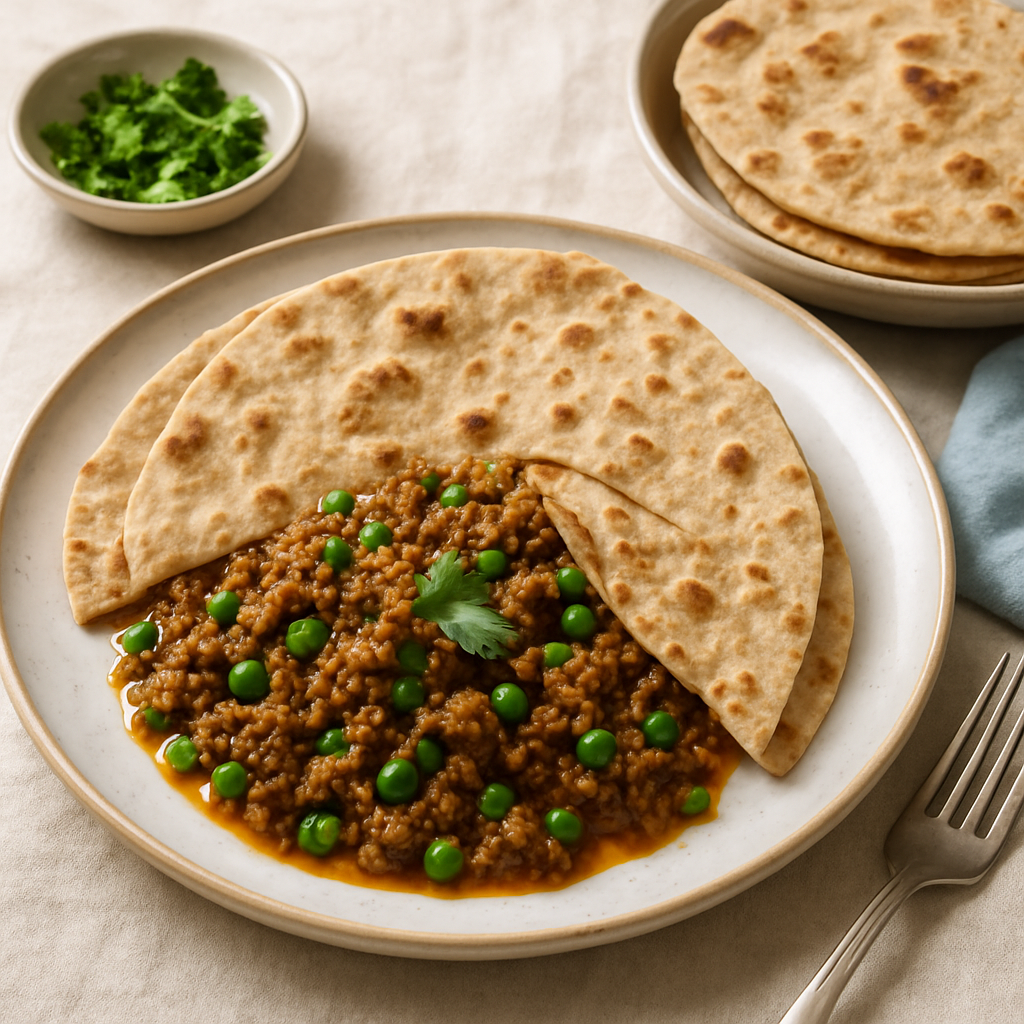
# Weeknight Lamb Keema with Peas and Warm Chapati
There's a reason keema has been a midweek staple in British South Asian households for generations — it's fast, deeply flavoured, and uses ingredients most people already have in the cupboard. If you've never made it at home, you're about ten minutes of prep away from one of the most satisfying dinners in your repertoire.
What Is Lamb Keema?
Keema (sometimes spelled kheema) simply means minced meat in Urdu and Hindi. It's a dish with roots across South Asia and has dozens of regional variations — some dry, some saucy, some loaded with potato, others finished with egg. The version most familiar to British cooks tends to be a fairly loose, spiced mince cooked down with tomatoes, onion, and peas.
It became a fixture in the UK partly because lamb mince is affordable, widely available, and takes on spice beautifully. It's also one of those dishes that genuinely gets better the longer it sits, making it ideal for batch cooking.
Why Lamb Works So Well Here
You can make keema with beef, chicken, or turkey mince, and all of them are perfectly decent. But lamb brings something the others don't — a slightly richer, earthier flavour that holds its own against bold spicing like cumin, coriander, and garam masala.
Lamb mince also has a reasonable fat content, which matters for both texture and flavour. It bastes the spices as they cook, helping the aromatics bloom properly rather than just sitting on top of the dish. That said, if you're watching saturated fat intake, draining off some of the rendered fat after browning the mince is a straightforward adjustment that doesn't compromise the flavour significantly.
From a protein perspective, 100g of cooked lamb mince delivers roughly 25–26g of protein, alongside meaningful amounts of zinc, iron, and B12 — nutrients that matter particularly for people who don't eat a wide variety of animal products.
The Recipe
Serves: 4 Prep time: 10 minutes Cook time: 30 minutes
Ingredients
- 500g lamb mince (ideally 15–20% fat)
- 1 large onion, finely diced
- 3 garlic cloves, minced
- 1 thumb-sized piece of fresh ginger, grated
- 2 medium tomatoes, chopped (or 200g tinned chopped tomatoes)
- 150g frozen peas
- 2 tbsp neutral oil (such as rapeseed or sunflower)
- 1 tsp cumin seeds
- 1 tsp ground coriander
- 1 tsp ground cumin
- ½ tsp turmeric
- ½ tsp chilli powder (adjust to taste)
- 1 tsp garam masala
- Salt to taste
- Small handful of fresh coriander, to finish
- 4 chapatis, to serve (shop-bought is absolutely fine)
Method
1. Heat the oil in a wide, heavy-bottomed pan over a medium-high heat. Add the cumin seeds and let them sizzle for 30 seconds until fragrant.
2. Add the diced onion and cook for 8–10 minutes, stirring occasionally, until soft and golden. Don't rush this — a properly softened onion is the foundation of the dish.
3. Add the garlic and ginger and stir for another minute or two until the raw smell cooks off.
4. Add the ground coriander, ground cumin, turmeric, and chilli powder. Stir well to coat the onion mixture, and cook for a further minute.
5. Add the lamb mince, breaking it up with a wooden spoon. Cook until browned all over — around 5–7 minutes. If there's a lot of rendered fat sitting in the pan, spoon some off at this point.
6. Add the chopped tomatoes and stir everything together. Reduce the heat to medium and simmer for 10–12 minutes until the tomatoes have broken down and the mixture has thickened.
7. Stir in the frozen peas and cook for 3–4 minutes until heated through. Add the garam masala, taste for seasoning, and adjust salt as needed.
8. Finish with fresh coriander and serve with warm chapati.
What Makes This Work Nutritionally
This is the kind of dish that quietly ticks a lot of boxes without making a fuss about it.
Protein: A serving of this keema (roughly 250g) delivers around 30–35g of protein, largely from the lamb mince. That's a solid contribution to daily protein targets, particularly for anyone doing resistance training or trying to maintain muscle mass.
Peas are often overlooked as a nutritional player, but they bring around 5g of protein per 80g serving, along with fibre, vitamin C, and folate. They also add a natural sweetness that balances the heat and earthiness of the spices without any effort on your part.
The spices themselves aren't just flavour — cumin, turmeric, and coriander all have documented anti-inflammatory properties in the research literature. The amounts used in a single serving are modest, but eaten regularly as part of a varied diet, they contribute something meaningful.
Chapati is a more useful carbohydrate pairing than many people expect. A standard wholemeal chapati contains around 15–20g of carbohydrate and 2–3g of fibre, with a lower glycaemic impact than white rice or plain naan. If you're making your own, swapping half the white flour for wholemeal flour is an easy way to increase the fibre content further.
What the Evidence Shows
Research into lamb as part of a balanced diet tends to get oversimplified in popular health media. Yes, lamb is higher in saturated fat than chicken — but the saturated fat picture is more nuanced than a single number suggests. Lamb contains a mix of saturated fatty acids, some of which (like stearic acid) appear to have a neutral effect on LDL cholesterol rather than raising it.
The iron in red meat is haem iron, which is absorbed at significantly higher rates than the non-haem iron found in plant sources. For people at risk of iron deficiency — including menstruating women, pregnant women, and endurance athletes — a couple of portions of lean red meat per week, as part of an otherwise varied diet, is consistent with NHS guidance.
As for spices, a 2017 review published in Nutrients found that curcumin (the active compound in turmeric) has measurable anti-inflammatory and antioxidant effects, though researchers note that bioavailability is low unless consumed with fat — which, conveniently, this dish provides.
None of this means keema is a superfood. But it is a nutritionally well-rounded meal that happens to be delicious, and that's a genuinely useful combination.
Common Mistakes and How to Avoid Them
Not browning the onions long enough is the most common reason homemade keema tastes flat. The Maillard reaction — the browning that happens with heat — is responsible for the deep, savoury flavour base. Ten minutes feels like a long time when you're hungry, but it genuinely matters.
Adding the garam masala too early is another easy slip. Garam masala is a finishing spice — it's aromatic and complex, and prolonged heat degrades those top notes. Stir it in right at the end, off or just barely on the heat.
Over-watering the dish can turn keema muddy. If you're using fresh tomatoes that are very juicy, or if you've added a splash of water to loosen things, give it time to reduce properly. A well-made keema should coat the back of a spoon.
Practical Takeaways
- Batch cook it. Keema reheats brilliantly and keeps in the fridge for three days or the freezer for three months. Make a double batch on Sunday and you've solved at least two weeknight dinners.
- Swap the protein if you need to. Beef mince works well. Chicken or turkey mince will be leaner but may need a little extra oil to stop the mixture drying out.
- Use frozen peas straight from the bag — no need to defrost. They'll cook through in the pan and help cool the dish slightly so it's ready to eat faster.
- Warm the chapatis directly on a gas flame for 30–40 seconds per side if you want that slightly charred, authentic texture. A dry frying pan works just as well on electric hobs.
- It's a complete meal as written, but if you want more vegetables, stirring in a handful of spinach at the end alongside the peas adds colour, folate, and virtually no extra effort.
---
If you want to hit your protein and macro targets without spending half your evening planning meals, Macrology generates macro-perfect meal plans in seconds — https://macrology.app/signin
---
Macrology tip: Logging keema is easy with Macrology's meal tracking — add your portion once and save it as a custom meal so future logging takes seconds. The app will factor it into your weekly plan automatically.
Want meals like this planned to your exact macros?
Macrology generates a personalised meal plan in seconds — breakfast, lunch, dinner and snacks, all hitting your daily targets.
Start your free 14-day trial