How the UK's School Food Standards Are Changing — and Why It Matters
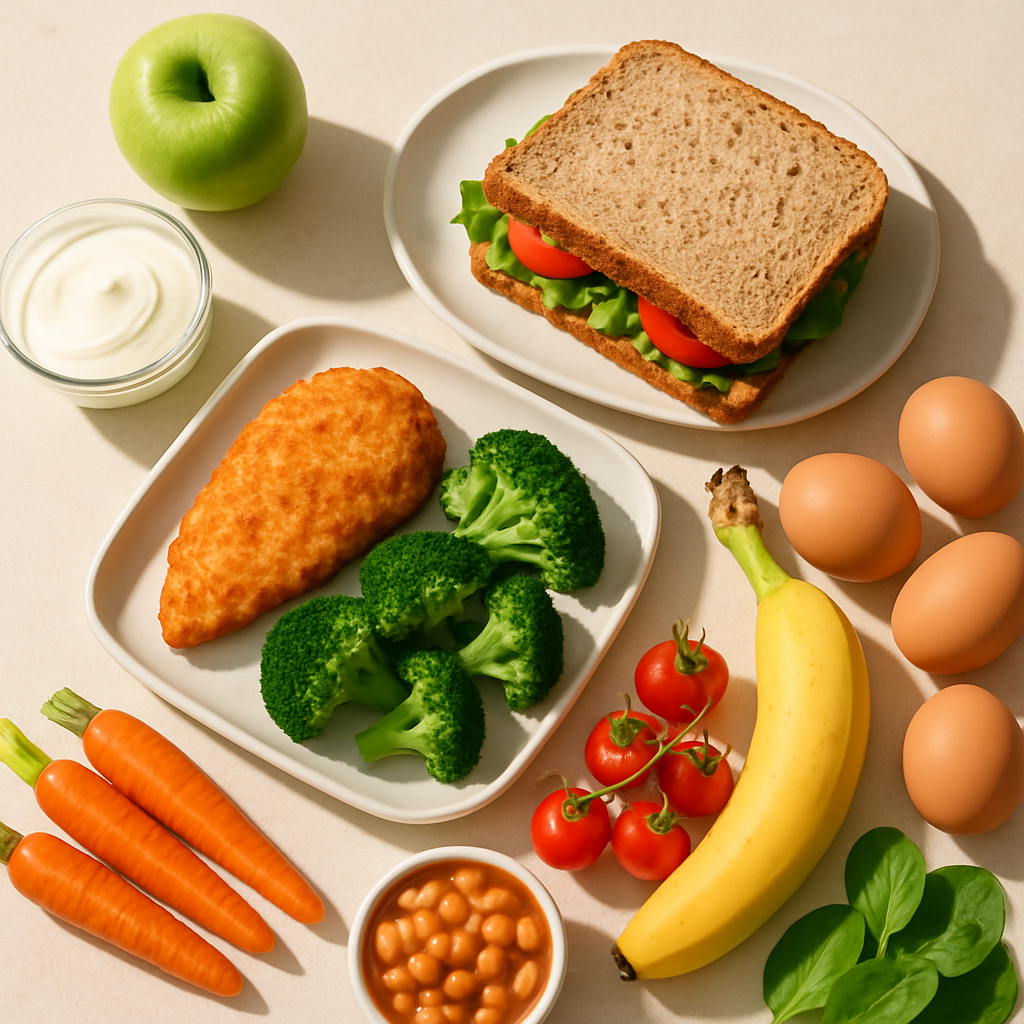
# How the UK's School Food Standards Are Changing — and Why It Matters
Most of us don't give much thought to what happens at lunchtime once our kids walk through the school gates. But the food served in school canteens has a surprisingly significant impact on children's health, concentration, and long-term eating habits — and the rules governing it are shifting.
Here's what's actually changing, what the evidence says about school food quality, and why this conversation matters beyond the dining hall.
A Brief History of School Food Standards in England
School food standards in England have a turbulent history. Before 2006, there were virtually no nutritional rules governing what schools could serve. The watershed moment came when Jamie Oliver's Feed Me Better campaign put turkey twizzlers on the front page and prompted the government to act. The School Food Trust was established, and statutory nutritional standards were introduced — for the first time specifying what could and couldn't appear on a school menu.
Those standards were quietly scrapped in 2010 when the coalition government gave academies and free schools the freedom to opt out. It took until 2015 for new mandatory standards to be reinstated for most state-funded schools in England, covering food-based requirements like limiting salt, sugar, and fried food, and ensuring fruit, vegetables, and protein featured daily.
The standards have remained largely unchanged since then — until now.
What's Actually Changing
The government has signalled a renewed focus on school food quality as part of its broader child health strategy. Proposed updates to the School Food Standards are aimed at tightening loopholes, reflecting updated dietary guidance, and bringing the rules more in line with current nutritional understanding.
Key areas under discussion include reducing the frequency of starchy, fried foods, updating portion guidance, and ensuring that plant-based options meet the same nutritional benchmarks as meat-based meals. There's also renewed pressure on schools to limit ultra-processed foods (UPFs) — a category that has attracted significant attention from researchers and policymakers in recent years.
Alongside this, the School Food Plan — a government-backed review — is examining how schools can improve food culture more broadly, not just compliance on paper. That includes how food is presented, the environment children eat in, and whether cooking and nutrition education is integrated into the curriculum in a meaningful way.
What the Evidence Shows
The case for better school food isn't just intuitive — it's well-supported by research.
A landmark study published in Public Health Nutrition found that children who ate school meals meeting nutritional standards had higher dietary quality overall compared to those bringing packed lunches, which tend to be lower in fruit, vegetables, and dairy. Packed lunch content, on average, falls well short of the nutritional standards that school meals are required to meet.
Research from the Education Endowment Foundation and others has also linked improved school meal quality to better concentration, behaviour, and academic attainment. One widely cited study from Essex found that after Jamie Oliver's intervention, schools saw improved academic results and reduced absence rates — effects that persisted over time.
There's also evidence around habit formation. Children who regularly eat a varied diet at school are more likely to accept a wider range of foods at home. Repeated exposure to vegetables and wholegrains in a social setting — where peers are eating the same things — is one of the most effective ways to build familiarity with foods children might otherwise reject.
The Ultra-Processed Food Debate
One of the more contentious elements of the proposed changes is the focus on reducing ultra-processed foods in school settings. UPFs — broadly defined using the NOVA classification system as industrially formulated products containing ingredients not typically found in home cooking — have been associated with poor health outcomes in a growing body of research.
Studies published in journals including The BMJ and The Lancet have linked high UPF consumption with increased risk of obesity, type 2 diabetes, cardiovascular disease, and even depression. A 2024 meta-analysis covering over 9 million people found consistent associations between UPF intake and multiple adverse health outcomes.
The counterargument — and it's a fair one — is that not all UPFs are created equal. A flavoured yoghurt and a reconstituted meat product both technically qualify as ultra-processed, but they're nutritionally very different. Critics argue that policies focused solely on processing level risk being too blunt, potentially restricting foods like fortified breakfast cereals or wholegrain bread that have genuine nutritional value.
The nuance here matters. What most researchers agree on is that the issue tends to be the combination of high energy density, low fibre, high salt, and high sugar that characterises many UPFs — rather than processing itself being inherently harmful. School food policy will need to reflect that complexity rather than applying a simple ban.
Why Enforcement Is as Important as the Rules Themselves
Standards are only meaningful if schools actually meet them. And here, there's a persistent gap.
Ofsted does not routinely inspect school food as part of its standard framework. The School Food Standards are enforced locally, which in practice means oversight varies enormously. A 2023 report from the School Food Review found that many schools — particularly smaller primaries — struggle to afford compliant menus given the financial pressures on catering budgets. Free School Meal funding rates have not kept pace with food price inflation, leaving caterers in an increasingly difficult position.
There's also the challenge of what happens outside the canteen. Tuck shops, vending machines, and food brought in from home are all beyond the reach of the standards. Research consistently shows that many children supplement or replace school meals with high-sugar snacks and drinks — making whole-school food culture, not just canteen menus, the more meaningful target.
What This Means for Families
For parents and carers, the changes — when they come — are unlikely to land overnight. Policy shifts of this kind tend to move slowly through consultation, guidance updates, and phased implementation. But there are a few things worth being aware of.
If your child eats school meals, they're likely already getting a more nutritionally complete lunch than a typical packed lunch provides, even under the current standards. The proposed changes would build on that foundation.
If your child brings a packed lunch, it's worth knowing that research suggests most packed lunches in the UK are heavy on crisps, biscuits, and processed snacks, and light on vegetables, fruit, and protein. No guilt attached to that — it's a systemic issue, not a parenting failing — but it's useful context.
And for anyone interested in the broader picture, the school food debate reflects a wider shift in how we think about food environments. Individual choices matter, but so do the structures within which those choices are made. Getting the food environment right for children — at school, at home, and in the community — is one of the more evidence-backed levers we have for long-term population health.
Practical Takeaways
- Check your school's menu online — most schools are required to publish them. Look for whether the menu includes a variety of vegetables, protein sources, and wholegrain options across the week.
- If your child takes a packed lunch, aiming for a protein source, some vegetables or fruit, a wholegrain carb, and a dairy or dairy-alternative option covers the bases without overcomplicating it.
- Talk to your school's governing body or parent association if you have concerns about food quality — schools are more responsive to parent feedback than many people realise, and governing bodies have a role in holding caterers to account.
- Don't underestimate the home environment — children's food preferences are shaped across multiple contexts. Regular exposure to varied meals at home works alongside what they experience at school.
- Stay engaged with the consultation — the government's review of school food standards is ongoing, and public responses to consultations do influence outcomes.
If you want help building nutritious, practical meals for the whole family around what your children are (or aren't) eating at school, Macrology generates macro-perfect meal plans in seconds — https://macrology.app/signin
Want meals like this planned to your exact macros?
Macrology generates a personalised meal plan in seconds — breakfast, lunch, dinner and snacks, all hitting your daily targets.
Start your free 14-day trialMore from news
New Research: What UK Studies Reveal About the Link Between Food Delivery App Usage and Dietary Quality
7 min readNew Research: What UK Studies Reveal About the Link Between Food Environment at Home and Children's Eating Habits
7 min readNew Research: What UK Studies Reveal About the Link Between Cooking Frequency at Home and Overall Diet Quality
7 min read