New Research: What UK Studies Reveal About the Link Between Vitamin A Intake and Eye Health
# New Research: What UK Studies Reveal About the Link Between Vitamin A Intake and Eye Health
Most people associate vitamin A with carrots and old wives' tales about seeing in the dark. But recent research coming out of UK institutions is adding serious scientific weight to what was once dismissed as folklore — and the findings are more nuanced than you might expect.
What Is Vitamin A and Why Does It Matter?
Vitamin A is a fat-soluble nutrient that exists in two main forms in the diet. Preformed vitamin A (retinol) comes from animal sources like liver, dairy, and oily fish. Provitamin A carotenoids — the most well-known being beta-carotene — are found in orange, yellow, and dark green vegetables, and converted into active vitamin A by the body.
The nutrient plays a role in immune function, skin cell renewal, and reproduction. But its relationship with vision is arguably its most well-documented function, going back decades in scientific literature.
The reason it matters for eyesight comes down to biology. Retinal — a derivative of vitamin A — is a core component of rhodopsin, the light-sensitive protein in the rod cells of your retina. Without adequate vitamin A, rhodopsin production drops, and the ability to see in low-light conditions deteriorates. That part of the folklore, at least, is entirely accurate.
What the Evidence Shows
UK research has increasingly moved beyond the basics of deficiency and started examining how vitamin A intake across the general population relates to long-term eye health outcomes — particularly age-related conditions.
A major contribution to this space is the UK Biobank project, which has enrolled over 500,000 participants and collected detailed dietary and health data. Analyses drawing on this dataset have explored associations between carotenoid intake — including beta-carotene, lutein, and zeaxanthin — and conditions like age-related macular degeneration (AMD), which is the leading cause of sight loss in the UK, affecting around 700,000 people.
One area of interest is the relationship between dietary lutein and zeaxanthin (both carotenoids structurally related to beta-carotene) and macular health. These pigments concentrate in the macula — the central region of the retina — and appear to act as a natural filter against oxidative damage and harmful blue light. Research from groups including those affiliated with the Institute of Ophthalmology at University College London has supported the idea that higher dietary intake of these compounds is associated with a reduced risk of AMD progression.
It is worth being clear about what "associated with" means here. These are largely observational findings, meaning we can see a correlation but cannot conclusively say that eating more lutein causes better macular health. Confounding factors — overall diet quality, physical activity, smoking status — make causation harder to pin down. That said, the biological mechanism is credible and well-understood, which strengthens the case.
The Deficiency Picture in the UK
Vitamin A deficiency is often framed as a problem confined to low-income countries. In the UK, outright clinical deficiency — the kind that causes night blindness and in severe cases total vision loss — is rare. But that does not mean everyone in the UK is getting enough.
The National Diet and Nutrition Survey (NDNS), which monitors dietary habits across the British population, has flagged suboptimal intakes in certain groups. Teenage girls and young women are among those most likely to fall below recommended levels, partly due to dietary patterns that are lower in liver and dairy. Older adults, particularly those with reduced appetite or absorption issues, are another group at risk.
Suboptimal intake does not cause dramatic symptoms overnight. But over years and decades, it may contribute to gradual changes in eye health — particularly in the context of age-related conditions where cumulative oxidative stress plays a role.
Common Misconceptions Worth Addressing
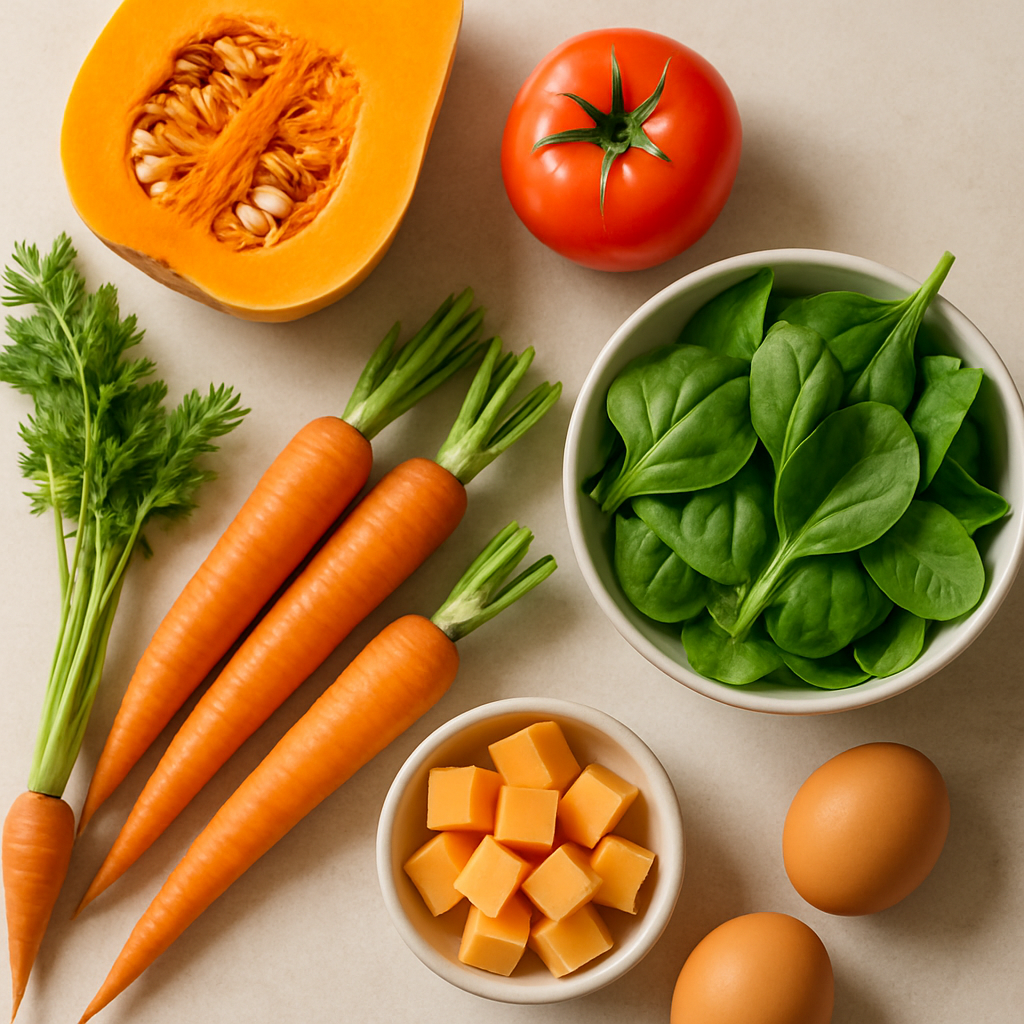
The first misconception is that carrots alone will sort your vision. While carrots are a solid source of beta-carotene, the conversion rate from beta-carotene to active vitamin A is relatively inefficient — typically somewhere between 1:6 and 1:12 depending on the individual, their gut health, and how the food is prepared. Cooking carrots and eating them with a source of fat improves absorption significantly. But if you are relying on raw carrot sticks as your primary source, you are likely getting less active vitamin A than you think.
The second misconception is that more is always better. Unlike water-soluble vitamins, vitamin A is stored in the liver and can accumulate to toxic levels if taken in excess — a condition called hypervitaminosis A. This is almost never a concern from food alone, but high-dose retinol supplements can be genuinely harmful with prolonged use. Symptoms range from headaches and nausea to liver damage in severe cases. Pregnant women are specifically advised to avoid high-dose vitamin A supplements and limit liver consumption, as excess retinol is linked to fetal abnormalities.
The third misconception is that supplements are a reliable substitute for dietary sources. The evidence here is actually quite firm: isolated beta-carotene supplements have not demonstrated the same protective effects as getting carotenoids through whole foods, and in high doses in smokers, beta-carotene supplementation has been associated with increased lung cancer risk in some trials. Food-based sources, where carotenoids come packaged with other phytonutrients, appear to behave differently.
Who Should Pay Particular Attention
For most people eating a reasonably varied diet, vitamin A status is not something to worry about daily. But a few groups have good reason to be more attentive.
People over 60 are at elevated risk for AMD regardless of diet, but dietary patterns that include regular servings of leafy greens (kale, spinach), eggs (a good source of lutein and zeaxanthin in a bioavailable form), and oily fish are consistently associated with better outcomes in the research.
Those following a strict vegan diet need to be aware that preformed vitamin A comes only from animal sources. While the body can convert beta-carotene, the efficiency varies considerably between individuals due to genetic differences in the BCMO1 gene, which encodes the enzyme responsible for conversion. Some people convert poorly, meaning they could theoretically eat plenty of orange vegetables and still have lower active vitamin A levels than expected.
People with fat malabsorption conditions — including Crohn's disease, coeliac disease, or those who have had bariatric surgery — may also struggle to absorb fat-soluble vitamins adequately and are worth monitoring via a GP.
Practical Takeaways
You do not need to overhaul your diet or start tracking every microgram of vitamin A. But a few small, consistent habits can make a meaningful difference over time.
Eat leafy greens regularly. Kale, spinach, and spring greens are high in lutein and zeaxanthin. Aim for a portion most days, and cook them lightly rather than eating raw to improve carotenoid bioavailability.
Add fat to your vegetables. A drizzle of olive oil, a knob of butter, or some cheese alongside your orange and green vegetables significantly improves absorption. This is not a trick — it is basic nutritional biochemistry.
Include eggs if you eat them. Egg yolks are one of the best food sources of lutein and zeaxanthin in a highly bioavailable form, and they are easy to include in everyday meals.
Do not assume supplements are a safety net. If you are concerned about your vitamin A intake, a conversation with your GP or a registered dietitian is more useful than reaching for a high-dose supplement. Blood tests can give you a clearer picture than guesswork.
Eat liver occasionally if you are not pregnant. Liver is the richest dietary source of preformed vitamin A by some distance. Even a small portion once a fortnight can meaningfully contribute to your intake. If liver is not your thing, pâté made from liver is a gentler entry point.
If you want to build meals that actually hit your micronutrient targets — vitamin A included — without spending hours planning, Macrology generates macro-perfect meal plans in seconds — https://macrology.app/signin
The Bottom Line
The link between vitamin A and eye health is one of the best-established relationships in nutritional science, and UK research is continuing to refine our understanding of how dietary patterns across a lifetime influence outcomes like AMD. The headline is not dramatic: eat a varied diet that includes leafy greens, colourful vegetables, eggs, and some animal-source foods if you eat them, and your eyes are likely getting reasonable support. The nuances — around conversion efficiency, supplement risks, and at-risk groups — are worth knowing, but they are not a reason to panic. They are just a reason to be a little more deliberate.
Want meals like this planned to your exact macros?
Macrology generates a personalised meal plan in seconds — breakfast, lunch, dinner and snacks, all hitting your daily targets.
Start your free 14-day trialMore from news
New Research: What UK Studies Reveal About the Link Between Food Delivery App Usage and Dietary Quality
7 min readNew Research: What UK Studies Reveal About the Link Between Food Environment at Home and Children's Eating Habits
7 min readNew Research: What UK Studies Reveal About the Link Between Cooking Frequency at Home and Overall Diet Quality
7 min read