New Research: What UK Studies Reveal About the Link Between Saturated Fat Intake and Cholesterol Levels
# New Research: What UK Studies Reveal About the Link Between Saturated Fat Intake and Cholesterol Levels
The relationship between saturated fat and cholesterol has been debated for decades — and the science is finally catching up with the complexity. If you grew up being told to avoid butter, red meat, and full-fat dairy at all costs, some of the latest UK research might surprise you.
## The Old Story — and Why It's Incomplete
For most of the late 20th century, the message was simple: saturated fat raises cholesterol, raised cholesterol causes heart disease, therefore saturated fat is dangerous. This chain of reasoning shaped dietary guidelines across the UK and beyond for generations.
The problem is that this picture was always incomplete. Cholesterol isn't a single villain — it's a family of molecules with very different roles in the body. And the relationship between what you eat and what ends up in your bloodstream is far more nuanced than a straight line between bacon sandwiches and heart attacks.
Recent UK research has started to unpick this complexity, shifting the conversation away from single nutrients and towards dietary patterns, food quality, and individual variation.
## What Cholesterol Actually Does
Before diving into the evidence, it helps to understand what cholesterol actually is. It's a waxy, fat-like substance produced by the liver and found in some foods. Your body needs it — it's essential for building cell membranes, producing hormones, and synthesising vitamin D.
The key distinction is between LDL (low-density lipoprotein) and HDL (high-density lipoprotein). LDL is often labelled "bad" cholesterol because high levels are associated with plaque build-up in arteries. HDL is often called "good" cholesterol because it helps transport cholesterol back to the liver for removal.
What makes things more complicated is that LDL itself isn't uniform. Small, dense LDL particles appear to be more harmful than large, fluffy LDL particles — and different foods affect these subtypes differently. This distinction rarely featured in older dietary guidelines, but it's increasingly central to current research.
## What the Evidence Shows
One of the most significant recent contributions to this debate came from UK Biobank data — a large-scale study tracking the health of around 500,000 UK participants over time. Analyses drawing on this dataset have repeatedly highlighted that the source of saturated fat matters as much as the quantity.
A 2023 analysis published in BMC Medicine found that saturated fat from dairy products — including cheese and yoghurt — was not associated with increased cardiovascular risk in the same way as saturated fat from processed meat. The researchers suggested that the food matrix (the way nutrients are packaged together in whole foods) may play a significant role in how saturated fat affects cholesterol and, ultimately, heart health.
Meanwhile, the British Heart Foundation has updated its position in recent years, moving away from a blanket "low-fat" message and towards guidance that emphasises replacing saturated fat with unsaturated fat rather than simply reducing fat overall. Research consistently shows that swapping saturated fat for refined carbohydrates — which happened frequently during the low-fat era of the 1980s and 90s — doesn't improve cardiovascular outcomes and may worsen them.
A key study from the Medical Research Council found that when people replace saturated fat with polyunsaturated fat (found in oily fish, nuts, and seeds), LDL cholesterol falls and cardiovascular risk reduces meaningfully. The same benefit doesn't appear when saturated fat is simply cut without a quality replacement in place.
## The Dairy Debate
Full-fat dairy is arguably where the science has shifted most visibly. For years, skimmed milk and low-fat yoghurt were presented as the obviously healthier choice. The evidence now is considerably more mixed.
Several UK cohort studies — including analyses from the EPIC-Norfolk study — have found no significant association between full-fat dairy consumption and increased cardiovascular risk in the general population. Some findings even suggest that fermented dairy products like cheese and yoghurt may have a neutral or mildly protective effect, potentially due to the bacteria, vitamin K2, and calcium they contain alongside the fat.
This doesn't mean full-fat dairy is a free pass — individual responses to dietary cholesterol and saturated fat vary considerably depending on genetics. Around one in 250 people in the UK has familial hypercholesterolaemia, a genetic condition that causes very high LDL levels regardless of diet. For those individuals, saturated fat intake requires much closer attention.
For the general population, though, choosing full-fat dairy over the low-fat version is unlikely to be the deciding factor in cardiovascular health.
## Where Saturated Fat Intake Still Warrants Attention
None of this means saturated fat is irrelevant. The evidence does still support a link between high saturated fat intake — particularly from ultra-processed foods — and raised LDL cholesterol in population studies.
Ultra-processed foods high in saturated fat (think pastries, certain fast food, processed meats, and many packaged snacks) tend to come alongside refined carbohydrates, excess sodium, and low fibre — a combination that creates a genuinely unfavourable metabolic environment. Isolating the effect of saturated fat alone in this context is almost impossible, but the overall pattern is consistently associated with worse cardiovascular outcomes.
The current UK government guidance from the NHS recommends that men consume no more than 30g of saturated fat per day, and women no more than 20g. Most UK adults are above these thresholds, and the average intake sits closer to 12–13% of total energy — slightly above the 10% recommended by UK dietary guidelines.
Reducing intake in the context of a whole-diet approach remains a reasonable goal — but obsessing over the saturated fat content of a piece of cheddar while eating a diet low in vegetables, oily fish, and fibre is unlikely to move the needle much.
## Individual Variation Is Real — and Often Overlooked
One of the most important and underreported aspects of this topic is how differently individuals respond to saturated fat. Research consistently shows that some people are "hyper-responders" — their LDL rises sharply in response to dietary saturated fat — while others see minimal change.
Genetics play a major role here. Variants in genes like APOE — particularly the APOE4 variant, which is associated with higher cardiovascular risk — can significantly influence how your body processes dietary fat. In the UK, roughly 25% of the population carries at least one copy of the APOE4 allele, making genetic context genuinely relevant to personalised dietary advice.
This is part of why blanket population-level guidance can only go so far. A dietary approach that works well for one person may not be optimal for another — which is exactly why the shift towards more personalised nutrition is gathering momentum in UK research institutions.
## Practical Takeaways
The research doesn't demand a dramatic overhaul — it mostly calls for a shift in focus.
Think about the whole food, not just the fat. A handful of walnuts contains saturated fat alongside unsaturated fats, fibre, and polyphenols. A processed pastry contains saturated fat alongside refined flour and added sugar. These are not comparable.
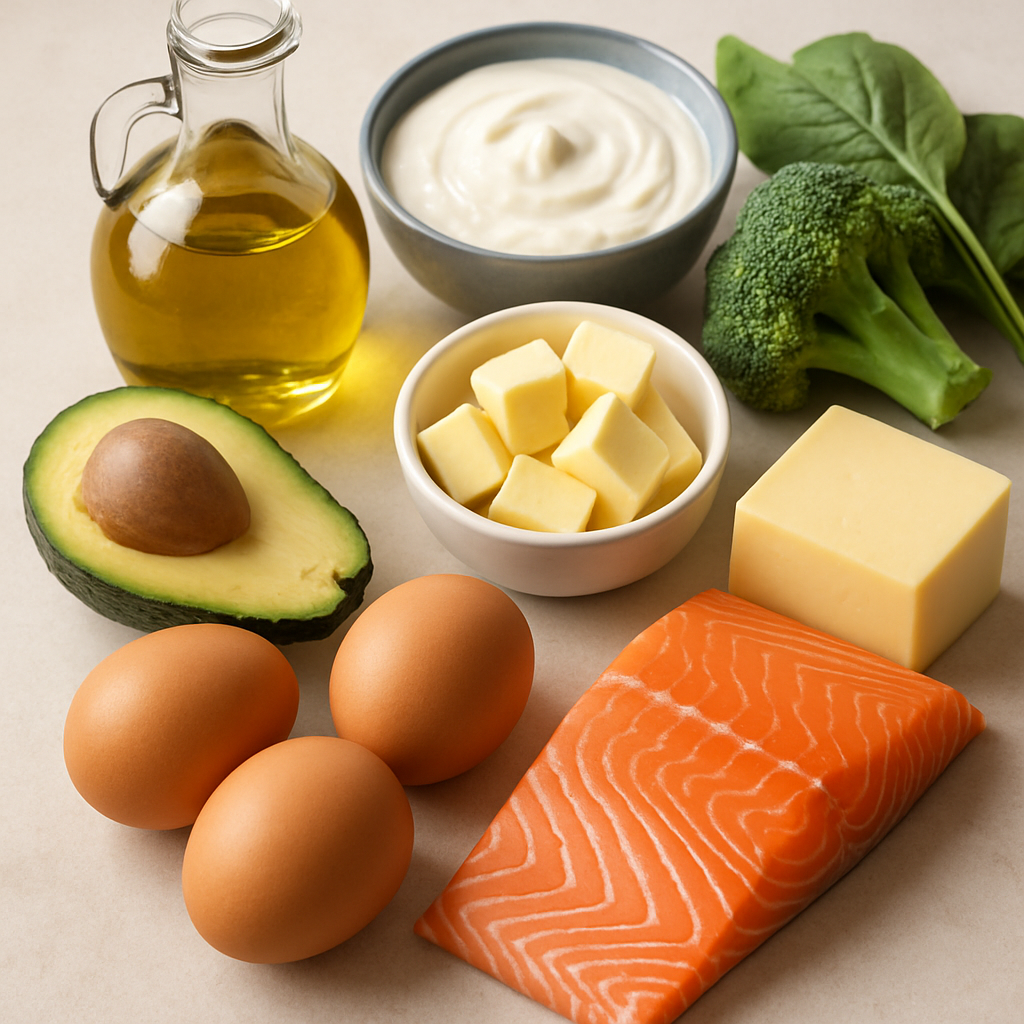
Prioritise the swap, not just the cut. If you're looking to support healthy cholesterol levels, replacing some saturated fat with unsaturated sources — olive oil, oily fish, avocado, nuts and seeds — has a stronger evidence base than simply eating less fat overall.
Eat more oily fish. Omega-3 fatty acids from sources like salmon, mackerel, and sardines have a well-established effect on triglycerides and overall cardiovascular risk. UK adults average well below the recommended one to two portions per week.
Fibre is arguably more important than fat type. Soluble fibre — found in oats, lentils, beans, and certain fruits — directly reduces LDL cholesterol by binding to it in the gut. This often gets far less attention than saturated fat, despite strong and consistent evidence.
Know your numbers. If you're concerned about cholesterol, getting a blood test through your GP is the most direct route to understanding your personal risk — especially if heart disease runs in your family.
If you want to hit the right balance of fats, fibre, and macros without spending hours planning meals, Macrology generates macro-perfect meal plans in seconds — https://macrology.app/signin
Want meals like this planned to your exact macros?
Macrology generates a personalised meal plan in seconds — breakfast, lunch, dinner and snacks, all hitting your daily targets.
Start your free 14-day trialMore from news
New Research: What UK Studies Reveal About the Link Between Food Delivery App Usage and Dietary Quality
7 min readNew Research: What UK Studies Reveal About the Link Between Food Environment at Home and Children's Eating Habits
7 min readNew Research: What UK Studies Reveal About the Link Between Cooking Frequency at Home and Overall Diet Quality
7 min read