New Research: What UK Studies Reveal About the Link Between Processed Meat Consumption and Bowel Cancer Risk
# New Research: What UK Studies Reveal About the Link Between Processed Meat Consumption and Bowel Cancer Risk
Bowel cancer is the fourth most common cancer in the UK, and diet is one of the few modifiable risk factors we actually have good evidence for. So when large-scale UK research adds new weight to the processed meat conversation, it's worth paying attention — not to panic, but to understand what the science actually says.
What counts as processed meat?
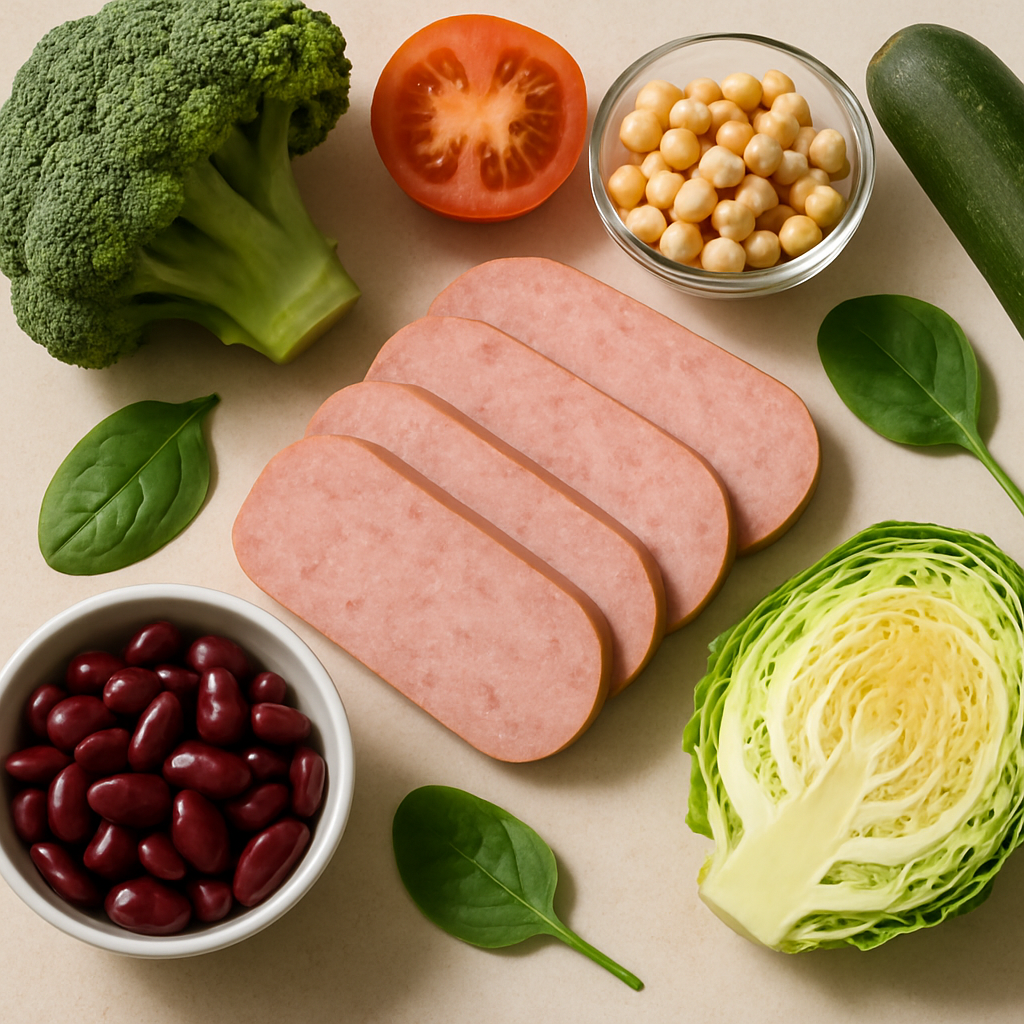
Before diving into the research, it helps to be clear on what we're actually talking about. Processed meat refers to any meat that has been preserved through smoking, curing, salting, fermentation, or the addition of chemical preservatives. That includes bacon, ham, sausages, salami, chorizo, hot dogs, and most tinned meats.
This is distinct from fresh red meat — an uncooked beef steak, a lamb chop, or a pork loin are not processed in the same way, and the evidence around them, while worth knowing, is a different conversation. The mechanisms driving risk appear to differ between the two categories, which matters when interpreting the research.
What the evidence shows
The most significant classification came from the World Health Organisation's International Agency for Research on Cancer (IARC), which in 2015 classified processed meat as a Group 1 carcinogen — the same category as tobacco and alcohol. That classification sounds alarming, but it's important to understand what it means: it tells us the evidence of a link is strong, not that processed meat is as dangerous as smoking a packet of cigarettes a day.
More recently, UK-based research has strengthened that picture. The UK Biobank study, one of the largest cohort studies in the world with over 500,000 participants recruited across the UK, has produced multiple analyses linking processed meat intake to increased colorectal cancer risk. A 2023 analysis using Biobank data found that even relatively modest processed meat consumption — around 25g per day, roughly one rasher of bacon — was associated with a measurable increase in bowel cancer risk compared to those eating little or none.
The EPIC-Oxford study, which has followed over 65,000 people in the UK since the 1990s, has similarly found consistent associations between processed meat and colorectal cancer. Importantly, EPIC-Oxford includes a large proportion of vegetarians and vegans, which gives researchers a useful comparison group that's harder to find in most population studies.
Cancer Research UK's own dietary risk estimates suggest that around 13% of bowel cancer cases in the UK are linked to processed and red meat consumption — making it the second largest dietary risk factor for the disease after being overweight or obese.
Why might processed meat affect bowel cancer risk?
The biological mechanisms here are reasonably well understood, which is part of why researchers have more confidence in this particular link than in some other diet-cancer associations.
N-nitroso compounds are one key factor. Processed meats contain nitrates and nitrites used as preservatives, which can be converted in the gut into these potentially carcinogenic compounds. Haem iron, found in all red and processed meat, has been shown in laboratory studies to promote the formation of these same compounds and may damage the lining of the bowel directly.
The cooking process also plays a role. When processed meats are cooked at high temperatures — grilling bacon until crispy, charring sausages on a barbecue — they produce heterocyclic amines and polycyclic aromatic hydrocarbons, both of which have shown mutagenic properties in laboratory studies.
It's worth noting that most of this mechanistic evidence comes from laboratory and animal studies. Human biology is more complex, and these pathways don't operate in isolation — your overall dietary pattern, gut microbiome, genetics, and lifestyle all interact. But the convergence of epidemiological data and plausible biological mechanisms is what gives researchers reasonable confidence in the relationship.
How much risk are we actually talking about?
This is where context really matters, and it's where media coverage often does people a disservice.
The increase in absolute risk from regular processed meat consumption is considerably smaller than the relative figures sometimes quoted. The average UK lifetime risk of developing bowel cancer is around 1 in 15. Research suggests that eating around 50g of processed meat daily (roughly two rashers of bacon or one sausage) increases that risk by approximately 18% in relative terms — which translates to a lifetime risk of roughly 1 in 13 rather than 1 in 15.
That's a real increase, and over a population of 67 million people it adds up to a significant number of cases. But at an individual level, it's a modest shift — not a guarantee of illness, and not a reason to treat every sausage as a biohazard.
The dose-response relationship also matters here. The evidence consistently shows that higher intakes carry greater risk — someone eating processed meat daily faces a different risk profile to someone eating it occasionally. There doesn't appear to be a hard threshold below which processed meat becomes completely harmless, but the relationship is graduated rather than binary.
Common misconceptions worth clearing up
"It's only a problem if you eat a lot of it." The current evidence suggests that risk does increase with higher consumption, but even modest regular intake shows some association. The key word is regular — the data generally tracks habitual eating patterns over years, not the odd hot dog at a football match.
"Organic or nitrate-free versions are safe." Products labelled as nitrate-free often use celery powder or other vegetable-based nitrate sources that have the same chemical effect in the body. The "natural" label doesn't change the underlying biochemistry, and there's no strong evidence that these products carry meaningfully lower risk.
"I've eaten bacon my whole life and I'm fine." This is a completely understandable response — but cancer risk doesn't work like that. Epidemiological associations describe what happens across populations over time, not individual outcomes. Many people who smoke never develop lung cancer; that doesn't change the population-level evidence.
What does this mean in practice?
None of this requires dramatic overhaul or anxiety around food. The research points towards some practical, low-effort adjustments that the evidence would support.
Keep processed meat as an occasional food rather than a daily staple. Swapping the daily bacon sandwich for a weekly one makes a genuine difference at the population level and is unlikely to feel like a significant sacrifice for most people.
Pay attention to portion size when you do eat it. A 50g portion — two rashers — is where a lot of the research anchors its higher-risk findings. Smaller portions eaten less frequently represent a lower exposure overall.
Consider what else is on the plate. High fibre diets are consistently associated with reduced bowel cancer risk, and the two factors aren't unrelated. Fibre from wholegrains, vegetables, pulses, and fruit helps maintain gut health and may partially counteract some of the effects of meat-related compounds. This isn't about compensation or cancelling things out — it's about the overall dietary pattern.
Don't ignore the wider picture. Processed meat is one piece of a large puzzle. Physical activity, body weight, alcohol intake, and smoking all affect bowel cancer risk — in some cases more substantially than processed meat alone. Focusing on one food while ignoring other factors isn't the most effective use of your energy.
Practical takeaways
- Aim to eat processed meat less frequently rather than eliminating it entirely if that feels unworkable — the evidence supports reducing intake, not perfect avoidance
- When you do include it, keep portions modest (think one or two rashers rather than a full pack)
- Build fibre into most meals — oats, lentils, beans, wholegrain bread, and plenty of vegetables are all straightforward ways to do this
- Be sceptical of "nitrate-free" marketing — the chemistry doesn't meaningfully differ
- If bowel cancer runs in your family, it's worth speaking to your GP about screening options, which the NHS does offer in certain circumstances
If you want to build a diet that's genuinely balanced — higher in fibre, lower in ultra-processed foods, and built around your actual preferences — Macrology generates macro-perfect meal plans in seconds: https://macrology.app/signin
The science here isn't designed to make eating feel stressful. It's just useful information — and now you have it.
Want meals like this planned to your exact macros?
Macrology generates a personalised meal plan in seconds — breakfast, lunch, dinner and snacks, all hitting your daily targets.
Start your free 14-day trialMore from news
New Research: What UK Studies Reveal About the Link Between Food Delivery App Usage and Dietary Quality
7 min readNew Research: What UK Studies Reveal About the Link Between Food Environment at Home and Children's Eating Habits
7 min readNew Research: What UK Studies Reveal About the Link Between Cooking Frequency at Home and Overall Diet Quality
7 min read