New Research: What UK Studies Reveal About the Link Between Prebiotic Foods and Immune Function
# New Research: What UK Studies Reveal About the Link Between Prebiotic Foods and Immune Function
There's a growing body of evidence suggesting that what you eat doesn't just fuel your body — it actively instructs your immune system. And some of the most compelling recent research has come from right here in the UK.
Scientists are increasingly focused on a specific group of foods that feed the beneficial bacteria living in your gut. The findings are reshaping how nutritionists and clinicians think about everyday eating.
What Are Prebiotic Foods, Exactly?
Before diving into the research, it helps to be clear on what we're actually talking about — because "prebiotic" gets used loosely.
Prebiotics are a type of dietary fibre that your body can't digest but your gut bacteria can. They act as fuel for beneficial microbes like Lactobacillus and Bifidobacterium, helping those strains thrive and multiply. Unlike probiotics (which introduce live bacteria), prebiotics feed what's already there.
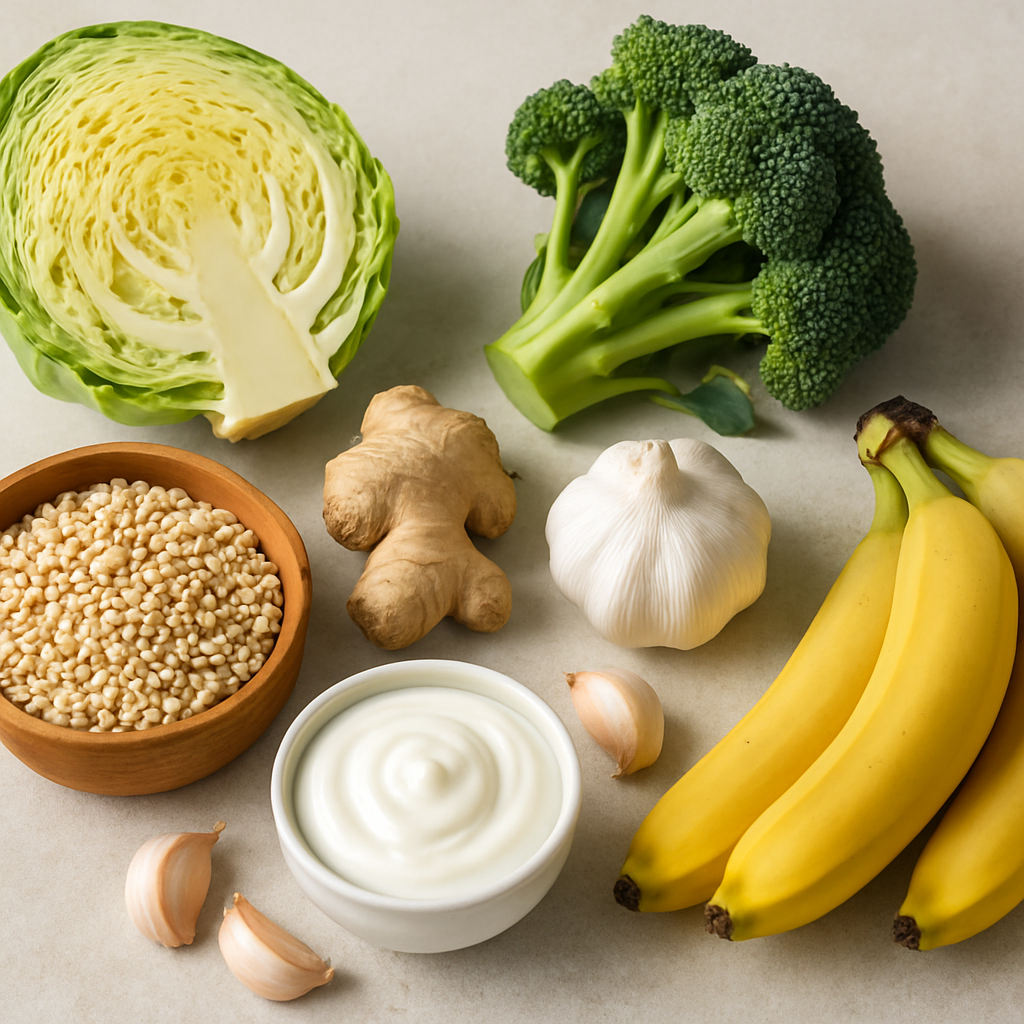
Common prebiotic foods include: garlic, onions, leeks, asparagus, Jerusalem artichokes, oats, bananas (especially less ripe ones), and chicory root. These aren't exotic superfoods — most of them are standard items in a British kitchen.
The key compounds involved are inulin, fructooligosaccharides (FOS), and galactooligosaccharides (GOS). You don't need to memorise those terms, but knowing they exist helps explain why the research is increasingly specific — scientists can now study individual compounds and measure precise immune responses.
The Gut-Immune Axis: Why It Matters
The gut isn't just for digestion. Roughly 70–80% of your immune tissue is located in and around the gastrointestinal tract — a network known as gut-associated lymphoid tissue, or GALT.
This means the bacteria living in your gut are in near-constant communication with your immune cells. When the microbial environment is diverse and well-nourished, the immune system tends to be better regulated. When it's disrupted — through poor diet, antibiotics, or chronic stress — immune function can become erratic, either underreacting to genuine threats or overreacting in ways that drive inflammation.
The practical implication is significant: supporting your gut microbiome isn't a niche wellness concern. It's directly relevant to how well your body defends itself.
What the Evidence Shows
Some of the clearest recent work has come out of UK research institutions. A landmark study from the Quadram Institute Bioscience in Norwich — one of the world's leading gut microbiome research centres — found that dietary fibre and prebiotic compounds consistently shift the composition of the gut microbiome in ways that appear to reduce systemic inflammation markers.
Research published by scientists at King's College London, particularly through the TwinsUK cohort, has reinforced the idea that microbiome diversity — strongly influenced by diet — correlates with more resilient immune responses. Notably, identical twins often show markedly different microbiome profiles depending on what they eat, which underlines just how much dietary choices matter, even when genetics are the same.
A 2023 study from the University of Reading, published in Gut Microbiota for Health, examined how specific prebiotic fibres influenced immune cell activity in adults over 60. The researchers found that participants consuming higher amounts of inulin-type fructans showed increased populations of regulatory T-cells — immune cells that play a key role in preventing the kind of excessive inflammatory response associated with autoimmune conditions and severe infections.
Importantly, these weren't dramatic pharmaceutical interventions. The dietary changes involved were modest and entirely achievable through food — adding more garlic, onions, and chicory to an ordinary diet.
The Inflammation Connection
One of the most consistent findings across UK and European studies is the relationship between prebiotics and chronic low-grade inflammation — sometimes called "inflammaging" in older adults.
Chronic inflammation is increasingly recognised as a driver of a wide range of conditions, from cardiovascular disease to type 2 diabetes to cognitive decline. It's not the acute inflammation you feel when you twist an ankle — it's a quieter, persistent background state that gradually damages tissue over time.
Prebiotic fibres appear to help counter this in a few ways. When gut bacteria ferment these fibres, they produce short-chain fatty acids (SCFAs) — particularly butyrate, acetate, and propionate. Butyrate, in particular, has been shown to have direct anti-inflammatory effects on the gut lining and to signal immune cells to dial down inflammatory activity.
A common misconception here is that you need to take a supplement to see this effect. The evidence consistently suggests that whole food sources — the garlic in your bolognese, the oats in your porridge, the leeks in your soup — generate meaningful SCFA production when consumed regularly. Supplements may have a role in clinical settings, but food-first approaches remain well-supported.
Who Benefits Most?
The research doesn't suggest prebiotics are only useful for people with obvious gut problems. Broadly, most people appear to benefit from higher prebiotic fibre intake — but some groups show particularly strong responses.
Older adults seem to gain the most in terms of immune function. This is partly because immune competence naturally declines with age (a process called immunosenescence), and partly because microbiome diversity tends to decrease as people get older. Studies from the APC Microbiome Ireland group, collaborating with UK institutions, have shown that targeted prebiotic intervention in people over 65 can measurably shift immune cell profiles in a positive direction within 8–12 weeks.
People recovering from illness or a course of antibiotics also show clear benefits, since their microbiome is often in a disrupted state. Reintroducing prebiotic-rich foods supports the regrowth of beneficial species faster than a standard diet alone.
There's also emerging evidence — though still early — that children's immune development is influenced by early prebiotic exposure through weaning foods. UK paediatric researchers are currently exploring this through several ongoing trials.
Common Barriers — and How to Get Around Them
One practical sticking point is that some prebiotic foods, particularly Jerusalem artichokes and raw garlic in large amounts, can cause digestive discomfort — bloating, wind, cramping — especially if introduced too quickly.
This is normal and doesn't mean you're reacting badly in a harmful sense. It typically means the bacteria in your gut are fermenting the fibres vigorously, and your gut isn't yet adapted to the volume. Introducing prebiotic foods gradually — rather than overhauling everything overnight — tends to reduce this significantly.
Cooking also affects prebiotic content. Garlic and onions lose some of their inulin when cooked, but not all of it — and given that most people consume far less fibre than the recommended 30g per day, any increase from cooked sources is still genuinely useful.
The UK average fibre intake sits at around 18–20g per day — well below the NHS recommended 30g. Closing even part of that gap through prebiotic-rich foods would, based on the current evidence, have meaningful implications for immune health.
Practical Takeaways
You don't need to restructure your entire diet to start benefiting from what the research shows. Here are some straightforward ways to increase your prebiotic fibre intake this week:
- Add a portion of oats to breakfast — porridge made with oats provides beta-glucan, a well-studied prebiotic fibre with documented immune effects
- Use leeks and onions as a base for soups, stews, and sauces rather than minimal quantities for flavour
- Eat garlic regularly — even cooked garlic retains meaningful prebiotic compounds; raw garlic contains more, but consistency matters more than perfection
- Try asparagus as a side vegetable — it's one of the higher-inulin options and pairs well with most main meals
- Choose less-ripe bananas when possible — the resistant starch content is higher before the banana fully sweetens
- Add chicory or endive to salads — both are excellent sources of inulin and widely available in UK supermarkets
The evidence doesn't ask for perfection. It consistently shows that regular, moderate increases in prebiotic fibre — through ordinary foods — produce measurable changes in gut microbiome composition and immune markers within weeks, not months.
If you want to make sure your daily meals are consistently hitting your fibre and macro targets without the mental load of planning from scratch, Macrology generates macro-perfect meal plans in seconds — https://macrology.app/signin
Want meals like this planned to your exact macros?
Macrology generates a personalised meal plan in seconds — breakfast, lunch, dinner and snacks, all hitting your daily targets.
Start your free 14-day trialMore from news
New Research: What UK Studies Reveal About the Link Between Food Delivery App Usage and Dietary Quality
7 min readNew Research: What UK Studies Reveal About the Link Between Food Environment at Home and Children's Eating Habits
7 min readNew Research: What UK Studies Reveal About the Link Between Cooking Frequency at Home and Overall Diet Quality
7 min read