New Research: What UK Studies Reveal About the Link Between Creatine Intake and Cognitive Function in Older Adults
# New Research: What UK Studies Reveal About the Link Between Creatine Intake and Cognitive Function in Older Adults
There's a supplement that most people associate with gym-goers and muscle gain — but researchers are increasingly interested in what it might do for your brain. New findings from UK-based studies are adding weight to the idea that creatine could play a meaningful role in how well older adults think, remember, and process information.
What Is Creatine and Why Are Scientists Looking at the Brain?
Most people know creatine as something that helps with physical performance. It's naturally produced in the body, found in meat and fish, and widely used as a supplement by athletes wanting to recover faster and lift heavier. But the brain is also an energy-hungry organ, and it uses the same phosphocreatine energy system as your muscles.
The logic here is straightforward: creatine helps cells regenerate ATP (adenosine triphosphate), which is the body's primary fuel source. The brain accounts for roughly 20% of the body's total energy expenditure despite making up only about 2% of body weight. If creatine helps maintain that energy supply more efficiently, there's a reasonable biological basis to expect cognitive benefits — particularly in older adults, whose natural creatine synthesis tends to decline with age.
This is what's been driving a growing wave of research, including several studies with UK participants and UK institutional involvement.
What the Evidence Shows
One of the most significant contributions to this area came from a study published in Proceedings of the Royal Society B by researchers at the University of East Anglia. The study conducted a systematic review and meta-analysis of randomised controlled trials examining creatine supplementation and cognitive performance. The findings were notable: creatine supplementation showed a positive effect on memory, particularly in older adults.
The effect was most consistent for tasks involving short-term memory and intelligence or reasoning, and the benefits appeared stronger in populations where creatine availability in the brain might already be reduced — including older adults and, interestingly, vegetarians, who tend to have lower baseline creatine levels due to lower dietary intake.
What makes this more than just a promising signal is the nature of the evidence reviewed. Randomised controlled trials are the gold standard in nutritional research, and the meta-analysis pulled from multiple such trials to arrive at its conclusions. That's a stronger foundation than a single observational study, where cause and effect are harder to establish.
A separate body of work from UK researchers has also explored the mechanisms behind these effects using neuroimaging, suggesting that creatine supplementation can increase phosphocreatine concentrations in brain tissue — providing a plausible biological pathway rather than just a statistical association.
Why Older Adults in Particular?
The cognitive benefits of creatine don't appear to be uniform across age groups. Younger, healthy adults with normal creatine levels tend to show smaller or less consistent effects. The pattern that emerges from the research is that creatine is most useful where there's a deficit to address.
As we age, the body's ability to synthesise creatine naturally declines. Brain creatine levels drop, and the phosphocreatine energy buffer — which helps neurons fire rapidly and recover quickly — becomes less efficient. This is also happening at a time when cognitive decline becomes a more pressing concern.
Age-related cognitive changes are normal to some degree, but there's significant variation in how quickly they progress. Factors like diet, physical activity, sleep, and cardiovascular health all play a role. The emerging picture from creatine research suggests that dietary intake may be another piece of that puzzle — not a magic solution, but a legitimate contributor.
It's also worth noting that the UK population has particular relevance here. A significant proportion of older adults in the UK eat less meat than they once did, whether for health, environmental, or economic reasons. Lower meat intake means lower dietary creatine, which could mean lower baseline levels in the brain — potentially making supplementation more impactful for this group specifically.
What About Vegetarians and Vegans?
This is one of the more compelling threads in the research. Plant-based diets contain essentially no creatine, since it's found almost exclusively in animal muscle tissue. The body can synthesise creatine from amino acids (arginine, glycine, and methionine), but dietary intake still makes a meaningful contribution to overall levels.
Studies have found that vegetarians and vegans tend to have lower baseline creatine stores compared to meat-eaters, and several trials have shown that this group responds more strongly to supplementation in cognitive testing. A randomised crossover trial found that vegetarians given creatine showed more pronounced improvements on memory tasks than meat-eaters given the same dose.
This is a practical point worth paying attention to, particularly as plant-based eating continues to grow in the UK. It doesn't mean there's anything wrong with a plant-based diet — the evidence for its broader health benefits is well-established — but it does highlight creatine as a nutrient that may warrant specific attention for people eating little or no meat.
Common Misconceptions Worth Clearing Up
A few things often get conflated in conversations about creatine and cognition, so it's worth addressing them directly.
Creatine is not a smart drug or nootropic in the traditional sense. It doesn't stimulate the central nervous system or artificially boost alertness. It works by supporting the energy systems that neurons rely on to function — which is a much more fundamental mechanism. The analogy would be ensuring a car has adequate fuel versus giving it a turbocharger.
The cognitive benefits are not about preventing dementia specifically. Current research focuses on general cognitive performance — memory, processing speed, reasoning — rather than clinical neurodegenerative conditions. It would be premature to position creatine as a preventative treatment for Alzheimer's or similar conditions based on current evidence, though some researchers are investigating this direction.
More is not necessarily better. The doses used in most cognitive trials range from 3–5 grams per day, which is the same range used in sports performance research. Very high doses don't appear to confer additional cognitive benefit and can cause digestive discomfort in some people.
What the Research Doesn't Yet Tell Us
Honesty matters here. The evidence is encouraging but not conclusive, and there are important gaps.
Most trials to date have been relatively short — weeks to a few months — so we don't have strong data on what long-term supplementation does, or whether benefits persist, plateau, or interact with other variables over time. We also don't yet have large-scale trials specifically designed to assess creatine's effect on cognitive decline trajectories in older adults, rather than just snapshot performance measures.
There are also questions around dosing for cognitive versus physical goals, optimal timing, and whether creatine monohydrate (the most studied form) differs meaningfully from newer formulations in its brain effects.
This is an active area of research, and the picture is likely to become clearer over the next five to ten years. The current evidence is strong enough to take seriously, but not so definitive that sweeping recommendations are warranted yet.
Practical Takeaways
Here's what the current evidence reasonably supports, without overstating it:
- Older adults may have more to gain from creatine supplementation than younger adults, based on declining natural synthesis and the pattern of effects seen in trials.
- People eating little or no meat — including vegetarians and vegans — have lower dietary creatine intake and tend to show stronger cognitive responses to supplementation.
- A dose of 3–5 grams of creatine monohydrate per day is what most trials have used. It's one of the most researched and cost-effective supplements available.
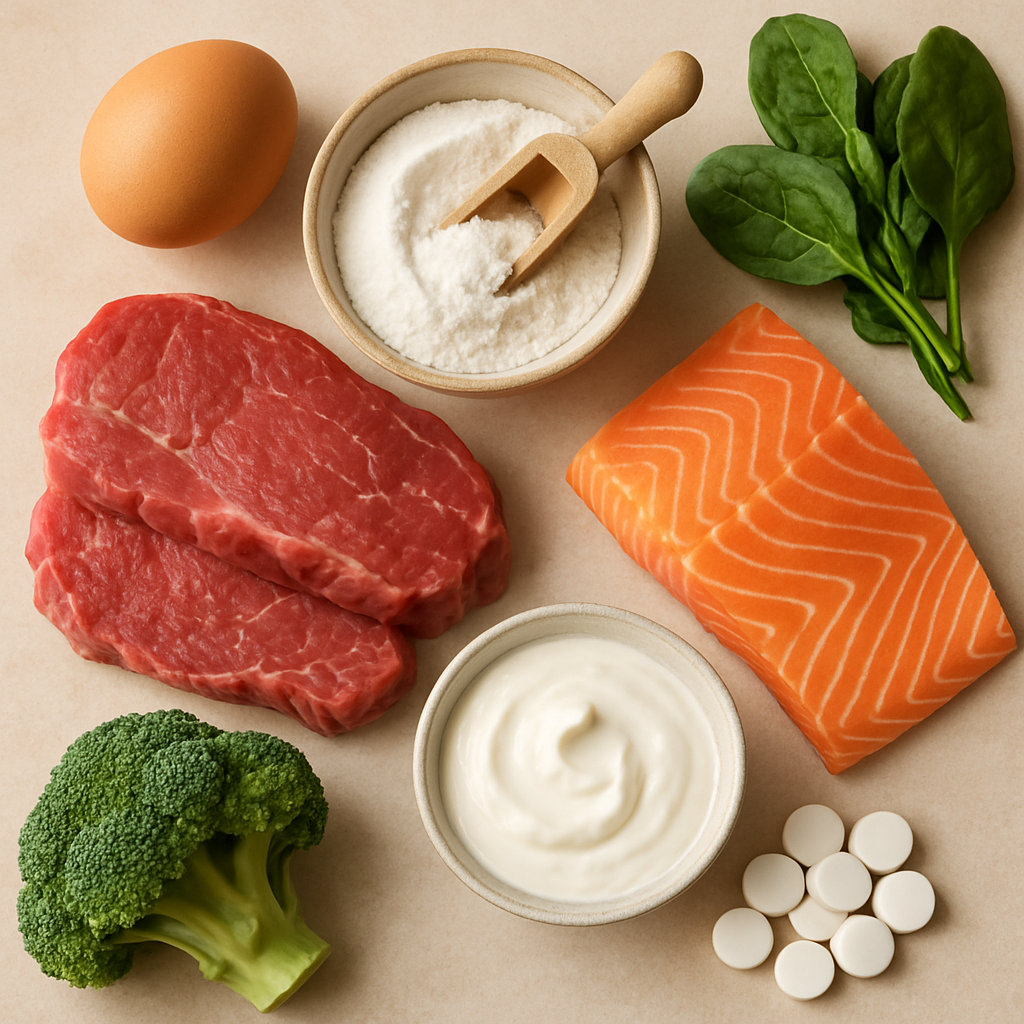
- Food sources include red meat, pork, poultry, and fish — with herring, salmon, and beef being among the richer sources. Getting meaningful amounts through diet alone is possible but requires regular consumption of these foods.
- If you're considering supplementation, it's worth mentioning it to your GP, particularly if you have kidney concerns — though creatine is considered safe for healthy adults at standard doses.
Thinking about how diet fits into your broader health picture as you get older is rarely simple, but it doesn't have to be complicated to manage.
If you want a meal plan that accounts for your nutritional targets — including protein and creatine-contributing foods — Macrology generates macro-perfect meal plans in seconds — https://macrology.app/signin
Want meals like this planned to your exact macros?
Macrology generates a personalised meal plan in seconds — breakfast, lunch, dinner and snacks, all hitting your daily targets.
Start your free 14-day trialMore from news
New Research: What UK Studies Reveal About the Link Between Food Delivery App Usage and Dietary Quality
7 min readNew Research: What UK Studies Reveal About the Link Between Food Environment at Home and Children's Eating Habits
7 min readNew Research: What UK Studies Reveal About the Link Between Cooking Frequency at Home and Overall Diet Quality
7 min read