New Research: What UK Studies Reveal About the Link Between Calcium Intake and Bone Health in Adults Over 40
# New Research: What UK Studies Reveal About the Link Between Calcium Intake and Bone Health in Adults Over 40
Getting enough calcium is one of those things most people assume they sorted out in childhood — drink your milk, build your bones, job done. But new research suggests the story for adults over 40 is considerably more interesting, and more nuanced, than that.
Why Bone Health Becomes More Complicated After 40
Most people reach their peak bone mass somewhere between their late twenties and early thirties. After that, the process gradually shifts — bone is still being broken down and rebuilt, but the balance starts to tip. By the time we reach our forties and fifties, that remodelling process can begin to favour bone loss over bone formation, particularly in women approaching and going through the menopause.
This is where calcium intake comes back into the picture. It's not about building bones from scratch anymore — it's about maintaining what you have, slowing the rate of loss, and reducing the risk of fractures later in life. The distinction matters, because it changes how we think about calcium's role and how much we actually need.
Osteoporosis affects around 3.5 million people in the UK, and fragility fractures — those caused by relatively minor falls or bumps — cost the NHS an estimated £4.4 billion annually. That context makes understanding calcium intake at a population level genuinely important.
What the Evidence Shows
A significant body of UK and European research has looked at calcium intake in adults over 40, and the findings are more complex than simple "eat more dairy" messaging.
The UK Biobank cohort, one of the largest long-term health studies in the world, has contributed substantially to our understanding here. Analysis of Biobank data published in recent years has found that dietary calcium intake is positively associated with bone mineral density in middle-aged and older adults — but crucially, the relationship has a ceiling effect. Beyond a certain threshold, consuming more calcium doesn't appear to provide additional bone protection.
Research published in the British Medical Journal has added further nuance, particularly around calcium supplements versus dietary calcium. Several large meta-analyses have found that calcium supplements alone — without vitamin D — have limited impact on fracture risk, and some studies have raised questions about cardiovascular risk at very high supplemental doses. Dietary calcium, by contrast, continues to show favourable associations without those concerns.
A 2021 review drawing on UK and Scandinavian data reinforced the point that the source of calcium appears to matter. Dairy-derived calcium showed strong associations with bone density, while calcium from non-dairy sources like fortified foods and leafy greens was beneficial but somewhat less bioavailable — meaning a smaller proportion is absorbed and used by the body.
The Vitamin D Problem That UK Adults Face
Here's where things get particularly relevant for anyone living in the UK. Calcium doesn't work in isolation — vitamin D is essential for calcium absorption in the gut. Without adequate vitamin D, even a well-planned, calcium-rich diet won't deliver its full benefit to your bones.
And the UK has a significant vitamin D problem. Public Health England (now UKHSA) has consistently found that around 1 in 5 UK adults has low vitamin D levels, with the issue peaking in winter and spring when sunlight exposure — the main way humans produce vitamin D — is minimal. People with darker skin tones, those who spend limited time outdoors, and older adults are at higher risk of deficiency.
The National Diet and Nutrition Survey repeatedly shows that average calcium intakes in UK adults are broadly adequate, hovering around the Reference Nutrient Intake of 700mg per day for most age groups. But the vitamin D picture undermines that — if you're not absorbing the calcium you're eating, the intake figure becomes somewhat academic.
This is why the current NHS guidance recommends that all UK adults consider a vitamin D supplement of 10 micrograms daily through autumn and winter. For bone health specifically, this isn't a minor footnote — it's arguably as important as calcium intake itself.
Common Misconceptions Worth Addressing
Misconception 1: Dairy is the only meaningful source of calcium.
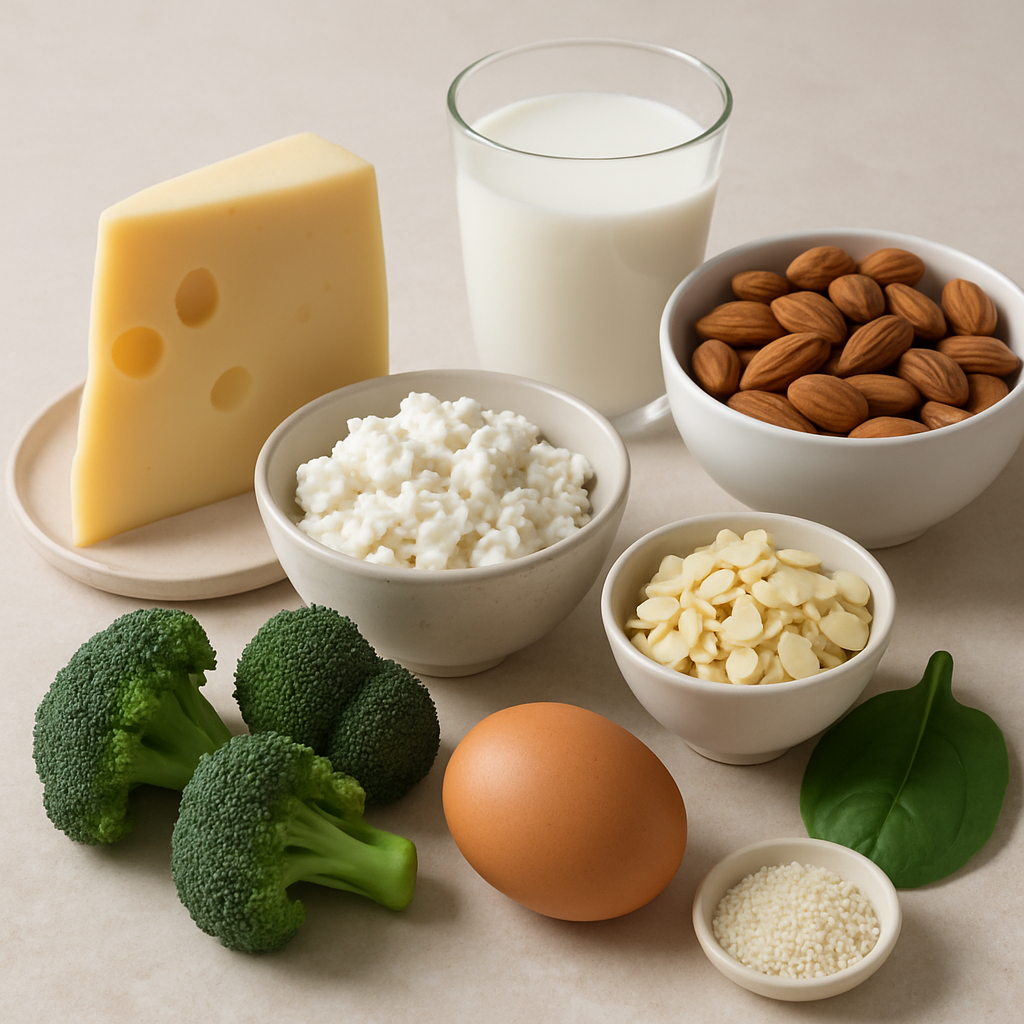
It's the most concentrated and bioavailable source for many people, but it's far from the only one. Fortified plant milks (look for those with added calcium carbonate), tinned sardines and salmon eaten with bones, firm tofu set with calcium sulphate, and dark leafy greens like kale and pak choi all contribute meaningfully. For people avoiding dairy — whether due to intolerance, preference, or allergy — a well-planned diet can still hit the target.
Misconception 2: Calcium supplements are a reliable fallback.
The evidence here is less reassuring than many people assume. The UK's Scientific Advisory Committee on Nutrition (SACN) has noted that while supplements can help people who genuinely cannot meet their needs through diet, they're not a simple equivalent to food sources. The absorption rate, the dose timing, and the interaction with other nutrients all affect how useful they are — and at doses above 1,500mg per day, there are legitimate questions worth discussing with a GP.
Misconception 3: Bone health is mainly a concern for women.
Men lose bone density too, just typically later and more gradually. UK research suggests that hip fracture rates in older men are rising, partly because men are less likely to be screened or treated for low bone density. Calcium and vitamin D intake matter across the board.
Foods That Consistently Support Bone Health in UK Diets
Beyond calcium, bone health is genuinely multi-nutrient. UK dietary research points to several other nutrients that play a supporting role:
- Magnesium — found in nuts, seeds, wholegrains, and dark chocolate — is involved in bone mineralisation and is frequently under-consumed in typical UK diets.
- Vitamin K2 — found in fermented foods and some hard cheeses — helps direct calcium into bones rather than soft tissue, though the research here is still developing.
- Protein — adequate protein intake is associated with better bone density in older adults, contrary to older theories suggesting protein was detrimental.
- Potassium — abundant in fruit and vegetables — may help reduce calcium excretion via the kidneys, meaning more stays in circulation for bone use.
The emerging picture from UK cohort studies is that overall dietary pattern matters more than any single nutrient. Diets that include a wide variety of whole foods — plenty of vegetables, adequate protein, some dairy or fortified alternatives, and oily fish — tend to be associated with better bone outcomes than those fixated on hitting a single target number.
Practical Takeaways for Adults Over 40
Here's what's actually actionable from all of this:
Check your dairy or fortified alternative intake. Three portions a day — a glass of milk, a pot of yoghurt, a matchbox-sized piece of cheese, or equivalent fortified plant alternatives — gets most people close to the 700mg RNI without much effort.
Eat tinned fish with the bones. Tinned sardines and salmon are an underrated calcium source and come with the added benefit of omega-3s and vitamin D. A small tin of sardines on toast is genuinely useful.
Take vitamin D from October to March. This isn't optional for most people in the UK — it's practical damage limitation given our latitude and weather. A 10mcg supplement is inexpensive and widely available.
Don't rely on supplements to compensate for a poor diet. The evidence for dietary calcium is consistently stronger than for supplemental calcium when it comes to fracture risk. Food first, supplement where there's a genuine gap.
Think about the whole plate, not just calcium. Magnesium, protein, vitamin K, and potassium all support bone health. A varied diet that includes vegetables, wholegrains, pulses, protein, and some dairy or fortified alternatives covers most of these bases simultaneously.
If you want to make sure your diet is consistently hitting your macro and micronutrient targets without having to track everything manually, Macrology generates macro-perfect meal plans in seconds — https://macrology.app/signin
Bone health at 40 and beyond isn't about perfection — it's about building consistent habits that add up over years. The research is clear enough on the direction of travel: food variety, adequate calcium and vitamin D, and a diet that supports overall health are the fundamentals. Everything else is detail.
Want meals like this planned to your exact macros?
Macrology generates a personalised meal plan in seconds — breakfast, lunch, dinner and snacks, all hitting your daily targets.
Start your free 14-day trialMore from news
New Research: What UK Studies Reveal About the Link Between Food Delivery App Usage and Dietary Quality
7 min readNew Research: What UK Studies Reveal About the Link Between Food Environment at Home and Children's Eating Habits
7 min readNew Research: What UK Studies Reveal About the Link Between Cooking Frequency at Home and Overall Diet Quality
7 min read