How the UK's Free School Meals Debate Is Reshaping Children's Nutrition Policy
# How the UK's Free School Meals Debate Is Reshaping Children's Nutrition Policy
Around 1 in 5 children in England lives in poverty — yet hundreds of thousands of them sit in classrooms every day without access to a free school meal. That gap between who qualifies and who actually needs support is driving one of the most significant policy debates in children's nutrition in a generation. And the ripple effects are starting to be felt far beyond the school canteen.
The Current State of Free School Meals in England
Free school meals (FSM) in England are currently available to primary school children in Reception through to Year 2 under Universal Free School Meals (UIFSM), regardless of household income. Beyond that, eligibility is means-tested — families must be receiving certain benefits and earning under £7,400 a year after tax to qualify.
That threshold hasn't moved in years, and as the cost of living has risen sharply, more families are falling into what campaigners call the "gap" — earning too much to qualify but not enough to reliably put food on the table. An estimated 900,000 children in England are living in poverty but don't meet the current criteria for free school meals. That's not a rounding error. That's a policy failure.
Scotland and Wales have taken a different approach, with Scotland extending universal FSM to all primary school children up to Primary 5, and Wales legislating to do the same across all primary years. The divergence across the devolved nations is making England's position look increasingly difficult to defend.
Why the Eligibility Gap Matters for Child Nutrition
A child who arrives at school hungry is a child who will struggle to concentrate, regulate their emotions, and engage with learning. This isn't a soft claim — it's well-supported by research on cognitive function and blood glucose. But the nutritional stakes go beyond just being hungry at lunchtime.
For many children from lower-income households, the school meal is the most nutritious meal they eat all day. School meals in England must meet nutritional standards set by the government — covering minimum requirements for protein, fibre, vitamins, and limits on saturated fat, salt, and sugar. A home-packed lunch, by contrast, has no such requirements. Studies have consistently found that packed lunches are, on average, lower in nutritional quality than school-provided meals.
When a child doesn't receive a free meal and the family can't afford a paid one, the alternatives are often a packed lunch of variable quality — or, in some cases, nothing at all. The eligibility gap doesn't just affect family finances. It directly shapes what a child eats during the hours when they're supposed to be learning.
What the Evidence Shows
The nutritional case for expanding free school meals is stronger than politicians often let on. A major report from the School Food Trust found that children who ate school meals consumed significantly more fruit, vegetables, and key nutrients than those who brought packed lunches.
A landmark study in the British Medical Journal found that universal free school meals in primary schools were associated with improved attainment, particularly for children from disadvantaged backgrounds — and that the benefits persisted. The research also found that expanding eligibility reduced the stigma associated with receiving free meals, which matters because stigma is a real barrier to uptake even among families who do qualify.
The London School of Economics produced analysis suggesting that for every pound spent on expanding free school meals, there are measurable returns in educational outcomes, reduced healthcare costs associated with poor childhood nutrition, and long-term economic productivity. The investment case is there — the political will has been harder to find.
It's also worth noting that the current system creates a cliff edge. A family earning £7,401 a year after tax receives nothing, while a family earning £7,399 qualifies. These are not meaningfully different financial situations, yet the policy treats them as if they are worlds apart.
The Role of Holiday Hunger
Any honest discussion of school meal policy has to address what happens when schools close. The holidays — particularly the six-week summer break — represent a significant nutritional risk for children who depend on free school meals during term time.
Holiday hunger became a national conversation largely thanks to Marcus Rashford's 2020 campaign, which pressured the government into extending meal vouchers during school holidays. The temporary programmes that followed revealed both the scale of the need and the logistical complexity of reaching families outside the school structure.
Holiday food provision has remained patchwork. Some local authorities fund holiday activity and food (HAF) programmes; others do so minimally. Charitable organisations fill gaps that public funding leaves open. The result is a postcode lottery that leaves some of the most vulnerable children with inconsistent access to nutritious food during the periods when they're out of school the longest.
Campaigners argue that any serious reform of school meal policy has to include a coherent holiday provision strategy — otherwise you're solving part of a problem while leaving another part entirely unaddressed.
The Politics of Expansion
Calls to extend universal free school meals to all primary children in England — and eventually secondary pupils — have grown louder across party lines. The argument from those in favour is straightforward: universality removes stigma, simplifies administration, and ensures no child falls through the gap.
The counterargument, usually made on fiscal grounds, is that providing meals to children from wealthy families is poor use of public money. The estimated cost of extending universal FSM to all primary children in England runs to around £1.5 billion per year — a significant sum, though proponents point out it's modest relative to the broader education budget and the long-term savings from better educational and health outcomes.
There's also a middle-ground position gaining traction: significantly raising the income threshold for means-tested FSM to capture the families currently stuck in the gap, rather than moving immediately to a universal model. This would reach a much larger proportion of children in need without the full cost of universality.
What seems increasingly clear is that the status quo — an income threshold unchanged since 2018, with no holiday provision guarantee — is not a sustainable position politically or practically.
What Schools and Local Authorities Are Doing in the Meantime
While national policy debates continue, schools and local councils aren't standing still. Many headteachers have found creative ways to extend provision — using pupil premium funding, partnering with local food charities, or quietly absorbing the cost of meals for families they know are struggling.
Some local authorities have used their discretionary powers to fund universal FSM locally, or to run robust HAF programmes during school holidays. These local solutions are genuinely impressive, but they're fragile — dependent on budget cycles, political priorities, and the goodwill of individual institutions.
The patchwork of local responses also makes it nearly impossible to gather consistent national data on how many children are actually going without adequate nutrition during the school day. You can't solve a problem you can't measure reliably.
Practical Takeaways for Parents and Carers
If you're a parent trying to navigate this, a few concrete things are worth knowing.
Check eligibility now — the government's FSM checker at gov.uk takes a few minutes and many families who qualify haven't applied. Eligibility also brings pupil premium funding to the school, which benefits all pupils.
If you don't qualify but are struggling, speak to the school directly. Many will have access to discretionary funds or know of local food support schemes. Schools are not there to judge — they want to help.
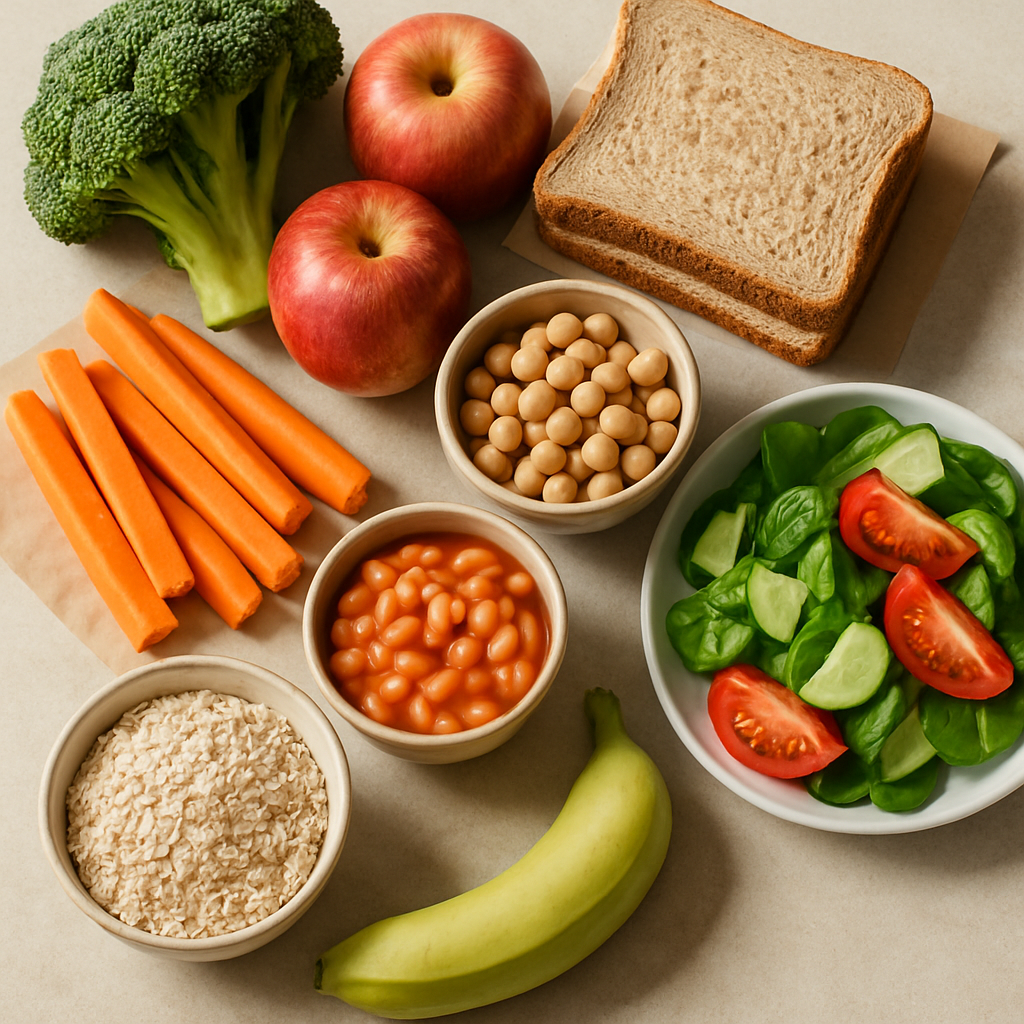
For packed lunches, the focus doesn't need to be perfection. A protein source (cheese, egg, meat, beans), some vegetables or fruit, and a complex carbohydrate covers a lot of nutritional ground without requiring significant time or cost.
If you want to plan nutritious, budget-friendly meals for your family, Macrology generates macro-perfect meal plans in seconds — https://macrology.app/signin
The free school meals debate is, at its heart, a question about what kind of society we want to be — one where a child's nutrition at lunchtime is determined by their postcode or their parents' income, or one where every child gets the same shot at a decent meal and a focused afternoon of learning. The policy is moving. Slowly, but it's moving.
Want meals like this planned to your exact macros?
Macrology generates a personalised meal plan in seconds — breakfast, lunch, dinner and snacks, all hitting your daily targets.
Start your free 14-day trialMore from news
New Research: What UK Studies Reveal About the Link Between Food Delivery App Usage and Dietary Quality
7 min readNew Research: What UK Studies Reveal About the Link Between Food Environment at Home and Children's Eating Habits
7 min readNew Research: What UK Studies Reveal About the Link Between Cooking Frequency at Home and Overall Diet Quality
7 min read