How the UK's Food-to-Go Market Is Adapting to Healthier Consumer Demands
# How the UK's Food-to-Go Market Is Adapting to Healthier Consumer Demands
Walk into any high street coffee shop or petrol station forecourt today and you'll find something that simply didn't exist a decade ago: a refrigerated section where you can actually read the ingredients without needing a chemistry degree. The UK's food-to-go market — worth over £21 billion and growing — is quietly undergoing a meaningful shift, and it's being driven by what people are asking for at the till.
What's Actually Changing on the High Street
The traditional food-to-go offer was built around convenience above almost everything else. A meal deal, a pastry, something hot wrapped in paper — fast, filling, forgettable. That formula still works for a lot of people, and there's nothing wrong with it. But the market is evolving because consumer behaviour is evolving alongside it.
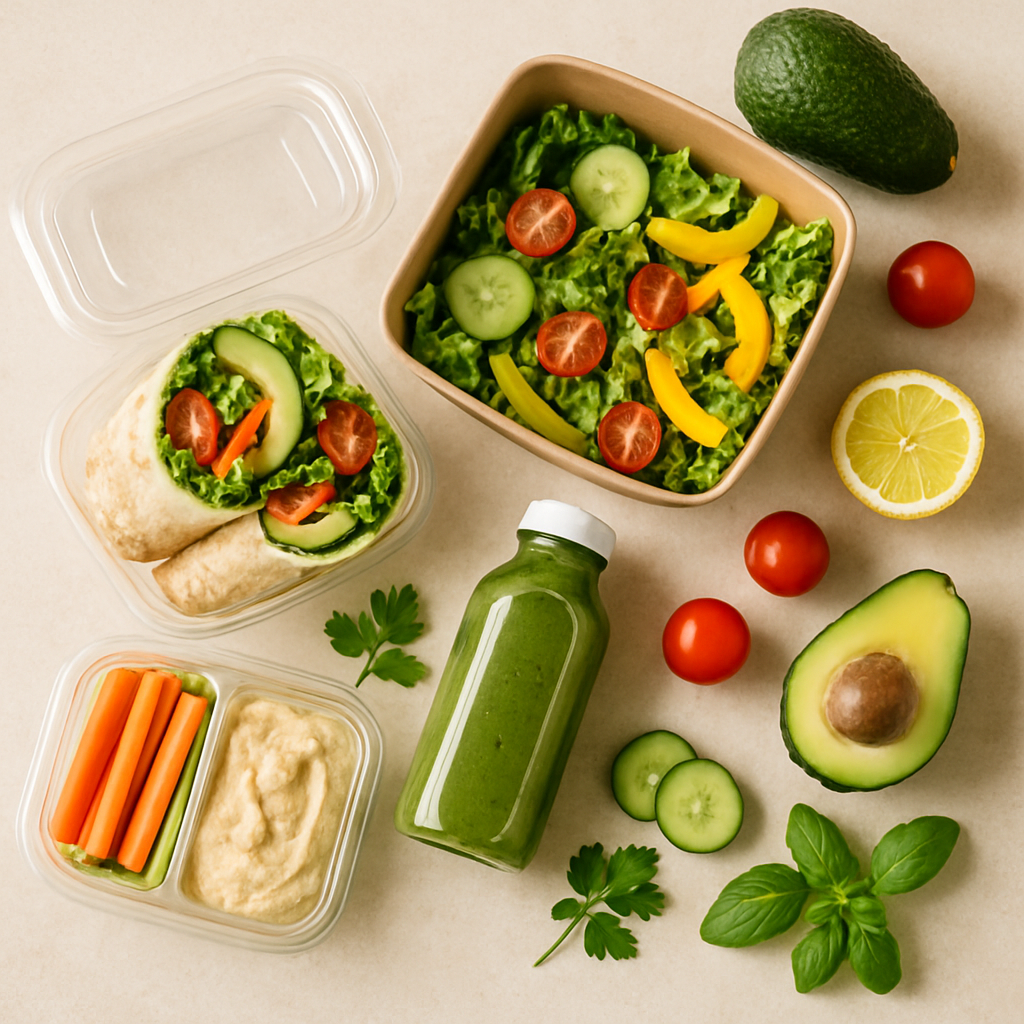
Major players like Pret a Manger, Greggs, Itsu, and Leon have all expanded their ranges in response to demand for higher-protein options, plant-based alternatives, and meals with clearer nutritional information. Even supermarket meal deals — the cornerstone of the British lunch break — now routinely include options like egg and chicken pots, edamame salads, and high-protein yoghurts as part of the snack tier.
This isn't purely altruistic on the part of the brands. It's commercial logic. When customers start consistently choosing one type of product over another, the market follows.
The Role of Nutritional Labelling
One of the most significant structural changes underpinning this shift is the expansion of mandatory calorie labelling. Since April 2022, large food businesses in England with 250 or more employees have been required to display calorie counts on menus and food packaging. Scotland and Wales have their own consultations underway.
The evidence on whether calorie labelling alone changes behaviour is genuinely mixed. Some studies show modest reductions in calories purchased; others show little effect. What it does do, fairly consistently, is increase consumer awareness — which, over time, creates pressure on businesses to reformulate or diversify their ranges.
A 2022 study published in BMJ found that mandatory menu labelling in the UK was associated with a reduction of around 8% in calories purchased per transaction at affected businesses. That's not dramatic, but across millions of transactions, it's commercially and nutritionally significant.
What the Evidence Shows
Beyond labelling, there's a broader question worth asking: are people actually eating better on the go, or are they just buying products that sound healthier?
The honest answer is: it's complicated. Market research from IGD and Kantar consistently shows that health is now one of the top three factors consumers cite when choosing food-to-go — alongside taste and price. But self-reported behaviour and actual purchasing data don't always match up neatly.
What we do know is that certain categories are growing rapidly. High-protein snacks, for instance, have seen double-digit growth in the UK convenience sector. The British Nutrition Foundation notes that protein intake is associated with satiety — meaning people feel fuller for longer — which partly explains the commercial appeal of positioning products this way.
Plant-based options have also expanded significantly, though growth has levelled off somewhat after the initial boom years of 2019–2021. The more durable trend appears to be towards whole food ingredients and shorter ingredient lists, rather than ultra-processed plant-based alternatives, which have faced their own scrutiny in recent years.
The Rise of "Better For You" Without the Baggage
One of the more interesting shifts in how food-to-go brands are marketing their products is a deliberate move away from the language of restriction. You'll notice that brands like Itsu and Leon lean heavily on words like "nourishing", "wholesome", or "made with real ingredients" rather than "low calorie" or "diet".
This reflects a genuine change in what resonates with consumers. Research from the Food Standards Agency and various marketing studies suggests that positive framing — what a food does contain — lands better than negative framing around what it doesn't. People respond to "rich in protein" more warmly than they respond to "low fat."
For businesses, this is also a hedge against the shifting science. What counts as nutritionally desirable changes — fat was the villain for decades before carbohydrates took over that role in popular discourse. Brands that anchor their identity to specific nutrients can find themselves exposed when the conversation moves on. Identity built around quality and transparency is more durable.
Challenges the Market Still Hasn't Solved
It would be easy to paint a picture of steady, linear progress — and that's not quite honest. There are real structural challenges that the food-to-go market is still working through.
Price remains the dominant barrier. A genuinely nutritious food-to-go option — something with decent protein, fibre, and real ingredients — typically costs more than its ultra-processed equivalent. A chicken and quinoa salad pot from a premium chain is £5–7. A sausage roll and a bag of crisps from the same high street will run you half that. For a significant portion of the population, especially given the ongoing cost-of-living pressures in the UK, that's not a trivial difference.
Geography matters too. The "healthier" food-to-go revolution is largely a city-centre story. In smaller towns, rural areas, and many transport hubs, the range is far more limited. Access to diverse, nutritious options on the go is still very unevenly distributed across the country.
There's also the ongoing issue of ultra-processed food dominance. Many products marketed as healthy — certain protein bars, low-calorie snacks, plant-based wraps — still fall squarely into the ultra-processed category by standard classifications like the NOVA scale. The label "high protein" doesn't automatically mean a product is made from recognisable ingredients.
Who's Leading the Way
Among the brands genuinely reshaping what food-to-go looks like, a few approaches stand out.
Itsu has built its entire identity around lower-calorie, nutrient-dense Japanese-inspired food, with clear labelling and a consistent commitment to shorter ingredient lists. It's carved out a loyal following by being coherent rather than trendy.
Greggs represents a different but equally interesting case. By launching a vegan sausage roll and gradually expanding its plant-based range, it demonstrated that mainstream, value-focused food-to-go brands can adapt without abandoning their core audience. The vegan range now accounts for a meaningful share of its sales.
Supermarket own-label ranges from Tesco, Sainsbury's, and M&S have also pushed the market forward. M&S in particular has developed a reputation for genuinely nutritious convenience options that compare well on both ingredient quality and macro content — their protein pots, balanced meal deals, and whole food snacks have become a benchmark of sorts.
Practical Takeaways for Navigating Food-to-Go
If you're someone who regularly eats on the go — whether that's a meal deal at lunch, a motorway service station pit stop, or breakfast grabbed between meetings — here are some practical ways to make it work for you:
Prioritise protein first. Whatever you're choosing, look for something with a meaningful protein source — eggs, chicken, fish, legumes, Greek-style yoghurt. This makes the most practical difference to how you feel for the next few hours.
Use the traffic light label as a quick filter. The UK's front-of-pack labelling system isn't perfect, but as a rapid sorting tool it's useful. Lots of red doesn't mean off-limits — it just gives you information to factor in alongside everything else.
Look at the ingredients list, not just the headline. A product can be marketed as "natural" or "nourishing" and still have a long list of additives. Shorter and more recognisable is generally a reasonable proxy for quality.
Don't write off the classics. A tuna mayo sandwich on wholegrain bread with a piece of fruit is a perfectly solid nutritional choice. The food-to-go market's shiny new products aren't automatically better than the familiar ones.
Check macros before you go, not at the counter. Most major chains now have their nutritional information online or via their app. If you know roughly what you want before you're standing in a queue, you'll make a more considered choice.
If you want to track your nutrition on busy days when food-to-go is the reality, Macrology generates macro-perfect meal plans in seconds — https://macrology.app/signin
The UK's food-to-go market isn't perfect, and it still has significant ground to cover on price, access, and the dominance of ultra-processed products. But the direction of travel is real, and the options genuinely available today are meaningfully better than they were five years ago. For anyone navigating busy days and imperfect options, that's a practical improvement worth acknowledging.
Want meals like this planned to your exact macros?
Macrology generates a personalised meal plan in seconds — breakfast, lunch, dinner and snacks, all hitting your daily targets.
Start your free 14-day trialMore from news
New Research: What UK Studies Reveal About the Link Between Food Delivery App Usage and Dietary Quality
7 min readNew Research: What UK Studies Reveal About the Link Between Food Environment at Home and Children's Eating Habits
7 min readNew Research: What UK Studies Reveal About the Link Between Cooking Frequency at Home and Overall Diet Quality
7 min read