How the UK's Ageing Population Is Reshaping National Dietary Guidelines
# How the UK's Ageing Population Is Reshaping National Dietary Guidelines
By 2050, one in four people in the UK will be over 65. That shift isn't just a demographic footnote — it's quietly forcing a rethink of how we approach nutrition at a national level, and the changes are more significant than most people realise.
Why Age Changes Everything About Nutrition
The relationship between food and the body doesn't stay static across a lifetime. As we get older, the way we absorb, use, and need certain nutrients changes quite dramatically — and for decades, national dietary guidance has been slow to catch up with that reality.
Older adults tend to absorb vitamin B12 less efficiently due to reduced stomach acid production. Calcium absorption drops. The skin becomes less effective at synthesising vitamin D from sunlight. Muscle mass naturally declines from around the age of 30, accelerating after 60 in a process called sarcopenia, which affects mobility, independence, and long-term health outcomes.
These aren't minor tweaks to the nutritional picture — they're fundamental shifts. And when the population skewing toward this life stage is growing as fast as it is in the UK, dietary guidelines that were built largely around younger, working-age adults start to show their age.
The Scale of the Shift
The UK's Office for National Statistics projects that by 2036, the number of people aged 85 and over will have nearly doubled compared to 2016 figures. We're not talking about a gradual drift — this is a structural change happening within a single generation.
At the same time, malnutrition among older adults remains stubbornly underreported. A 2022 report from the British Association for Parenteral and Enteral Nutrition (BAPEN) estimated that around 3 million people in the UK are at risk of malnutrition, with older adults disproportionately affected. Many of these cases go unidentified in both community and clinical settings.
The irony is that public health messaging has traditionally focused on overconsumption — too many calories, too much saturated fat, too much sugar. For a significant and growing portion of the population, the nutritional challenge runs in the opposite direction entirely.
What the Evidence Shows
Research consistently points to a few key nutritional gaps that become more pressing with age, and the science behind them is well-established.
Protein is perhaps the most important. A 2017 review published in the Journal of the American Medical Directors Association found that older adults need significantly more protein per kilogram of body weight than current UK guidelines suggest — potentially as much as 1.2 to 1.6g per kg per day, compared to the standard 0.75g recommendation that applies to the general adult population. Higher protein intake is associated with better muscle preservation, faster recovery from illness, and reduced risk of falls.
Vitamin D remains a persistent problem. Public Health England updated its guidance in 2016 to recommend that everyone consider a daily 10 microgram supplement, particularly in autumn and winter — but uptake remains low. For older adults, the stakes are higher: vitamin D deficiency is linked to bone loss, muscle weakness, and increased fracture risk.
Omega-3 fatty acids, found in oily fish, have accumulated a strong evidence base around cognitive health and inflammation. While the science on dementia prevention is still developing, the cardiovascular and inflammatory benefits are well-documented and particularly relevant for an ageing population managing multiple chronic conditions.
How Guidelines Are Starting to Respond
NICE (the National Institute for Health and Care Excellence) and NHS England have both been updating their frameworks to better reflect the needs of older adults, though critics argue the pace of change hasn't matched the urgency of the demographic data.
One of the more significant recent developments is the growing push to disaggregate dietary guidance by age group rather than applying broad adult recommendations across a 40-year age range. A 50-year-old and an 80-year-old have very different physiological needs, and lumping them together under one set of reference nutrient intakes makes increasingly little sense.
There's also been renewed focus on protein distribution across the day — not just total intake. Research suggests that spreading protein across three meals is more effective for muscle protein synthesis than eating most of it in one sitting, a finding that has implications for how meals in care settings and at home are structured.
The NHS Long Term Plan has also brought frailty screening and nutritional assessment more explicitly into primary care, recognising that poor nutrition in older adults is a driver of hospital admissions, longer recovery times, and reduced quality of life.
The Appetite Problem Nobody Talks About
One of the biggest obstacles to good nutrition in older age is something that rarely makes headlines: appetite naturally decreases with age. This phenomenon, sometimes called "anorexia of ageing," is driven by slower gastric emptying, changes in appetite-regulating hormones like ghrelin and leptin, and reduced sensitivity to hunger cues.
The practical consequence is significant. If an older adult is eating less overall, every calorie and every bite needs to work harder nutritionally. This is sometimes described as nutrient density becoming more critical — the balance shifts away from quantity and toward quality.
This also means that well-meaning generic advice to "eat less" or reduce portion sizes — advice that might be sensible for a sedentary 40-year-old — can be actively counterproductive for a 75-year-old already struggling to meet their nutritional needs.
The Social Dimension
Nutrition doesn't happen in a vacuum, and the dietary challenges facing older adults in the UK can't be separated from their social context.
Loneliness and social isolation are significant risk factors for poor nutritional intake. Research from Age UK has found that older people living alone are more likely to eat irregularly, skip meals, and have lower diet quality overall. Cooking for one can feel thankless, appetite is often suppressed in the absence of social eating, and the motivation to prepare a balanced meal can wane when there's nobody to share it with.
Access and mobility matter too. For older adults without a car, living in areas with limited public transport, or managing conditions that make shopping physically difficult, getting hold of fresh, varied food is a genuine practical challenge — not a matter of knowledge or motivation.
Any meaningful national response to the nutritional needs of an ageing population has to grapple with these structural realities, not just update a reference chart.
Practical Takeaways
If any of this is relevant to your life — whether you're thinking about your own nutrition as you get older, or supporting someone who is — here are some evidence-backed places to start:
Prioritise protein at every meal. Rather than thinking about daily totals in the abstract, aim to include a good protein source at breakfast, lunch, and dinner. Eggs, Greek yoghurt, fish, legumes, meat, and dairy all count. Spreading intake across the day appears to be more effective than loading it into one meal.
Take vitamin D seriously. The UK's climate means most people — and especially older adults — are unlikely to get sufficient vitamin D from sunlight alone. A daily 10 microgram supplement is a low-effort, low-cost intervention with good evidence behind it.
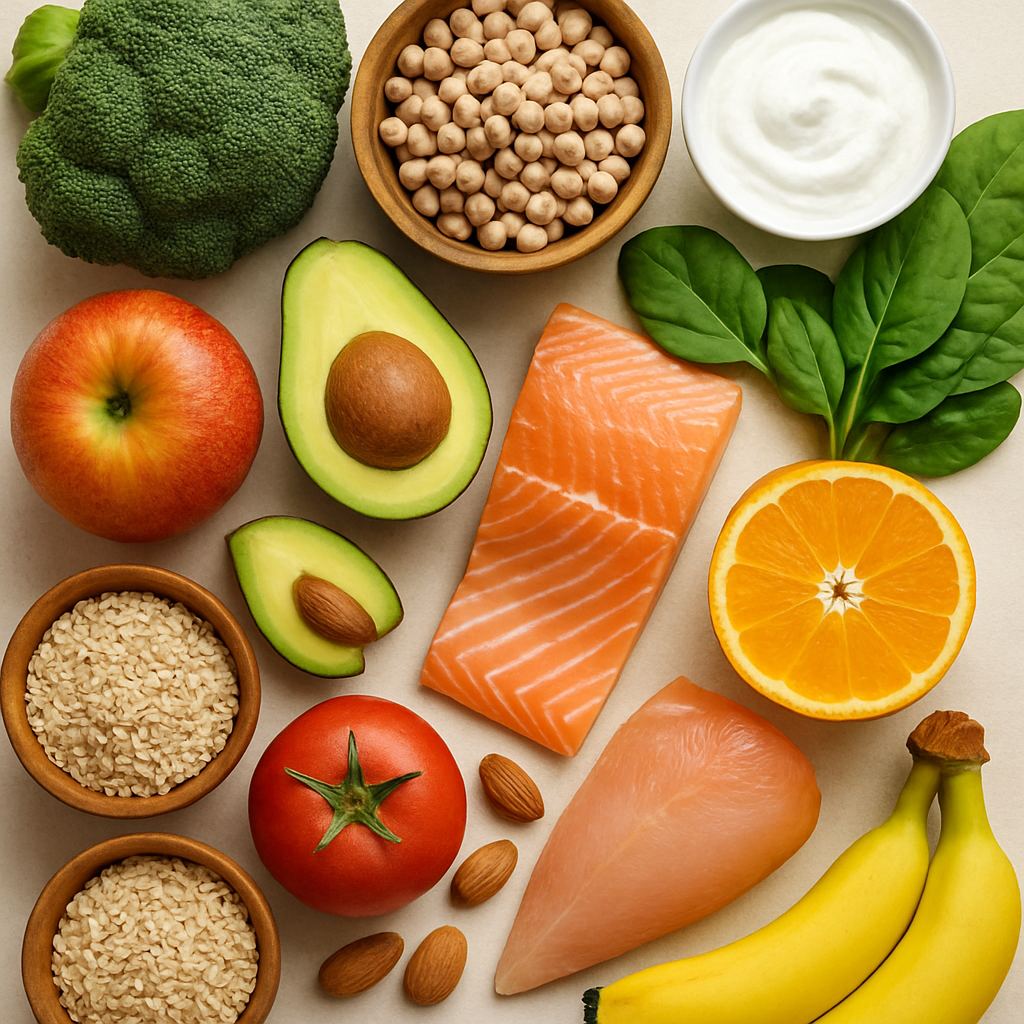
Think nutrient density, not volume. If appetite is smaller, focus on foods that deliver a lot nutritionally per bite: oily fish, eggs, nuts, seeds, legumes, leafy greens. These aren't exotic choices — they're practical ones.
Don't ignore the social side. Eating with others, even occasionally, has a measurable impact on dietary intake and enjoyment. Community lunch clubs, shared meals with family, or simply making mealtimes a moment to sit down and be present can all make a difference.
Talk to a GP if appetite has significantly changed. Unexplained changes in appetite or unintentional weight loss in older adults warrant a conversation with a healthcare professional — these aren't things to just accept as inevitable.
If you want help building nutritionally balanced meals that take age-specific needs into account, Macrology generates macro-perfect meal plans in seconds — https://macrology.app/signin
The UK's population is ageing faster than its dietary guidance has historically moved. That gap is closing, but slowly. In the meantime, the evidence is clear enough to act on — and the stakes for getting this right are high.
Want meals like this planned to your exact macros?
Macrology generates a personalised meal plan in seconds — breakfast, lunch, dinner and snacks, all hitting your daily targets.
Start your free 14-day trialMore from news
New Research: What UK Studies Reveal About the Link Between Food Delivery App Usage and Dietary Quality
7 min readNew Research: What UK Studies Reveal About the Link Between Food Environment at Home and Children's Eating Habits
7 min readNew Research: What UK Studies Reveal About the Link Between Cooking Frequency at Home and Overall Diet Quality
7 min read