Sweet Potato and Black Bean Quesadillas with Smoky Soured Cream
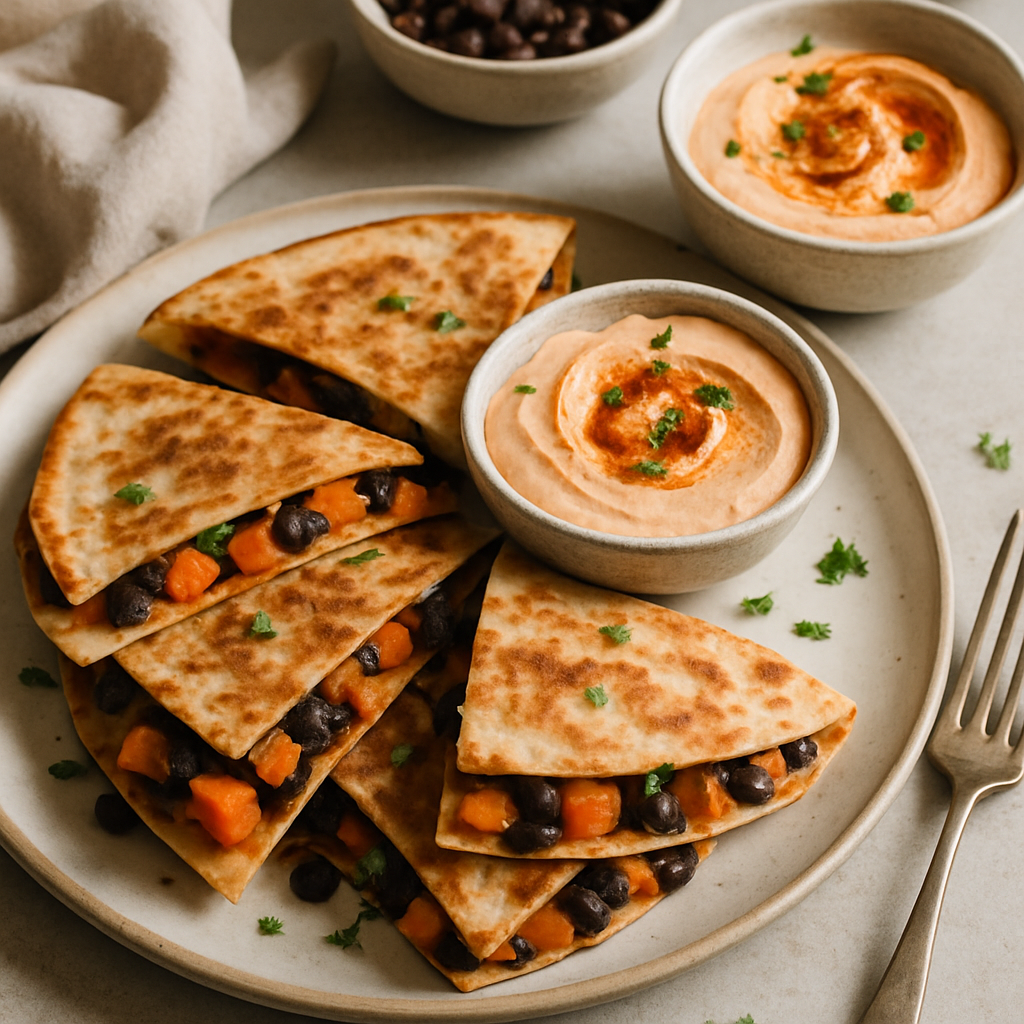
# Sweet Potato and Black Bean Quesadillas with Smoky Soured Cream
There's something deeply satisfying about a quesadilla — that crispy, golden exterior giving way to something warm and melty inside. This version swaps the usual cheese-heavy filling for roasted sweet potato and black beans, delivering serious flavour alongside a genuinely impressive macro profile.
Why This Combination Works
Sweet potato and black bean is one of those pairings that feels almost too obvious once you've tried it. The natural sweetness of the potato balances the earthy depth of the beans, while the smoky soured cream ties everything together with a cool, tangy contrast.
Beyond taste, this combination does some heavy nutritional lifting. Black beans are one of the better plant-based protein sources available, and when combined with the complex carbohydrates from sweet potato, you get a filling that sustains energy rather than spiking and crashing it.
The quesadilla format also makes this genuinely weeknight-friendly. You're looking at around 30 minutes from start to plate, with minimal washing up and ingredients most people already have in the cupboard.
The Ingredients
For the quesadillas (serves 2):
- 1 medium sweet potato (roughly 300g), peeled and diced into 1cm cubes
- 1 x 400g tin of black beans, drained and rinsed
- 4 medium flour tortillas
- 100g mature cheddar, grated
- 1 small red onion, finely diced
- 1 tsp smoked paprika
- ½ tsp cumin
- ½ tsp garlic powder
- 1 tbsp olive oil
- Salt and black pepper to taste
- Small handful of fresh coriander (optional)
For the smoky soured cream:
- 150g full-fat soured cream
- ½ tsp smoked paprika
- ½ tsp chipotle paste (or a pinch of cayenne if you don't have it)
- Squeeze of lime juice
- Pinch of salt
How to Make Them
Step 1: Roast the sweet potato
Preheat your oven to 200°C (180°C fan). Toss the diced sweet potato with the olive oil, smoked paprika, cumin, garlic powder, salt, and pepper. Spread onto a baking tray in a single layer and roast for 20–25 minutes until tender and slightly caramelised at the edges. Don't crowd the tray — you want roasting, not steaming.
Step 2: Make the smoky soured cream
While the potato roasts, stir together the soured cream, smoked paprika, chipotle paste, lime juice, and salt. Taste and adjust — it should be tangy, smoky, and just a little bit spicy. Pop it in the fridge until you're ready to serve.
Step 3: Build the filling
Once the sweet potato is done, tip it into a bowl with the drained black beans and diced red onion. Give everything a gentle mix so the beans warm slightly from the residual heat of the potato. If you're using coriander, stir it in now.
Step 4: Assemble and cook
Heat a large non-stick frying pan over a medium heat — no oil needed. Lay one tortilla flat, scatter half the grated cheese across one half, then spoon half the sweet potato and bean mixture on top. Fold the tortilla over to close, then press gently with a spatula.
Cook for 2–3 minutes per side until golden and crispy, with the cheese fully melted. Repeat with the second quesadilla. Slice into wedges and serve immediately with the smoky soured cream on the side.
What Makes This Work Nutritionally
The macro balance here is genuinely solid, particularly for a plant-forward meal.
Protein comes primarily from the black beans and cheddar. A 400g tin of black beans delivers roughly 24g of protein across the whole dish, and 100g of mature cheddar adds another 25g. That gives you a combined protein base of close to 50g across two servings — around 25g per portion — without any meat involved.
Carbohydrates are mainly from the sweet potato and tortillas, but these are largely complex carbs that digest more slowly and help maintain satiety. Sweet potato also provides a meaningful amount of fibre, potassium, and beta-carotene (a precursor to vitamin A).
Fat comes from the cheese and soured cream, which contributes to both flavour and fullness. Using full-fat soured cream here isn't arbitrary — it tends to be more satisfying in smaller quantities and doesn't split or turn watery during serving.
One thing worth noting: black beans are a particularly useful legume because they combine protein with a high fibre content (around 15g per tin), which supports gut health and helps regulate blood sugar response. That matters when you're eating something that also contains refined carbohydrates from the tortillas.
What the Evidence Shows
Plant-based meals built around legumes have a strong evidence base behind them. A 2019 review published in Nutrients found that regular legume consumption was associated with improved satiety, better glycaemic control, and reduced risk of cardiovascular disease — with black beans specifically noted for their high polyphenol content.
Sweet potato also holds up well under scrutiny. Despite its sweetness, it has a moderate glycaemic index (around 44–61 depending on cooking method), which is lower than white potato prepared the same way. The fibre content slows glucose absorption, making it a more measured energy source than it might appear.
The combination of fibre, protein, and fat in this meal also supports what researchers sometimes call "dietary satisfaction" — the idea that meals which hit multiple satiety signals tend to reduce overall energy intake later in the day, not through restriction, but simply because you're genuinely full.
Common Mistakes to Avoid
Skipping the roast on the sweet potato. You could microwave it or boil it, but you'd lose the caramelisation that gives the filling its depth. That slightly charred edge is doing a lot of flavour work.
Overloading the tortilla. It's tempting to pile it in, but too much filling means you lose the crispy-to-filling ratio that makes a quesadilla satisfying. A generous but measured layer is what you're after.
Cooking on too high a heat. The cheese needs time to melt properly before the outside burns. Medium heat, not high, is the move here — patience pays off.
Serving the soured cream straight from the fridge. A few minutes at room temperature takes the chill off and makes the flavour more pronounced. Small detail, noticeable difference.
Practical Takeaways
- Batch the filling. The sweet potato and black bean mixture keeps well in the fridge for up to three days, making it easy to throw together quesadillas on subsequent nights with almost no effort.
- Adjust the heat level by increasing the chipotle paste in the soured cream, or adding fresh chilli to the filling. The base recipe is mild enough for most people, including kids.
- Swap the cheddar for a smoked variety if you want to double down on the smoky flavour throughout, or use a vegan alternative to make the dish fully plant-based.
- Add a side salad of shredded cabbage, lime juice, and a little olive oil if you want to increase the volume of the meal without significantly changing the macros.
- Per serving (approximate): ~550–600 calories, ~26g protein, ~65g carbohydrates, ~22g fat — though this will shift depending on tortilla size and how generous you are with the cheese.
---
If you want a week's worth of meals that hit your macros as reliably as this one, Macrology generates macro-perfect meal plans in seconds — https://macrology.app/signin
---
Macrology Tip
This recipe fits neatly into a higher-carb, moderate-protein day, making it a great option around training or on days when you need sustained energy. Pop the ingredients into Macrology and it'll show you exactly how this meal fits into your daily targets — and suggest complementary meals to balance the rest of your day.
Want meals like this planned to your exact macros?
Macrology generates a personalised meal plan in seconds — breakfast, lunch, dinner and snacks, all hitting your daily targets.
Start your free 14-day trial