Sticky Tamarind Aubergine with Coconut Rice and Toasted Cashews
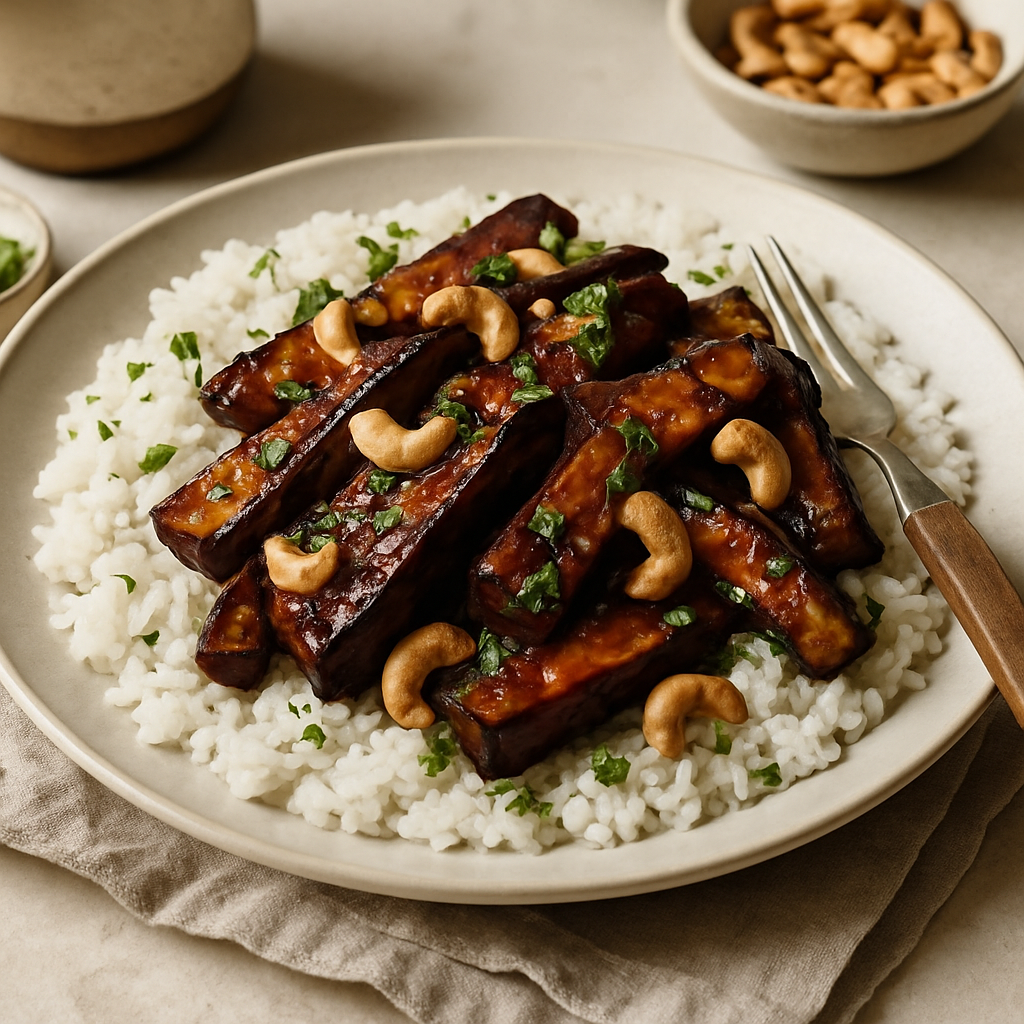
# Sticky Tamarind Aubergine with Coconut Rice and Toasted Cashews
There's a particular kind of satisfaction that comes from a dish that looks like it took hours but actually didn't. This one — glossy, deeply savoury, with that signature tamarind tang — is exactly that kind of recipe.
Aubergine has a knack for absorbing bold flavours, and when you pair it with a sticky tamarind glaze, creamy coconut rice, and the crunch of toasted cashews, the result is genuinely restaurant-worthy. Whether you're cooking for one or feeding a crowd, this is a keeper.
---
What is tamarind, and why does it work so well here?
Tamarind is a fruit native to tropical Africa and widely used across South and Southeast Asian cuisines, as well as in the Caribbean and Latin America. It has a deep, sour-sweet flavour that's hard to replicate — it's sharper than lemon juice, more complex than vinegar, and carries a subtle fruity richness underneath.
In cooking, tamarind acts as a natural tenderiser and flavour amplifier. When it's reduced with something sweet (like brown sugar or coconut sugar) and something salty (like soy sauce or tamari), it becomes a glaze with remarkable depth. It clings beautifully to aubergine because the flesh, once roasted or fried, becomes porous and spongy — almost designed to soak up a sticky sauce.
You'll find tamarind in most large supermarkets as a paste or concentrate, or in block form at Asian and South Asian grocery shops. The block form is stronger and more fragrant; if you're using it, dissolve a small amount in warm water and pass it through a sieve to remove the fibrous bits.
---
Why aubergine deserves more of your attention
Aubergine (or eggplant, if you're reading from across the pond) is one of those vegetables that divides people — usually because it's been cooked badly. Undercooked aubergine is spongy and slightly bitter. Properly cooked aubergine is silky, rich, and almost meaty in texture.
The key is heat and patience. Aubergine needs to cook long enough for the moisture to evaporate and the flesh to collapse and caramelise. Roasting at a high temperature or cooking in a hot pan with a generous amount of oil will get you there. Don't rush it, and don't skimp on the oil — aubergine absorbs fat like a sponge initially, but releases much of it as it cooks down.
From a nutritional standpoint, aubergine is low in calories but surprisingly useful. It contains nasunin, an anthocyanin found in the skin that has antioxidant properties, and it provides modest amounts of fibre, potassium, and folate. It's not a nutritional powerhouse on its own, but paired with coconut rice and cashews, this dish covers a lot of ground.
---
What the evidence shows: the nutritional case for this dish
This recipe is a genuinely well-rounded meal when you look at its components together.
Aubergine contributes fibre and antioxidants. Coconut rice provides readily available carbohydrate energy, and if you use a mix of white and brown rice (or just brown), you increase the fibre content meaningfully. Cashews are one of the most nutritionally interesting nuts — they're a source of magnesium, zinc, copper, and heart-healthy monounsaturated fats. A 30g portion provides around 5g of protein and nearly 15% of your daily magnesium needs.
Tamarind itself has been studied for various properties. Research published in the Journal of Ethnopharmacology has highlighted its traditional use in managing blood sugar, and some studies suggest the seed extract may have anti-inflammatory properties — though most of this research is preliminary and the amounts used in cooking are small.
The coconut milk in the rice adds saturated fat, which is worth knowing about if you're monitoring your intake. However, the type of saturated fat in coconut — largely medium-chain triglycerides (MCTs) — is metabolised differently to the long-chain saturated fats in animal products. The evidence here is nuanced and evolving; using coconut milk occasionally in an otherwise varied diet is unlikely to be a concern for most people.
Overall, this dish sits comfortably in the range of 650–750 kcal per serving, with a reasonable balance of carbohydrates, fats, and plant-based protein.
---
The recipe
Serves: 2 Prep time: 15 minutes Cook time: 35–40 minutes
### Ingredients
For the aubergine: - 2 medium aubergines, cut into thick wedges or large chunks - 3 tbsp neutral oil (sunflower or vegetable) - 2 tbsp tamarind paste - 1 tbsp soy sauce or tamari - 1 tbsp brown sugar or coconut sugar - 1 tsp sesame oil - 1 tsp garlic paste or 2 cloves garlic, finely grated - ½ tsp ground ginger - ½ tsp chilli flakes (optional)
For the coconut rice: - 160g jasmine rice, rinsed well - 200ml coconut milk (roughly half a standard tin) - 150ml water - Pinch of salt
To finish: - 50g cashews, roughly chopped - 2 spring onions, finely sliced - Small handful of fresh coriander - Lime wedges, to serve - Sesame seeds (optional)
### Method
1. Roast the aubergine. Preheat your oven to 220°C / 200°C fan. Toss the aubergine chunks with the neutral oil and a good pinch of salt, then spread across a large baking tray in a single layer. Roast for 20–25 minutes, turning once halfway, until golden and tender.
2. Make the glaze. While the aubergine roasts, whisk together the tamarind paste, soy sauce, brown sugar, sesame oil, garlic, ground ginger, and chilli flakes if using. Taste it — it should be tangy, salty, and slightly sweet with a gentle heat.
3. Cook the coconut rice. Add the rinsed rice, coconut milk, water, and salt to a saucepan. Bring to a gentle simmer, stir once, then cover with a lid and cook on the lowest heat for 12–15 minutes until the liquid is absorbed. Remove from the heat and leave to steam, covered, for 5 minutes before fluffing with a fork.
4. Toast the cashews. In a dry frying pan over a medium heat, toast the cashews for 2–3 minutes, stirring frequently, until golden. Watch them closely — they go from golden to burnt quickly.
5. Glaze the aubergine. Once the aubergine is roasted, pour the tamarind glaze over it and toss to coat. Return to the oven for 5–8 minutes until the glaze is sticky and slightly caramelised. The edges should look glossy and a little charred — that's exactly what you want.
6. Assemble and serve. Spoon the coconut rice into bowls, pile the sticky aubergine on top, and scatter over the toasted cashews, spring onions, coriander, and sesame seeds. Serve with a wedge of lime.
---
What makes this work nutritionally
This dish is built around complementary macronutrients that make it satisfying without relying on animal protein.
The coconut rice provides the carbohydrate base your body needs for energy, while the fat from the coconut milk slows digestion slightly and adds richness. The cashews bring healthy fats and a meaningful protein contribution — around 8–10g per serving when used at this quantity — as well as the textural contrast that stops the dish from feeling one-dimensional.
Aubergine's high water content means it's filling relative to its calorie load, and the fibre across the dish (from the aubergine, cashews, and rice if you use brown) supports satiety and digestive health.
The tamarind glaze does more than flavour work — its acidity helps to balance the richness of the coconut rice, which means the dish doesn't feel heavy despite the fat content. This is the kind of flavour pairing that professional chefs use instinctively: fat needs acid to keep it lively.
---
Practical tips and easy swaps
Make it higher protein: Add a tin of chickpeas, drained and patted dry, to the roasting tray alongside the aubergine. They'll crisp up nicely and add another 10–12g of protein per serving.
Make it lower fat: Use light coconut milk in the rice and reduce the oil on the aubergine slightly. The glaze will still work well, though you may need to add a splash of water to prevent catching.
Batch cook it: The coconut rice keeps well in the fridge for up to three days. The glazed aubergine is best fresh but reheats reasonably well in a hot oven or air fryer — avoid the microwave if you can, as it softens the caramelised edges.
No tamarind? A mix of lime juice and a small amount of Worcestershire sauce gets you surprisingly close in a pinch. It won't be identical, but it'll still make a good glaze.
---
> Macrology tip: If you want to hit your macro targets without the mental load of calculating everything yourself, Macrology generates macro-perfect meal plans in seconds — [https://macrology.app/signin](https://macrology.app/signin)
Want meals like this planned to your exact macros?
Macrology generates a personalised meal plan in seconds — breakfast, lunch, dinner and snacks, all hitting your daily targets.
Start your free 14-day trial