Sticky Miso Salmon Noodle Bowl with Pak Choi and Sesame Dressing
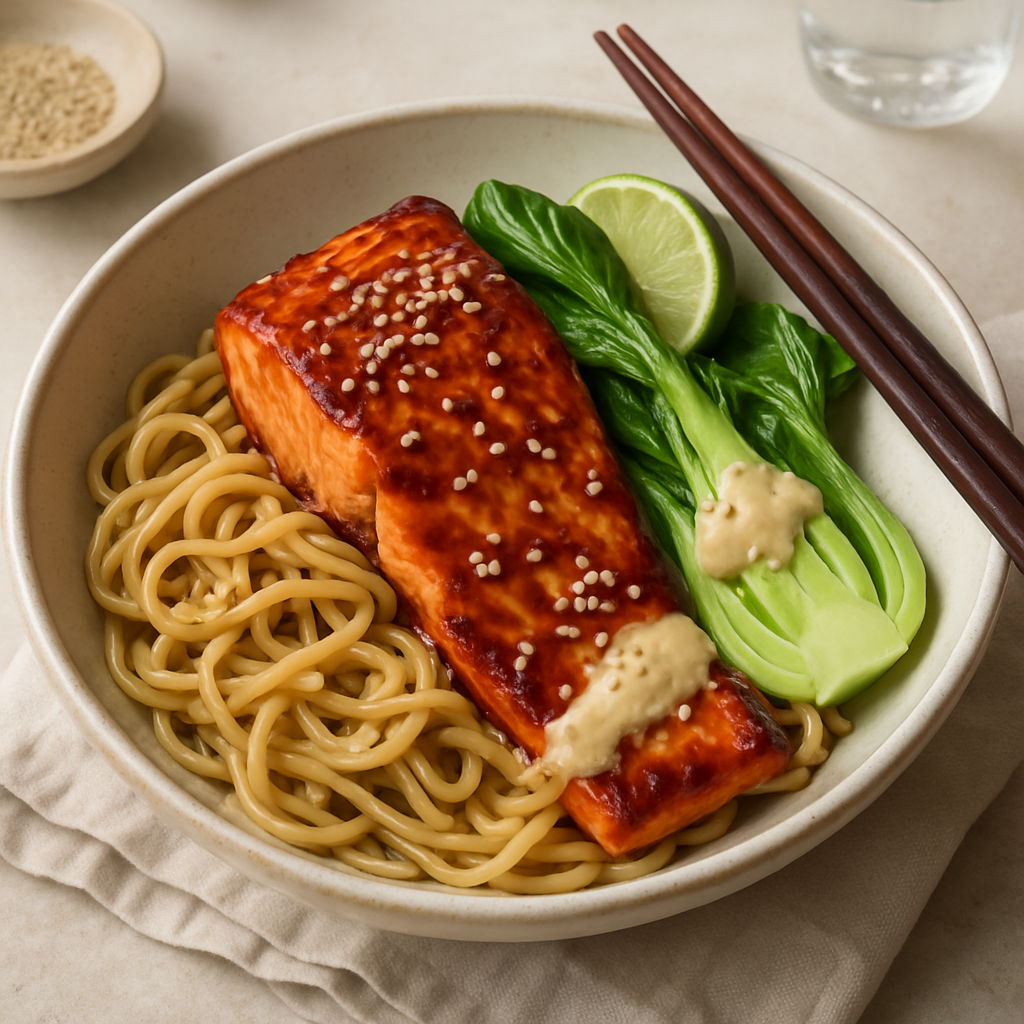
# Sticky Miso Salmon Noodle Bowl with Pak Choi and Sesame Dressing
There's something deeply satisfying about a bowl of food that manages to be both weeknight-quick and genuinely impressive. This sticky miso salmon noodle bowl is exactly that — rich, savoury, a little sweet, and loaded with enough protein and micronutrients to keep you fuelled for hours.
What Makes This Bowl Special
The magic here comes from the miso glaze. White miso (shiro miso) is the mildest variety — fermented, slightly sweet, and intensely umami without being overpowering. When it hits a hot pan with a touch of honey and soy sauce, it caramelises beautifully around the salmon, creating that sticky, lacquered finish that makes every bite feel considered.
Pak choi brings a tender crunch and a mild, slightly peppery flavour that balances the richness of the fish. The sesame dressing ties everything together — nutty, tangy, and just salty enough to make the noodles genuinely exciting rather than an afterthought.
This isn't a fussy recipe. You'll have it on the table in around 25 minutes.
Ingredients (Serves 2)
For the salmon:
- 2 salmon fillets (around 150g each), skin on or off
- 1 tbsp white miso paste
- 1 tbsp low-sodium soy sauce
- 1 tsp honey
- 1 tsp sesame oil
- 1 tsp rice wine vinegar
For the noodles and pak choi:
- 150g soba noodles (or wholewheat noodles)
- 2 heads of pak choi, halved lengthways
- 1 tbsp neutral oil (e.g. rapeseed or sunflower)
- 1 clove garlic, finely grated
- 1 tsp fresh ginger, finely grated
For the sesame dressing:
- 2 tbsp tahini
- 1 tbsp low-sodium soy sauce
- 1 tbsp rice wine vinegar
- 1 tsp sesame oil
- 1 tsp honey
- 2–3 tbsp warm water (to loosen)
To serve:
- 1 tbsp sesame seeds (toasted)
- 2 spring onions, finely sliced
- Optional: sliced red chilli, fresh coriander, lime wedge
Method
Step 1 — Make the miso glaze and marinate the salmon
Mix the miso, soy sauce, honey, sesame oil, and rice wine vinegar together in a small bowl until smooth. Coat the salmon fillets generously and leave to marinate for at least 10 minutes (longer if you have time — up to an hour in the fridge works well).
Step 2 — Make the sesame dressing
Whisk the tahini, soy sauce, rice wine vinegar, sesame oil, and honey together. Add warm water a tablespoon at a time until you reach a pourable, coating consistency. Taste and adjust — a little more vinegar if you want more tang, a touch more honey for sweetness. Set aside.
Step 3 — Cook the noodles
Cook the soba noodles according to the packet instructions. Drain and rinse under cold water to prevent sticking, then toss with a small drizzle of sesame oil to keep them loose.
Step 4 — Cook the pak choi
Heat the neutral oil in a large frying pan or wok over a high heat. Add the pak choi cut-side down and cook for 2–3 minutes until lightly charred. Flip, add the garlic and ginger, and cook for another minute. Remove from the pan and set aside.
Step 5 — Cook the salmon
In the same pan (no need to wash it), add a small splash of oil over a medium-high heat. Place the salmon fillets in the pan and cook for 3–4 minutes per side depending on thickness. The miso glaze will caramelise quickly — watch it carefully to avoid burning. You're looking for a deep, sticky coating with the salmon just cooked through. A slight pink centre is completely fine.
Step 6 — Assemble
Divide the noodles between two bowls. Add the pak choi, then top with the salmon. Drizzle generously with the sesame dressing. Scatter over the spring onions, sesame seeds, and any optional toppings.
What Makes This Work Nutritionally
This bowl is a genuinely well-rounded meal, and it's worth understanding why rather than just taking that on faith.
Salmon is one of the best dietary sources of omega-3 fatty acids, specifically EPA and DHA — the long-chain forms that the body can use directly. Unlike the ALA found in flaxseeds or walnuts, EPA and DHA don't need to be converted, which means you get more of the benefit. A single 150g fillet provides well over the recommended weekly intake of oily fish set out by the NHS.
Miso is a fermented food, meaning it contains live cultures that may support gut health. The research is still developing in this area, but fermented foods are increasingly recognised as a useful part of a varied diet. It's also worth noting that white miso is relatively lower in sodium compared to darker varieties, which matters if you're keeping an eye on salt intake.
Soba noodles made from buckwheat have a lower glycaemic index than standard white wheat noodles, meaning they digest more slowly and provide a steadier release of energy. They're also a source of manganese and magnesium. If you can't find soba, wholewheat noodles are a solid alternative.
Pak choi is a cruciferous vegetable, related to broccoli and cabbage. It's rich in vitamin C, vitamin K, folate, and several antioxidant compounds. It's also one of the more calcium-dense vegetables — useful if you're not eating much dairy.
Tahini (sesame paste) adds healthy unsaturated fats, a small hit of plant protein, and calcium. It's also what gives the dressing that rich, creamy body without needing anything heavier.
Together, this bowl delivers a strong protein hit (roughly 40–45g per serving), a good balance of complex carbohydrates, healthy fats, and a wide spread of micronutrients — without needing to think too hard about it.
Common Mistakes (and How to Avoid Them)
Burning the miso glaze is the most common pitfall. Miso contains natural sugars that caramelise fast — keep the heat at medium-high rather than full blast, and don't walk away from the pan. If it starts catching, lower the heat immediately.
Overcooking the salmon is easy to do, especially with skin-off fillets. Salmon at 3–4 minutes per side (depending on thickness) should be just cooked through with a slightly softer centre. It will continue to cook a little after you take it off the heat, so pulling it slightly early is almost always the right call.
Skipping the rinse on the noodles — soba especially — will leave you with a gluey clump. Rinse under cold water straight after draining and toss with a tiny bit of oil. It makes a genuine difference to the final texture.
Variations Worth Trying
This recipe is versatile in a way that's actually useful rather than vague.
Swap the salmon for tofu — firm tofu, pressed and cut into thick slabs, takes the miso glaze brilliantly and works just as well in the pan. It's a natural plant-based version rather than a compromise.
Use rice noodles if you're avoiding gluten — the sesame dressing and pak choi work with just about any noodle base.
Add edamame for an extra protein boost and a pop of colour. Frozen edamame, briefly blanched, takes no effort and rounds the bowl out further.
Switch white miso for red miso if you want a deeper, more intense flavour — just be aware that red miso is more pungent and saltier, so you may want to reduce the quantity slightly.
Practical Takeaways
- Marinate the salmon for at least 10 minutes — even a short rest makes a noticeable difference to the flavour
- Make the sesame dressing in a small jar; it keeps in the fridge for up to five days and works on salads, grain bowls, and steamed veg
- If you're meal prepping, keep the components separate — noodles, pak choi, dressing, and salmon stored individually reheat far better than a pre-assembled bowl
- Toast your sesame seeds in a dry pan for 2–3 minutes — it takes seconds and makes them noticeably more fragrant
- One salmon fillet per person is the right portion for a satisfying, macro-balanced meal — this isn't a recipe that needs scaling up to feel filling
If you want macro-perfect meal plans built around recipes like this one, Macrology generates them in seconds — [https://macrology.app/signin](https://macrology.app/signin)
---
> Macrology tip: Log this meal in Macrology to see exactly how it fits your daily protein, fat, and carb targets — and let the app suggest complementary meals for the rest of the day based on what you've already eaten.
Want meals like this planned to your exact macros?
Macrology generates a personalised meal plan in seconds — breakfast, lunch, dinner and snacks, all hitting your daily targets.
Start your free 14-day trial