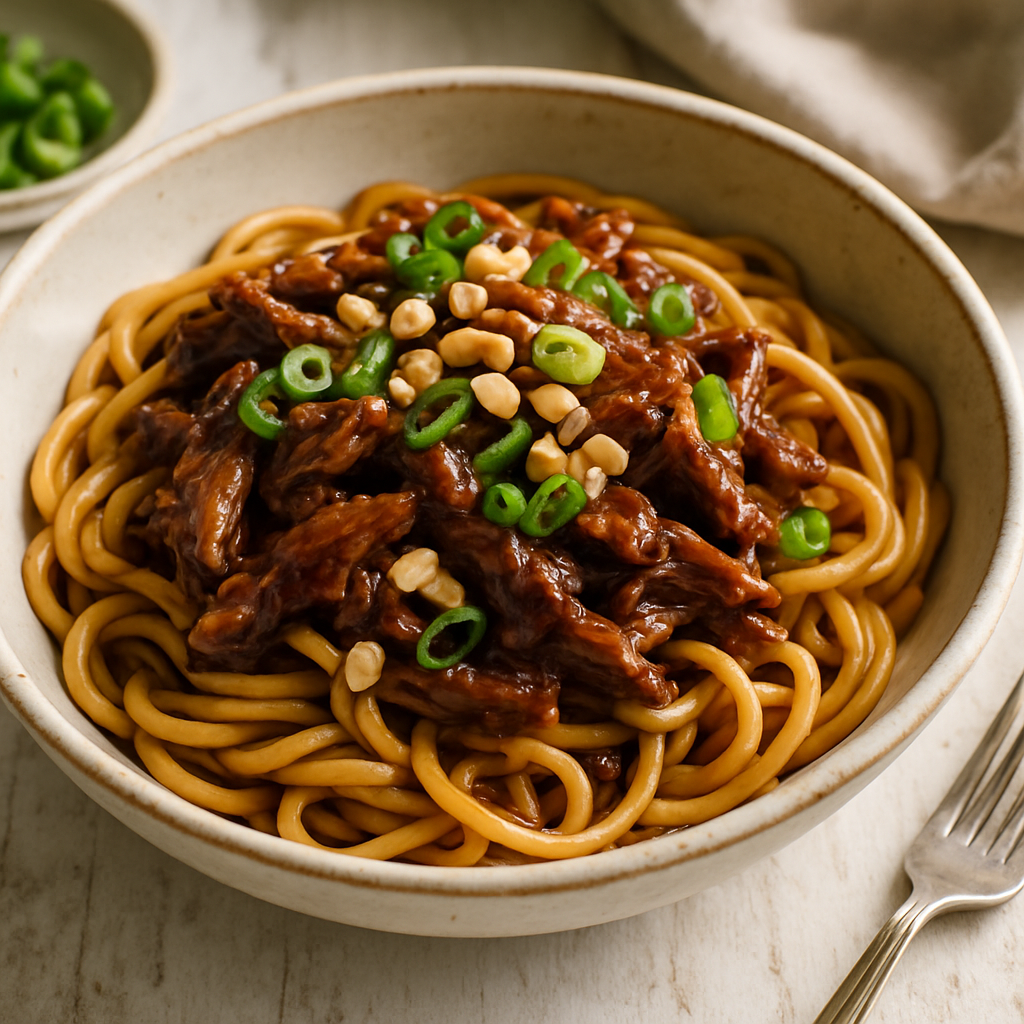
Sticky Hoisin Duck Noodles with Spring Onions and Toasted Peanuts
# Sticky Hoisin Duck Noodles with Spring Onions and Toasted Peanuts
There's a particular kind of weeknight dinner that manages to feel indulgent and effortless at the same time — and this is one of them. Sticky, glossy hoisin duck tossed through slippery noodles, topped with crisp spring onions and toasted peanuts that add just the right amount of crunch. It's the sort of meal that disappears fast.
Why This Recipe Works
Duck has a reputation for being faffy — the kind of thing you'd only attempt on a Sunday with nowhere to be. But this recipe strips that idea back completely.
Using duck legs (or ready-cooked duck from the supermarket, which is genuinely excellent here) means most of the heavy lifting is done for you. The hoisin sauce does the flavour work: deep, savoury, and just sweet enough to caramelise beautifully in a hot pan.
The noodles bring it all together — absorbing the sauce, catching the rendered duck fat, becoming something far greater than the sum of their parts.
Ingredients (Serves 2)
- 2 confit duck legs (shop-bought is absolutely fine)
- 150g medium egg noodles or wholewheat noodles
- 3 tbsp hoisin sauce
- 1 tbsp low-sodium soy sauce
- 1 tsp sesame oil
- 1 tsp rice vinegar
- 1 tsp fresh ginger, finely grated
- 2 garlic cloves, minced
- 4 spring onions, sliced (whites and greens separated)
- 30g unsalted peanuts, roughly chopped
- 1 tsp vegetable oil
- Small handful of fresh coriander (optional)
- 1 red chilli, sliced, to serve (optional)
The Method
Step 1 — Get the duck crispy. Place your duck legs skin-side down in a cold, dry frying pan, then turn the heat to medium-high. As the pan heats, the fat renders out naturally. Cook for 6–8 minutes until the skin is deeply golden and lacquered. Flip and cook for a further 3–4 minutes. Remove, shred the meat using two forks, and discard most of the skin if you prefer — though a little crispy skin stirred through never hurt anyone.
Step 2 — Make the sauce. Combine the hoisin sauce, soy sauce, sesame oil, rice vinegar, and grated ginger in a small bowl. Give it a stir and set aside. This takes about 90 seconds and makes everything come together quickly at the end.
Step 3 — Cook the noodles. Cook the noodles according to the packet instructions, then drain and toss with a tiny splash of sesame oil to stop them clumping. Keep them warm.
Step 4 — Build the dish. In the same pan you used for the duck (don't wash it — that residual fat is flavour), add a small splash of vegetable oil if needed and fry the garlic and spring onion whites over medium heat for 1–2 minutes. Add the shredded duck back in along with the sauce, stirring everything together for 2 minutes until hot, glossy, and sticky.
Step 5 — Toss and top. Add the drained noodles to the pan and toss well so everything is coated. Divide between two bowls and scatter over the spring onion greens, toasted peanuts, coriander, and chilli if using.
To toast the peanuts: Simply add them to a dry pan over medium heat for 2–3 minutes, tossing often, until golden and fragrant. Don't walk away — they catch quickly.
What Makes This Work Nutritionally
Duck is often overlooked as a protein source, but it's a genuinely strong one. A typical duck leg provides around 25–28g of protein, along with iron, zinc, and B vitamins — particularly B12, which supports energy metabolism and is harder to get from plant sources.
Yes, duck is higher in fat than chicken breast — but the fat profile is more nuanced than most people realise. Duck fat contains a significant proportion of monounsaturated and oleic fatty acids, the same type found in olive oil, which have been associated with cardiovascular health in observational research.
The peanuts add a further hit of protein and healthy fats, plus magnesium and vitamin E. Spring onions bring prebiotic fibre that feeds beneficial gut bacteria. And the noodles provide the carbohydrate your body needs to fuel muscle recovery and keep energy stable through the evening.
Altogether, this dish lands at approximately 550–620 kcal per serving, with a strong protein contribution of around 38–42g, depending on your noodle choice and how much duck you use.
What the Evidence Shows
The protein-first approach this dish delivers isn't just a macro-tracking talking point — there's robust evidence behind it.
Research published in the American Journal of Clinical Nutrition consistently shows that higher protein intakes support muscle protein synthesis, satiety, and body composition over time. The general recommendation for active adults looking to maintain or build muscle sits at around 1.6–2.2g of protein per kilogram of body weight per day — and a meal like this makes a meaningful dent in that target without requiring any particular effort.
The hoisin sauce deserves a brief mention here too. It's higher in sodium and sugar than, say, a simple olive oil dressing — but in the context of a balanced meal, that's not a concern. Dietary patterns matter far more than individual ingredients, and a sauce that makes you actually want to cook at home is doing useful work.
One common misconception worth addressing: the idea that eating fat makes you fat is firmly outdated nutrition science. Fat is calorically dense, yes, but the fats in this dish — from duck, sesame oil, and peanuts — are predominantly unsaturated and contribute to satiety, hormone production, and the absorption of fat-soluble vitamins.
Variations and Swaps
No duck? Shredded leftover roast chicken works brilliantly here. So does firm tofu, pressed and pan-fried until crispy before being tossed in the sauce. The hoisin does a lot of the heavy lifting regardless of the protein you choose.
Noodle choices matter. Wholewheat noodles will give you more fibre and a slightly lower glycaemic response. Rice noodles make this gluten-free. Egg noodles are the most traditional here and pick up the sauce beautifully.
Want more vegetables? A handful of shredded Tenderstem broccoli, pak choi, or sugar snap peas stirred in during step 4 adds colour, fibre, and crunch without complicating anything.
Lower sodium version: Use reduced-salt soy sauce and a hoisin with less added sugar — most major supermarkets stock both.
Practical Takeaways
- Buy confit duck legs from the supermarket. Most major UK supermarkets stock them. They're already cooked and seasoned — you're simply crisping the skin and shredding the meat. This halves the actual cooking time.
- Prep the sauce ahead. The hoisin mixture takes under two minutes to make and keeps in the fridge for several days. Having it ready means this whole dish comes together in about 15 minutes.
- Separate your spring onion whites and greens. The whites go in early with the garlic to cook down; the greens go on at the end for freshness. It's a small move that makes a noticeable difference.
- Don't skip the peanuts. Toasting them takes three minutes and completely transforms their flavour. They add textural contrast that stops the dish from feeling one-note.
- Batch the duck. If you're cooking duck legs anyway, do an extra one. The shredded meat keeps in the fridge for three days and works well in a quick lunch bowl or a wrap the next day.
---
If you want to hit your macro targets without spending hours planning, Macrology generates macro-perfect meal plans in seconds — [https://macrology.app/signin](https://macrology.app/signin)
> Macrology tip: Recipes like this one are easy to adjust for your specific calorie and protein targets. Log it in Macrology and let the app scale the portions to fit your day — no manual maths required.
Want meals like this planned to your exact macros?
Macrology generates a personalised meal plan in seconds — breakfast, lunch, dinner and snacks, all hitting your daily targets.
Start your free 14-day trial