Spiced Lamb Meatballs with Roasted Tomato Sauce and Orzo
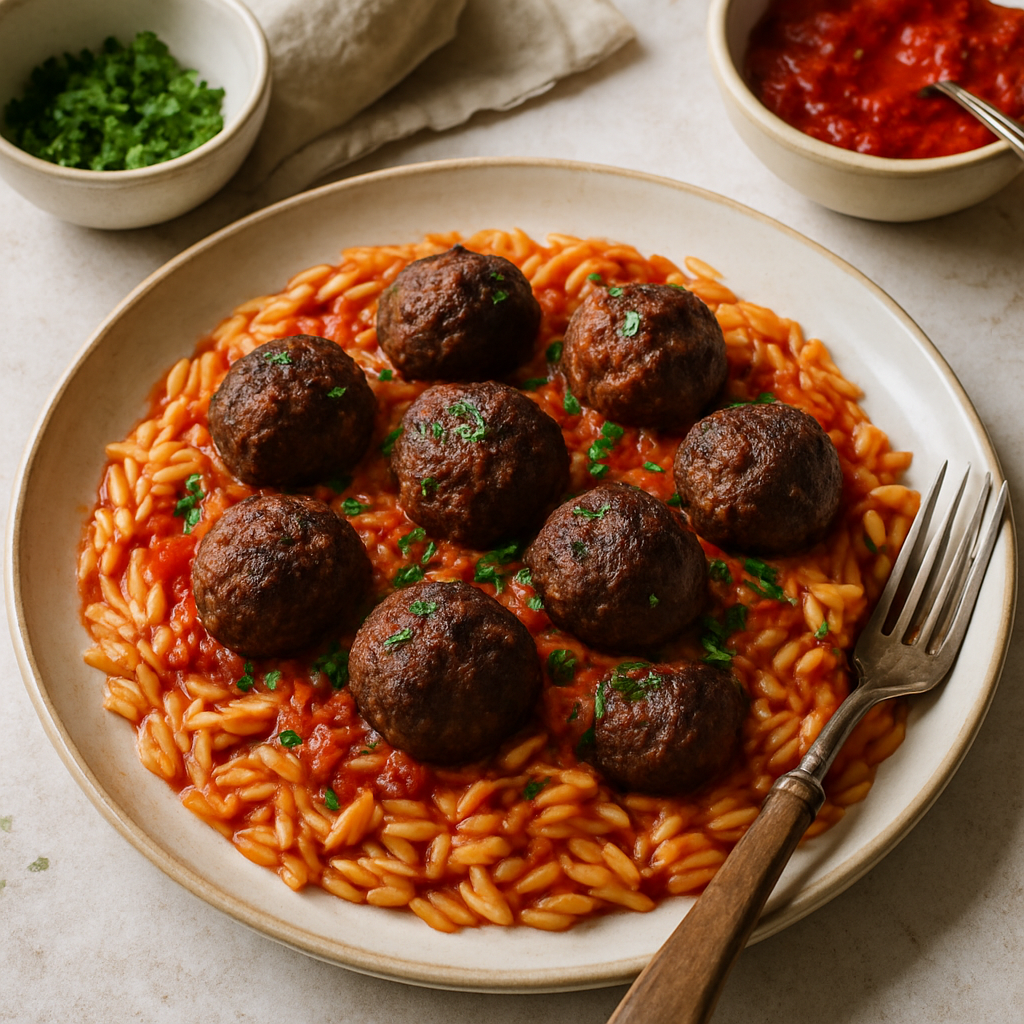
# Spiced Lamb Meatballs with Roasted Tomato Sauce and Orzo
There's something about a bowl of meatballs in rich tomato sauce that feels deeply satisfying — the kind of meal that earns its place on a regular weeknight rotation without feeling repetitive. This version uses lamb rather than the usual beef or pork, and that one swap changes everything.
---
Why Lamb Works So Well Here
Lamb has a natural richness and depth of flavour that stands up brilliantly to bold spicing. Where beef meatballs can taste flat without a lot of coaxing, lamb brings its own character to the dish — a slightly mineral, savoury quality that pairs beautifully with warm spices like cumin, coriander, and cinnamon.
It's also a meat with a long culinary history across the Middle East and Mediterranean, where these spice combinations have been refined over centuries. This recipe draws on that tradition without pretending to replicate any one dish. Think of it as inspired by those flavours rather than beholden to them.
One practical note: lamb mince is widely available in UK supermarkets, often at a similar price to quality beef mince. A 20% fat content works best here — the fat keeps the meatballs tender and juicy through the cooking process, so leaner versions can sometimes turn out dry.
---
The Spice Mix That Makes It
The spicing in this recipe does the heavy lifting. You don't need anything exotic — every ingredient on this list is available from a standard supermarket spice aisle.
The blend is built around cumin and coriander as the base, with smoked paprika for depth and a small amount of cinnamon for warmth. A pinch of dried chilli flakes adds background heat without making the dish spicy. Dried mint is the secret weapon — it's used widely in lamb dishes across Turkish and Lebanese cooking and brings a freshness that cuts through the richness of the meat.
Mix these through the mince along with a grated onion, a clove of garlic, and a handful of fresh parsley. The grated onion (rather than chopped) disperses moisture and flavour evenly through the mix without leaving chunks that could cause the meatballs to fall apart.
---
Roasting the Tomatoes: Worth the Extra Step
The sauce here isn't a quick tin-of-tomatoes job, though you could absolutely do that if time is short. Instead, roasting the tomatoes first concentrates their sweetness and adds a gentle caramelised depth that you simply can't get from a saucepan.
Use a mix of cherry tomatoes and a couple of larger vine tomatoes if you can. Halve them, toss with olive oil, a pinch of sugar, salt, and a few unpeeled garlic cloves, then roast at 200°C for around 25–30 minutes until the edges are starting to catch.
Blend the roasted tomatoes with the softened garlic (squeezed from their skins), a splash of red wine vinegar, and a little vegetable or chicken stock to loosen. The result is a sauce that tastes like it took far more effort than it did. You can make it ahead and refrigerate it for up to three days, which is useful if you're cooking across the week.
---
Orzo: The Underrated Pasta Choice
Orzo is a small, rice-shaped pasta that's worth keeping in your cupboard at all times. It cooks quickly, absorbs flavour well, and has a satisfying texture that works in everything from soups to baked dishes.
For this recipe, cook the orzo directly in the tomato sauce rather than separately in plain water. Add stock gradually as you would a risotto — not because the technique is complicated, but because it means the orzo absorbs the flavour of the sauce as it cooks rather than just sitting in it. The starch released from the pasta also thickens the sauce slightly, giving it a silkier consistency.
If you'd rather keep things simple, cooking the orzo separately and stirring it through at the end works perfectly well too. The dish is forgiving.
---
What the Evidence Shows
Lamb often gets unfairly positioned as an indulgence or an occasional treat because of its fat content, but the nutritional picture is more nuanced than that.
Lamb is an excellent source of complete protein, meaning it contains all nine essential amino acids your body can't make on its own. A 100g serving of cooked lamb mince provides roughly 25–26g of protein. It's also a rich source of haem iron, the form most readily absorbed by the body — particularly relevant in the UK, where iron deficiency is one of the most common nutritional shortfalls, especially among women of reproductive age.
Lamb also provides meaningful amounts of zinc, vitamin B12, and selenium — nutrients that support immune function, nerve health, and thyroid regulation respectively. The fat in lamb includes a mix of saturated and monounsaturated fats, and current evidence doesn't support the idea that moderate consumption of red meat causes harm in an otherwise balanced diet. The 2023 update to UK dietary guidelines maintains that red meat can be part of a healthy, balanced diet when consumed in reasonable amounts (roughly 70g cooked weight per day on average).
The orzo adds complex carbohydrates for sustained energy, and the tomato sauce — especially after roasting — is a concentrated source of lycopene, an antioxidant associated in research with reduced risk of certain chronic conditions. The bioavailability of lycopene actually increases when tomatoes are cooked and combined with fat, so the olive oil in this recipe genuinely helps.
---
What Makes This Work Nutritionally
Per serving (based on four portions), this dish delivers approximately:
- Protein: 38–42g — primarily from the lamb, with a small contribution from the orzo
- Carbohydrates: 45–50g — mostly from the orzo, providing steady energy
- Fat: 18–22g — from the lamb and olive oil, including monounsaturated fats from the oil
- Fibre: 4–6g — from the tomatoes, onion, garlic, and parsley
It's a genuinely well-rounded meal in a single bowl. If you want to push the protein higher, a small dollop of Greek yoghurt on top adds around 5–6g per tablespoon and works brilliantly with the warm spices.
---
The Full Recipe
Serves: 4 Prep time: 20 minutes Cook time: 40 minutes
For the meatballs: - 500g lamb mince (around 20% fat) - 1 small onion, grated - 2 garlic cloves, minced - 1 tsp ground cumin - 1 tsp ground coriander - ½ tsp smoked paprika - ¼ tsp ground cinnamon - ½ tsp dried mint - Pinch of dried chilli flakes - Small handful of fresh parsley, finely chopped - Salt and black pepper
For the roasted tomato sauce: - 400g cherry tomatoes - 2 vine tomatoes, halved - 4 garlic cloves, unpeeled - 2 tbsp olive oil - 1 tsp sugar - 1 tsp red wine vinegar - 200ml chicken or vegetable stock - Salt and pepper
For the orzo: - 300g orzo - 600–700ml stock (chicken or vegetable) - The finished tomato sauce
Method:
1. Preheat your oven to 200°C (fan 180°C). Spread the tomatoes and unpeeled garlic cloves on a baking tray, drizzle with olive oil, season with salt and the sugar, and roast for 25–30 minutes until softened and beginning to colour.
2. While the tomatoes roast, combine all the meatball ingredients in a bowl. Mix well with your hands — don't overwork it, but make sure everything is evenly distributed. Roll into balls roughly the size of a walnut (you should get around 20). Place on a plate and refrigerate while the tomatoes finish.
3. Once the tomatoes are done, squeeze the garlic from its skins into a blender with the tomatoes and their juices. Add the red wine vinegar and stock. Blend until smooth, then season to taste. Set aside.
4. Heat a splash of oil in a wide, deep frying pan or sauté pan over medium-high heat. Brown the meatballs in batches — you're aiming for colour on the outside, not to cook them through. Set aside.
5. In the same pan, add the orzo and pour over the tomato sauce. Add enough stock to just cover the orzo, then stir to combine. Bring to a gentle simmer and add the meatballs back in. Cook for 12–14 minutes, stirring occasionally and adding a splash more stock if the orzo is catching, until the orzo is tender and the meatballs are cooked through.
6. Finish with a little fresh parsley, a drizzle of olive oil, and crumbled feta if you like.
---
Practical Takeaways
- Make the sauce ahead — it keeps in the fridge for three days and freezes well, so doubling the batch is worth it.
- The meatball mixture can be made the night before — the flavours develop overnight, and it saves time on the day.
- For higher protein, add a spoonful of Greek yoghurt to each bowl and serve with a small side salad dressed simply with lemon and olive oil.
- Batch cooking option: scale up to 8 portions, freeze the meatballs separately from the orzo (pasta doesn't freeze especially well), and reheat from frozen in the sauce on a low heat.
---
> Macrology tip: If you want your weekly meals planned around your specific macro targets — including dishes like this one — Macrology generates macro-perfect meal plans in seconds. https://macrology.app/signin
Want meals like this planned to your exact macros?
Macrology generates a personalised meal plan in seconds — breakfast, lunch, dinner and snacks, all hitting your daily targets.
Start your free 14-day trial