Smoked Haddock and Leek Risotto with Parmesan and Chives
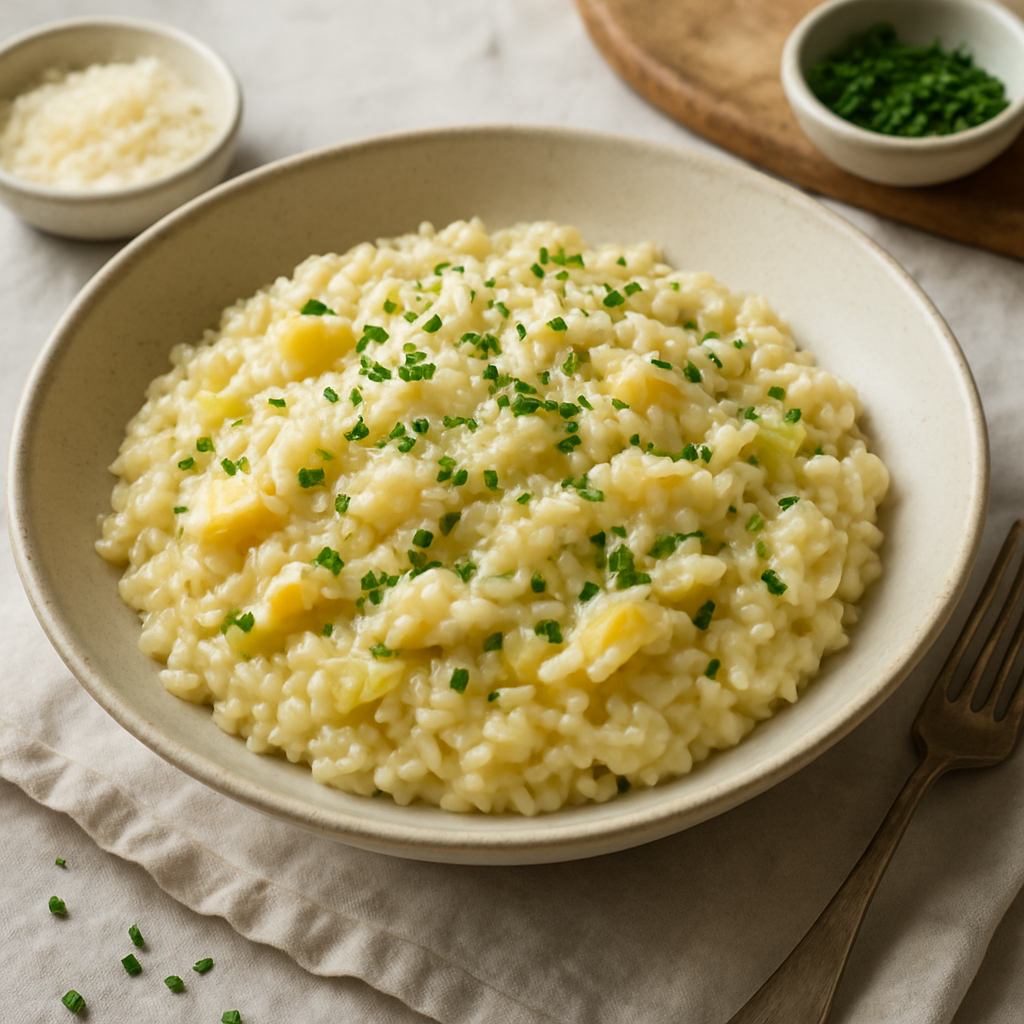
# Smoked Haddock and Leek Risotto with Parmesan and Chives
There's something quietly brilliant about smoked haddock in a risotto. The fish brings a gentle smokiness that does all the heavy lifting on flavour, meaning you don't need a complicated list of ingredients to end up with something genuinely impressive.
This recipe is one of those weeknight dinners that feels a bit special without requiring you to be a professional chef — or to stand at the hob stressing. It's creamy, satisfying, and built around ingredients that work hard nutritionally as well as in the bowl.
---
What You'll Need
Serves 4
- 400g smoked haddock fillets (undyed, if possible)
- 300g arborio or carnaroli rice
- 2 medium leeks, trimmed and finely sliced
- 1 medium onion, finely diced
- 3 garlic cloves, minced
- 150ml dry white wine
- 1.2 litres fish or vegetable stock, kept warm
- 60g Parmesan, finely grated, plus extra to serve
- 30g unsalted butter
- 2 tbsp olive oil
- A small bunch of fresh chives, finely chopped
- Freshly ground black pepper
- Optional: a squeeze of lemon juice to finish
---
How to Make It
Step 1 — Poach the haddock
Place the smoked haddock fillets in a wide pan and cover with roughly 400ml of the stock. Bring to a gentle simmer and poach for 5–6 minutes until the fish is just cooked through. Lift the fish out and set aside on a plate. Reserve the poaching stock — it's full of flavour and you'll use it in the risotto base.
Step 2 — Soften the aromatics
In a large, heavy-bottomed pan, heat the olive oil and half the butter over a medium-low heat. Add the onion and cook gently for 5 minutes until softened and translucent. Add the garlic and sliced leeks, then continue cooking for another 6–8 minutes, stirring occasionally, until the leeks have completely wilted and turned silky.
Step 3 — Toast the rice
Add the arborio rice to the pan and stir to coat it in the oil and butter. Cook for 2 minutes, stirring, until the edges of the grains begin to look slightly translucent. This step matters — it helps the rice absorb liquid gradually and builds the characteristic creaminess of a good risotto.
Step 4 — Add the wine
Pour in the white wine and stir until it's fully absorbed. The wine deglazes the pan and adds a subtle acidity that balances the richness of the Parmesan and butter later on.
Step 5 — Build the risotto
Begin adding the warm stock, including the reserved poaching liquor, one ladleful at a time. Stir frequently — not constantly, but enough to encourage the starch to release from the rice. Add the next ladle only once the previous one has been absorbed. This process takes around 18–20 minutes. Taste the rice regularly from about the 16-minute mark; it should be tender with just a little bite at the centre.
Step 6 — Finish and fold in the fish
When the rice is cooked to your liking and the risotto has a loose, flowing consistency, remove the pan from the heat. Flake the poached haddock into large pieces, discarding any skin and bones. Fold in the remaining butter and the Parmesan, then gently add the fish. Stir everything together loosely — you want the fish to stay in decent chunks rather than breaking down completely. Season with black pepper, and add a squeeze of lemon if you like.
Step 7 — Rest and serve
Let the risotto sit for 2 minutes before serving — it continues to cook slightly off the heat and the texture settles. Spoon into warm bowls, scatter generously with chives and a little extra Parmesan, and serve straight away.
---
What Makes This Work Nutritionally
Smoked haddock is an excellent source of lean protein — a typical 100g portion delivers around 19–20g of protein with very little fat. It's also a solid source of iodine, a mineral that many people in the UK don't get enough of, and which plays a key role in thyroid function.
Leeks belong to the allium family alongside onions and garlic. They contain prebiotic fibres — particularly fructooligosaccharides — which feed beneficial bacteria in the gut. They're also a useful source of vitamin K and folate.
Arborio rice is higher on the glycaemic index than brown rice, but the combination of fat from the butter and Parmesan, plus the protein from the fish, slows glucose absorption significantly — so the overall glycaemic impact is much more moderate than the rice alone would suggest. This is a good example of why looking at individual ingredients in isolation rarely tells the full story about how a meal affects you.
Parmesan is calorie-dense, but used in this quantity it contributes around 7–8g of protein per serving as well as calcium and a lot of flavour. A little goes a long way when the quality is good.
Per serving (approximate): - Calories: 540–580 kcal - Protein: 38–42g - Carbohydrates: 58–62g - Fat: 14–17g
---
What the Evidence Shows
Fish consumption in the UK sits well below the recommended two portions per week for most adults, with oily and smoked fish consumed even less frequently. Research published in the British Journal of Nutrition has consistently linked regular fish intake — including white and smoked varieties — with better cardiovascular outcomes, improved cognitive function, and higher dietary iodine levels.
Smoked fish often gets a cautionary note around sodium content, which is fair — the smoking and curing process does increase salt levels compared to fresh fish. However, a single portion of smoked haddock (roughly 120–150g) typically contributes around 500–700mg of sodium, which is well within a sensible daily range when the rest of the meal is seasoned lightly, as this recipe is. The benefits of regular fish consumption are well-established enough that smoked haddock remains a nutritionally strong choice for most people.
Risotto also has an undeserved reputation as a "heavy" dish. Studies comparing similar calorie amounts from different meal types show that high-protein, carbohydrate-rich meals like this one tend to support satiety effectively, which makes sense given the interplay between protein and the gastric hormones that regulate hunger.
---
Common Mistakes Worth Knowing About
Cold stock is the enemy of risotto. If you add cold liquid to hot rice, the temperature drops and the cooking becomes uneven. Keep your stock simmering in a separate pan throughout.
Smoked haddock varies enormously in quality. Undyed haddock (pale, creamy coloured) tends to have a cleaner, more delicate flavour than the bright orange-dyed variety. Both work, but undyed is worth seeking out if your supermarket or fishmonger stocks it.
Don't rush the leeks. They need time over a gentle heat to release their natural sweetness and become properly silky. If you try to speed this up with a high heat, they'll colour before they've softened, and you lose that sweet, mellow base that makes this dish.
---
Practical Takeaways
- Poach the haddock in stock, not water — it infuses the cooking liquid with flavour that carries through the whole dish.
- Keep the stock warm in a separate pan throughout cooking — this is one of the few genuinely non-negotiable steps in risotto-making.
- Fold the fish in gently at the end and use a light hand — chunky flakes of haddock are far more satisfying than mashed fish.
- Add lemon at the end rather than during cooking — the brightness cuts through the richness beautifully, but it loses its impact if it cooks for too long.
- This dish reheats reasonably well with a splash of stock or water to loosen it, though risotto is always best eaten fresh.
---
Macrology tip: If you want to track the macros for this recipe or build a full week of high-protein dinners around it, Macrology generates macro-perfect meal plans in seconds — [https://macrology.app/signin](https://macrology.app/signin)
Want meals like this planned to your exact macros?
Macrology generates a personalised meal plan in seconds — breakfast, lunch, dinner and snacks, all hitting your daily targets.
Start your free 14-day trial