Slow-Roasted Lamb Shoulder with White Beans, Rosemary and Anchovy
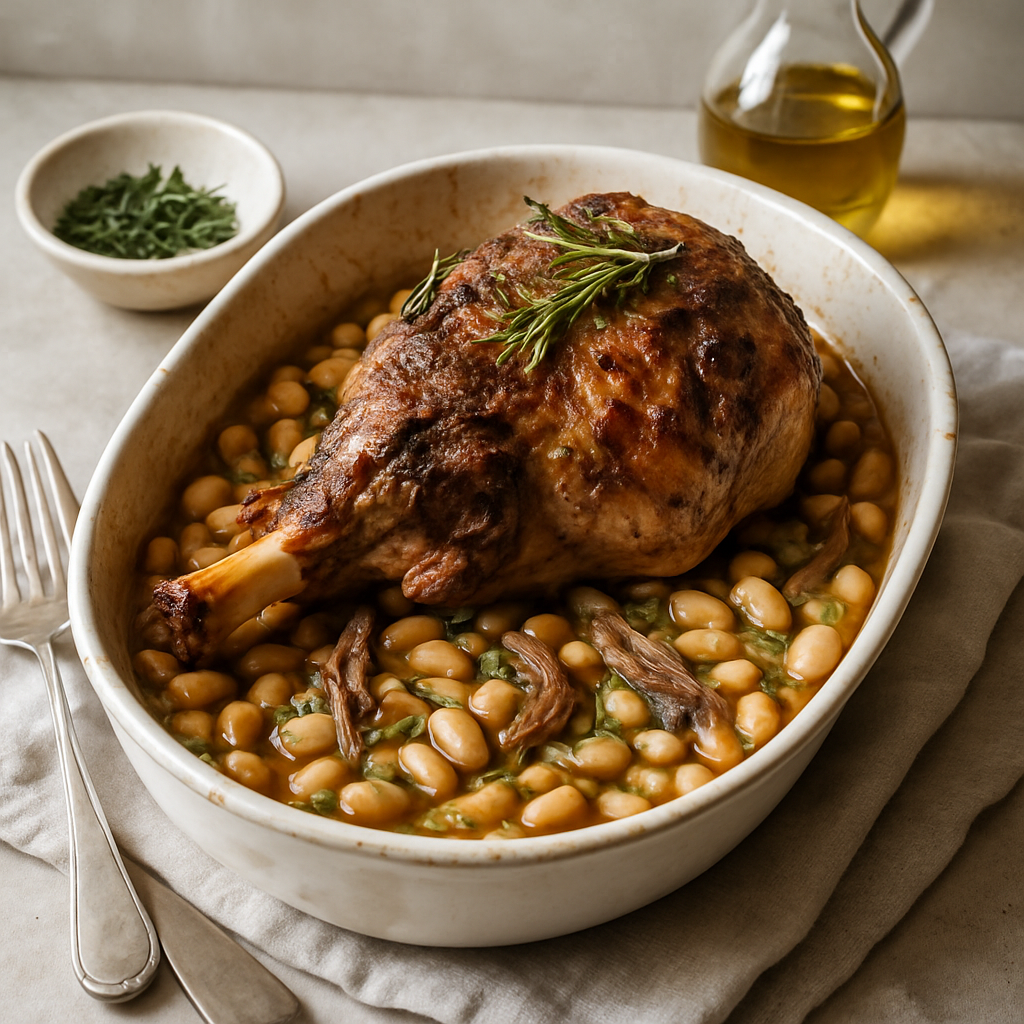
# Slow-Roasted Lamb Shoulder with White Beans, Rosemary and Anchovy
There's a particular kind of cooking that doesn't ask much of you — just time, a bit of patience, and a decent oven. Slow-roasted lamb shoulder is exactly that: a cut that practically falls apart on its own, rewarding you with rich, deeply savoury meat that tastes like it came from a Sunday table that's been doing this for generations.
Why Lamb Shoulder Is the Cut Worth Knowing
Leg of lamb gets a lot of the attention, but shoulder is where the real flavour lives. Because it's a harder-working muscle, it has more intramuscular fat and connective tissue — and that's not a drawback, it's the point. When cooked low and slow, that collagen breaks down into gelatin, giving the meat a silky, pull-apart texture that leg simply can't match.
It's also more forgiving. Overcook a leg by twenty minutes and it's dry. Overcook a shoulder and it just gets better.
The Anchovy Question (Bear With Us)
If you're not an anchovy person, don't click away. The anchovies here aren't there to make anything taste fishy — they dissolve completely into the fat during cooking, leaving behind a deep, savoury backbone that amplifies the lamb without announcing themselves.
This is umami working quietly in the background. The glutamates in anchovies boost the perception of the lamb's own savouriness, in the same way a splash of Worcestershire sauce transforms a beef stew. You won't taste fish. You'll taste lamb that tastes more like itself.
If you're genuinely avoiding fish for dietary or allergy reasons, a small amount of miso paste stirred into your rub will do a similar job.
What Makes This Work Nutritionally
Lamb shoulder is a genuinely nutritious cut, though it tends to get lumped in with "rich" or "indulgent" food in a way that doesn't tell the full picture.
Protein: A 200g serving of cooked lamb shoulder provides roughly 35–40g of protein, making it one of the more substantial protein sources in a single meal.
Iron and zinc: Lamb is one of the best dietary sources of haem iron — the form your body absorbs most efficiently — alongside meaningful amounts of zinc, which supports immune function and wound healing. Red meat, eaten as part of a varied diet, contributes usefully to both.
B vitamins: Particularly B12, which is only found naturally in animal products, and niacin (B3), which plays a role in energy metabolism.
The white beans add a second wave of nutrition — fibre, plant-based protein, and slow-digesting carbohydrate that helps make this a properly balanced plate rather than a protein-heavy bowl sitting on nothing.
What the Evidence Shows
There's been a fair amount of noise around red meat and health over the past decade, and it's worth unpacking briefly. The research linking processed red meat (bacon, sausages, cured meats) to health risks is more consistent than the evidence around unprocessed red meat like a roasted lamb shoulder.
A 2019 analysis published in Annals of Internal Medicine caused significant debate when it concluded that the evidence for reducing unprocessed red meat was weak, and that adults might reasonably continue eating it at current levels. This doesn't mean eating lamb shoulder every day, but it does suggest that a weekly slow-roast sits comfortably within a sensible, varied diet for most people.
The broader dietary pattern matters more than any single food. A plate of slow-roasted lamb with white beans, vegetables, and fresh herbs looks quite different nutritionally from processed meat products eaten daily — and conflating the two doesn't serve anyone well.
The Recipe
Serves: 4–6 Prep time: 20 minutes Cook time: 4–4.5 hours (mostly hands-off)
---
Ingredients
- 1 bone-in lamb shoulder, approximately 2–2.5kg
- 6 anchovy fillets in oil
- 4 garlic cloves, roughly chopped
- 3 sprigs of fresh rosemary, leaves stripped
- 2 tbsp olive oil
- Zest of 1 lemon
- 400g tin of cannellini beans, drained and rinsed (or cook dried ones if you have the time)
- 1 second tin of cannellini beans, drained and rinsed
- 200ml chicken or lamb stock
- 1 large white onion, sliced
- Salt and black pepper
---
Method
1. Take your lamb out of the fridge at least an hour before cooking. Preheat your oven to 160°C fan (180°C conventional).
2. Using a pestle and mortar, pound the anchovies, garlic, rosemary leaves, lemon zest, and olive oil into a rough paste. Season generously with black pepper — you won't need much salt, as the anchovies carry plenty.
3. Score the lamb shoulder all over with a small sharp knife, making cuts roughly 2–3cm deep. Push a little of the paste into each incision, then rub the rest all over the surface.
4. Scatter the sliced onion across the base of a large, deep roasting tin. Place the lamb on top, pour the stock around (not over) it, and cover tightly with a double layer of foil.
5. Roast for 3.5 hours. Remove the foil, add the drained white beans around the lamb, and return to the oven uncovered for a further 45–60 minutes until the lamb is deeply golden and yielding completely when pressed.
6. Rest for at least 20 minutes before pulling the meat apart with two forks. The beans will have absorbed the lamb fat and stock into something extraordinary.
7. Serve with a sharp green salad or simply wilted greens to cut through the richness.
---
A note on the beans: Cannellini work beautifully here, but butter beans or haricot beans are equally good. The goal is a bean that holds its shape while absorbing the cooking juices — avoid anything too delicate.
Common Questions
Can I cook this in a slow cooker? Yes. Brown the shoulder in a hot pan first if you can — it's not essential, but it develops flavour. Cook on low for 8–9 hours, then finish under a hot grill to get some colour on the skin. Add the beans for the final hour.
What if my lamb shoulder is boneless? It'll cook slightly faster — check from the 3-hour mark. You may want to tie it with kitchen string to keep it together.
Can I prep it the night before? Absolutely. Apply the paste, cover, and refrigerate overnight. Longer marinating time means more flavour penetration, and it saves you work on the day.
Practical Takeaways
- Score deeply and generously — the anchovy-rosemary paste needs to get into the meat, not just sit on the surface.
- Cover tightly for the first phase — this traps steam and keeps the shoulder moist during the long cook.
- Don't skip the resting time. Twenty minutes minimum lets the juices redistribute so the meat stays moist when you pull it.
- Use the tin juices. After resting, tip any liquid in the tin back over the beans and meat before serving. It's the best bit.
- Scale it up easily. This reheats exceptionally well — leftovers work brilliantly in flatbreads, pasta, or a simple hash with eggs the next morning.
---
> Macrology tip: If you want a week's worth of high-protein, macro-balanced meals planned around recipes like this one, Macrology generates macro-perfect meal plans in seconds — [https://macrology.app/signin](https://macrology.app/signin)
Want meals like this planned to your exact macros?
Macrology generates a personalised meal plan in seconds — breakfast, lunch, dinner and snacks, all hitting your daily targets.
Start your free 14-day trial