Slow-Cooked Pork Shoulder Tacos with Pickled Red Cabbage and Chipotle Crema
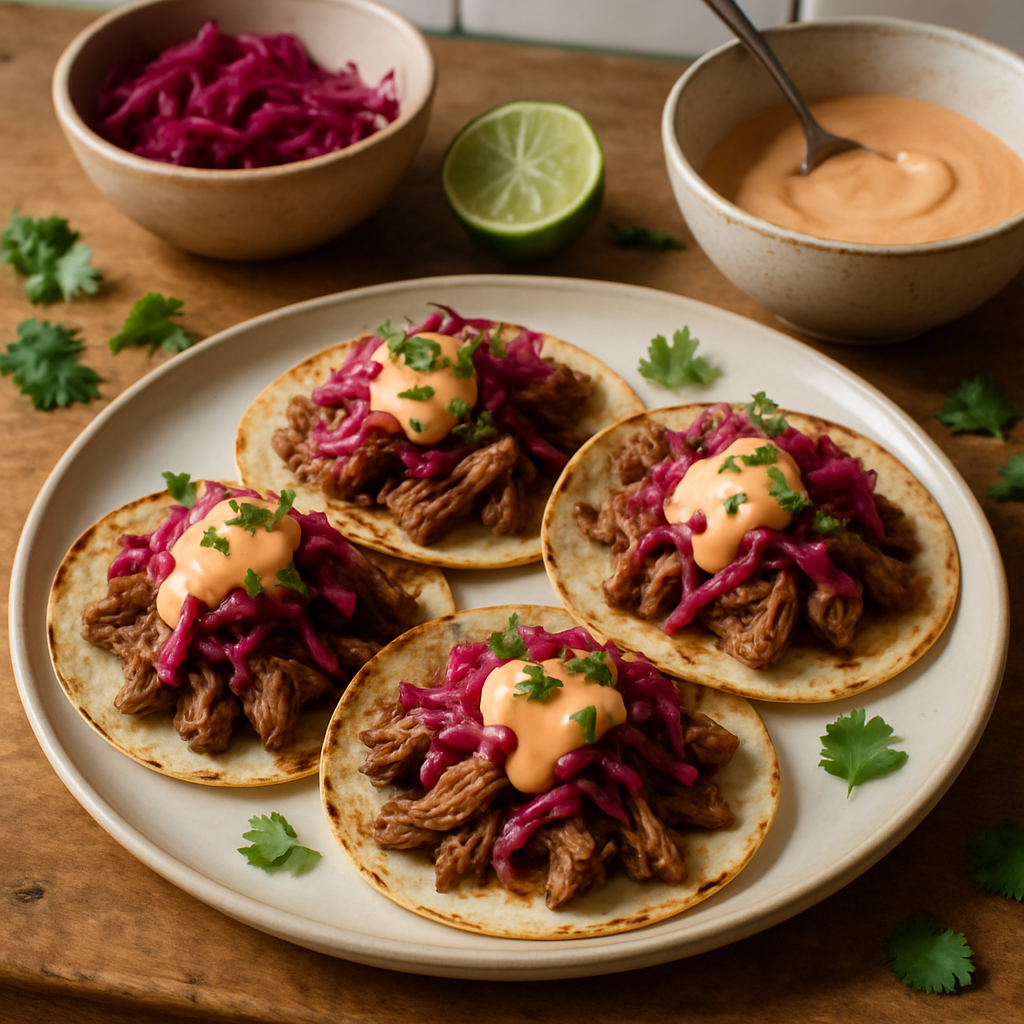
# Slow-Cooked Pork Shoulder Tacos with Pickled Red Cabbage and Chipotle Crema
There's something almost magical about putting a tough cut of meat in a pot in the morning and coming back hours later to find it falling apart at the touch of a fork. These slow-cooked pork shoulder tacos are the kind of meal that feels like serious cooking but asks very little of you in return.
Why Pork Shoulder Is the Right Cut for This
Pork shoulder — sometimes labelled as pork butt or Boston butt at the butcher — is one of the most rewarding cuts you can buy. It's well-worked muscle with plenty of connective tissue and intramuscular fat, which means it's tough when cooked quickly but extraordinary when given time and low heat.
That connective tissue is largely collagen, and over several hours of slow cooking, collagen breaks down into gelatine. This is what gives pulled pork its silky, almost sticky quality — not added fat or sugary sauces. The slow cook does the work for you.
It's also one of the more affordable cuts at most UK butchers and supermarkets. You'll typically pay less per kilogram than for loin or chops, and you'll get considerably more flavour for your money.
The Spice Rub: Building Flavour Before the Heat Goes On
The rub is where you set the tone for everything that follows. This recipe uses a blend of smoked paprika, ground cumin, dried oregano, garlic powder, onion powder, a pinch of cayenne, salt, and black pepper. It's not a complex pantry list — these are everyday spices that stack together to create something that tastes like it took considerably more effort than it did.
Rub the spice mix generously over every surface of the pork shoulder the night before if you can, then leave it uncovered in the fridge. The salt begins to draw moisture out and then reabsorb it, seasoning the meat more deeply than a last-minute rub ever could. If you're short on time, even 30 minutes at room temperature will help.
When you're ready to cook, a quick sear in a hot pan before the slow cooker or oven develops the Maillard reaction — the browning that adds roasted, complex flavour. It's an optional step, but one worth taking.
The Slow Cook: Low, Slow, and Largely Hands-Off
Place the seared pork shoulder into your slow cooker with a roughly chopped white onion, a few crushed garlic cloves, the juice of two oranges, juice of one lime, and a splash of apple cider vinegar. The citrus serves two purposes: it adds brightness and it helps break down the muscle fibres over time.
Set the slow cooker to low for 8–10 hours, or high for 5–6 hours if you're starting later in the day. If you're using a Dutch oven or lidded casserole dish in the oven, 160°C for around 4–5 hours works well.
You'll know it's ready when the meat falls apart with two forks and resists any effort to stay in one piece. At this point, shred it directly in the cooking juices, letting it soak everything back up. The liquid becomes deeply flavoured as the cook progresses — don't waste a drop of it.
Pickled Red Cabbage: The Taco's Best Friend
This is the element that lifts everything. A quick-pickled red cabbage takes about ten minutes to prepare and can be made up to three days ahead, sitting happily in the fridge until needed.
Thinly slice around a quarter of a red cabbage and pack it into a clean jar or bowl. Warm 100ml of red wine vinegar, 100ml of water, a teaspoon of sugar, and a good pinch of salt until the sugar dissolves, then pour it over the cabbage and leave it for at least 30 minutes. It will turn a vivid purple-pink and soften slightly while keeping a satisfying crunch.
That acidity is doing important work here — it cuts through the richness of the pork and the creaminess of the chipotle sauce, giving each bite contrast and balance. Tacos without acid tend to feel heavy; tacos with it feel complete.
Chipotle Crema: Smoky, Cool, and Ready in Two Minutes
The crema is simple: four tablespoons of soured cream or crème fraîche, one chipotle pepper in adobo sauce (finely chopped or blended), a squeeze of lime juice, and a pinch of salt. Stir it together and taste as you go — chipotles in adobo vary in heat, so add more or less depending on how much warmth you want.
If you can't find chipotles in adobo tins (most large UK supermarkets stock them now, usually in the world foods aisle), chipotle paste works too. Start with around half a teaspoon and build from there.
The crema does double duty — it adds smokiness that echoes the pork's spice rub, and its cool creaminess tempers any heat from the chipotle. It's one of those components that seems small on paper but you'd notice immediately if it was missing.
What Makes This Work Nutritionally
Pork shoulder is a genuinely solid source of complete protein, containing all nine essential amino acids. A 150g serving of pulled pork provides roughly 30–35g of protein, making these tacos a meaningful contribution to daily protein targets without needing supplements or engineered foods.
The fat content is moderate — pork shoulder has more fat than loin, but much of the visible fat renders out during the long cook. What remains is predominantly a mix of saturated and monounsaturated fats. Research published in journals including the American Journal of Clinical Nutrition has increasingly supported the view that dietary fat from whole food sources, consumed in reasonable amounts as part of a varied diet, doesn't carry the risk profile it was once thought to.
Red cabbage is nutritionally underappreciated. It provides vitamin C, vitamin K, and anthocyanins — the pigments responsible for its deep purple colour, which have been associated with anti-inflammatory effects in several observational studies. The pickling process preserves most of these compounds.
Corn tortillas, if you use them, are naturally gluten-free and provide a modest amount of complex carbohydrate. Flour tortillas give a softer texture and slightly higher calorie count — neither is a wrong choice, it's just about what you prefer.
What the Evidence Shows
Slow cooking as a method has received some attention in nutritional research because of concerns about nutrient loss. The evidence here is nuanced: some water-soluble vitamins do reduce with prolonged heat, but because slow cooking is done in a closed, liquid environment, many of those nutrients stay in the cooking juices — which in this recipe get absorbed back into the meat during shredding. You're not losing them down the drain.
Protein digestibility is also worth noting. Collagen, once converted to gelatine through slow cooking, is easier to digest than raw connective tissue. For anyone who finds high-protein eating hard on their digestion, slow-cooked cuts can be a gentler option.
The pickled cabbage adds a small but worthwhile contribution of beneficial bacteria if left to ferment further, though a quick pickle like this one is more about flavour than fermentation. If gut health is something you're thinking about, extending the pickling time to 48–72 hours nudges it further in that direction.
Practical Takeaways and Serving Suggestions
To serve: warm your tortillas directly over a gas flame for 20–30 seconds per side, or in a dry frying pan. Stack the pulled pork first, then the pickled cabbage, then a generous drizzle of chipotle crema. A few fresh coriander leaves and a wedge of lime on the side finish the job.
Quantities for four people: 1–1.2kg bone-in pork shoulder, 8–10 small tortillas, one quarter red cabbage, one batch of crema.
Ahead-of-time cooking: the pork reheats brilliantly the next day in its own juices, often tasting even better after resting overnight. It also freezes well — portion it into freezer bags with some cooking liquid and it'll keep for up to three months.
Macro estimate per two tacos (approximate): 42g protein, 38g carbohydrate, 18g fat — though this varies depending on tortilla size and how generous you are with the crema.
If you want your meals to hit specific macro targets without the mental arithmetic, Macrology generates macro-perfect meal plans in seconds — https://macrology.app/signin
---
> Macrology tip: Add this recipe to your Macrology meal plan and the app will automatically adjust portion sizes to fit your personal protein, carb, and fat targets — no calculator required.
Want meals like this planned to your exact macros?
Macrology generates a personalised meal plan in seconds — breakfast, lunch, dinner and snacks, all hitting your daily targets.
Start your free 14-day trial