Slow-Cooked Beef Shin Ragu with Pappardelle and Gremolata
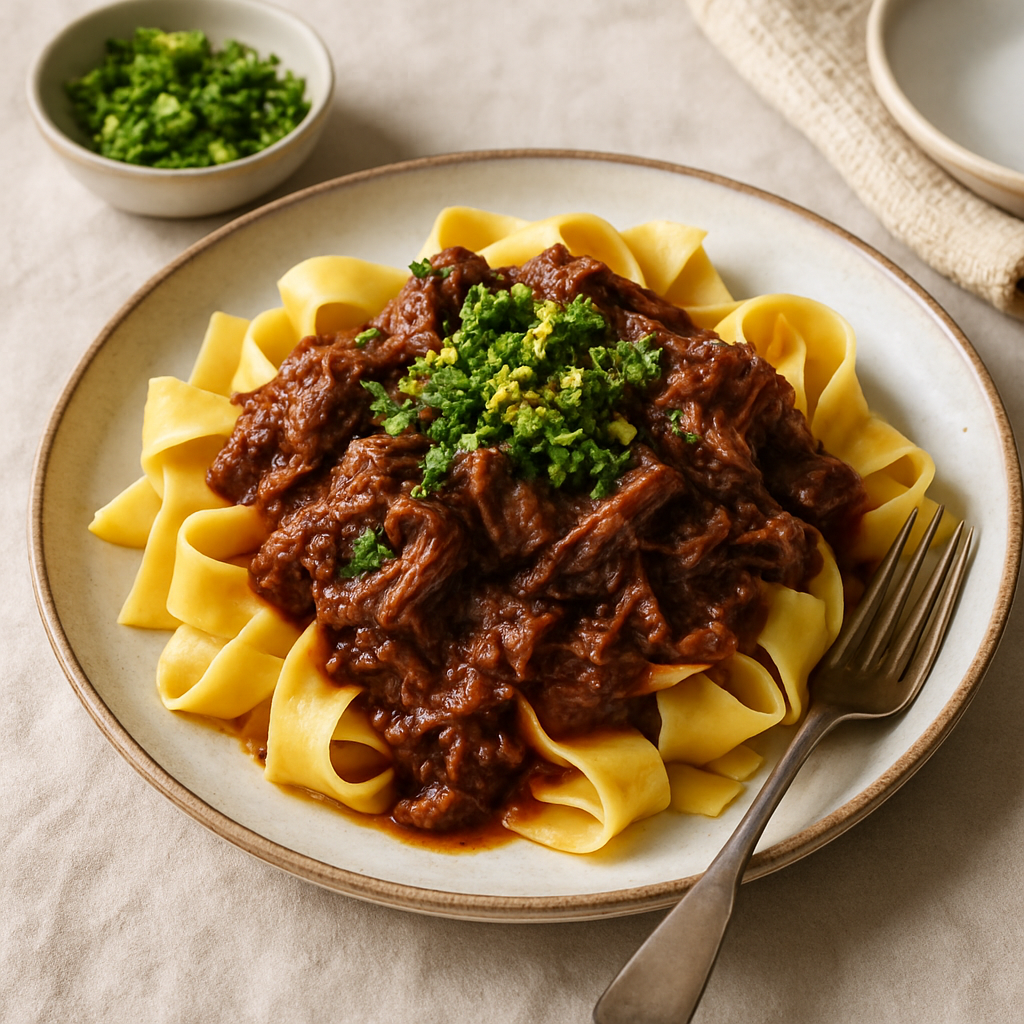
# Slow-Cooked Beef Shin Ragu with Pappardelle and Gremolata
There's a particular kind of magic that happens when a tough, collagen-rich cut of meat spends hours in a low oven surrounded by wine, aromatics, and stock. What starts as something almost unyielding becomes silky, deeply flavoured, and genuinely extraordinary. This beef shin ragu is that dish — and it's far simpler to pull off than it looks.
Why Beef Shin?
Beef shin is one of the most underrated cuts at the butcher's counter. It comes from the lower leg of the animal, which means it works hard — and that hard work translates into extraordinary flavour once it's cooked low and slow.
The key is collagen. Shin is packed with connective tissue that, over several hours of gentle heat, breaks down into gelatin. That gelatin is what gives a good ragu its glossy, sauce-coating quality — the kind that clings to pasta rather than pooling at the bottom of the bowl.
It's also one of the more affordable beef cuts you can buy, which makes it ideal for a dish that genuinely impresses. Ask your butcher for bone-in shin pieces if you can — the marrow adds another layer of richness — but boneless works perfectly well too.
The Case for Pappardelle
Ragu and pasta is an ancient pairing, but the pasta shape matters more than most people think. Wide, flat ribbons like pappardelle are ideal for a chunky, braised sauce because they have the surface area and structural integrity to hold the meat without getting lost in it.
Tagliatelle is a close second. Avoid anything too thin (spaghetti, linguine) or too tubular (penne, rigatoni) — they'll either get overwhelmed by the sauce or fail to carry it properly. If you can find fresh pappardelle, use it; the texture is noticeably silkier and it cooks in under three minutes.
Dried pappardelle is absolutely fine and widely available in most UK supermarkets. Just make sure you cook it in well-salted water and don't let it go past al dente.
What Makes Gremolata Worth the Two Minutes It Takes
Gremolata is a classic Italian condiment — typically just lemon zest, garlic, and flat-leaf parsley, finely chopped and mixed together. It sounds almost too simple to bother with, but it does something genuinely clever to a rich, braised dish.
Slow-cooked meat sauces are deeply savoury, fatty, and warming — all good things, but they can become a little one-dimensional after a few bites. Gremolata cuts through that richness with brightness and a fresh, herbaceous lift. The lemon zest in particular wakes up the palate in a way that a squeeze of juice doesn't quite replicate.
It takes about two minutes to make and it's the difference between a good bowl of pasta and a brilliant one. Don't skip it.
What the Evidence Shows: The Nutrition Behind This Dish
Beef shin is a genuinely strong source of protein — a typical 200g portion of cooked shin provides roughly 35–40g, which supports muscle repair, satiety, and general metabolic function. Because it's a lean, working muscle with relatively low intramuscular fat, it's also lower in saturated fat than cuts like brisket or short rib.
The gelatin released during cooking isn't just textural — it contains glycine, an amino acid that plays a role in joint health and sleep quality, though the evidence here is still developing rather than definitive.
Pappardelle contributes a meaningful amount of complex carbohydrate, which is the body's preferred energy source. Pairing it with a protein-rich sauce also helps to moderate the glycaemic response compared to eating pasta alone — something worth knowing if you're managing energy levels across the day.
The gremolata adds vitamin C from the lemon zest and a small but useful hit of vitamin K from the parsley. Neither will dramatically shift your micronutrient intake, but fresh herbs are one of the easiest ways to add flavour and a little nutritional value at the same time.
The Recipe
Serves: 4–6 Active time: 30 minutes Cook time: 3.5–4 hours
Ingredients
For the ragu: - 1.2kg beef shin, cut into large chunks (bone-in or boneless) - 2 tbsp olive oil - 1 large onion, finely diced - 2 carrots, finely diced - 3 celery stalks, finely diced - 6 garlic cloves, sliced - 2 tbsp tomato purée - 300ml red wine (something you'd drink — a Chianti or Montepulciano works well) - 400g tin of chopped tomatoes - 300ml beef stock - 2 sprigs of fresh rosemary - 2 bay leaves - Salt and black pepper
For the gremolata: - Zest of 1 lemon - 1 small garlic clove, very finely minced - A large handful of flat-leaf parsley, finely chopped
To serve: - 400–500g dried pappardelle (or 600g fresh) - Parmesan, freshly grated
Method
Preheat your oven to 160°C fan. Pat the beef dry with kitchen paper and season generously with salt and pepper — this step is worth doing properly, as surface moisture prevents good browning.
Heat the olive oil in a large, heavy-bottomed casserole dish (a cast-iron one is ideal) over a high heat. Brown the beef in batches, taking your time to get real colour on each side. Don't crowd the pan. Remove and set aside.
Reduce the heat to medium and add the onion, carrot, and celery. Cook for 8–10 minutes until softened and beginning to turn golden. Add the garlic and tomato purée, stir well, and cook for another 2 minutes.
Pour in the red wine and scrape up any caramelised bits from the bottom of the pan. Let it bubble for 3–4 minutes to cook off the alcohol. Add the chopped tomatoes, beef stock, rosemary, and bay leaves. Nestle the beef back in, ensuring it's mostly submerged.
Bring to a gentle simmer, then cover and transfer to the oven. Cook for 3.5–4 hours, checking occasionally, until the meat is completely tender and falling apart.
Remove the beef and shred it roughly with two forks, discarding any bones and the herb sprigs. Return the shredded meat to the sauce and stir to combine. Taste and adjust seasoning.
Mix together the gremolata ingredients in a small bowl just before serving — making it fresh preserves the brightness of the lemon and parsley.
Cook the pappardelle according to packet instructions. Reserve a mug of pasta cooking water before draining. Toss the pasta through the ragu, adding a splash of cooking water if needed to loosen the sauce. Serve with gremolata scattered over the top and plenty of Parmesan.
What Makes This Work Nutritionally
The combination of slow-braised beef shin and pappardelle gives you a genuinely balanced macronutrient profile — substantial protein from the meat, complex carbohydrate from the pasta, and moderate fat largely from the olive oil and natural fat in the beef.
The soffritto base (onion, carrot, celery) isn't just flavour — it adds fibre, beta-carotene, and a range of B vitamins. The tomatoes contribute lycopene, an antioxidant that becomes more bioavailable when cooked, which is a useful reminder that cooked vegetables aren't nutritionally inferior to raw ones.
Portion sizing is worth a thought here. A 100g dry weight of pasta (roughly one serving) paired with a generous ladleful of ragu makes for a satisfying meal that tracks well across protein, carbs, and fats — particularly if you're eating around training or a physically active day.
Practical Takeaways
- Brown the meat properly. Resist the urge to rush. Real colour equals real flavour — the Maillard reaction produces hundreds of flavour compounds that won't develop in a pale, steamed piece of beef.
- Make it ahead. This ragu is noticeably better the next day once the flavours have had time to settle. It keeps in the fridge for up to four days and freezes brilliantly.
- Scale it up. The recipe doubles well. Use the extra portions as a base for other meals — on jacket potatoes, in toasted ciabatta, or alongside creamy polenta.
- Swap the pasta. If you're reducing carbohydrates, this ragu is equally good served over courgetti, celeriac mash, or simply on its own with crusty bread on the side.
- Don't skip the pasta water. The starchy cooking water acts as an emulsifier, helping the sauce cling to the pasta rather than sitting separately on the plate.
---
If you want meal plans that include dishes like this — with macros already worked out and portions tailored to your goals — Macrology generates macro-perfect meal plans in seconds — https://macrology.app/signin
> Macrology tip: Add this recipe to your Macrology meal plan and the app will automatically calculate the macros per portion, adjust serving sizes to hit your targets, and suggest complementary meals for the rest of the week. Cooking something this good doesn't have to mean guessing at the numbers.
Want meals like this planned to your exact macros?
Macrology generates a personalised meal plan in seconds — breakfast, lunch, dinner and snacks, all hitting your daily targets.
Start your free 14-day trial