Sesame Crusted Tuna Steak with Pickled Radish and Cucumber Noodles
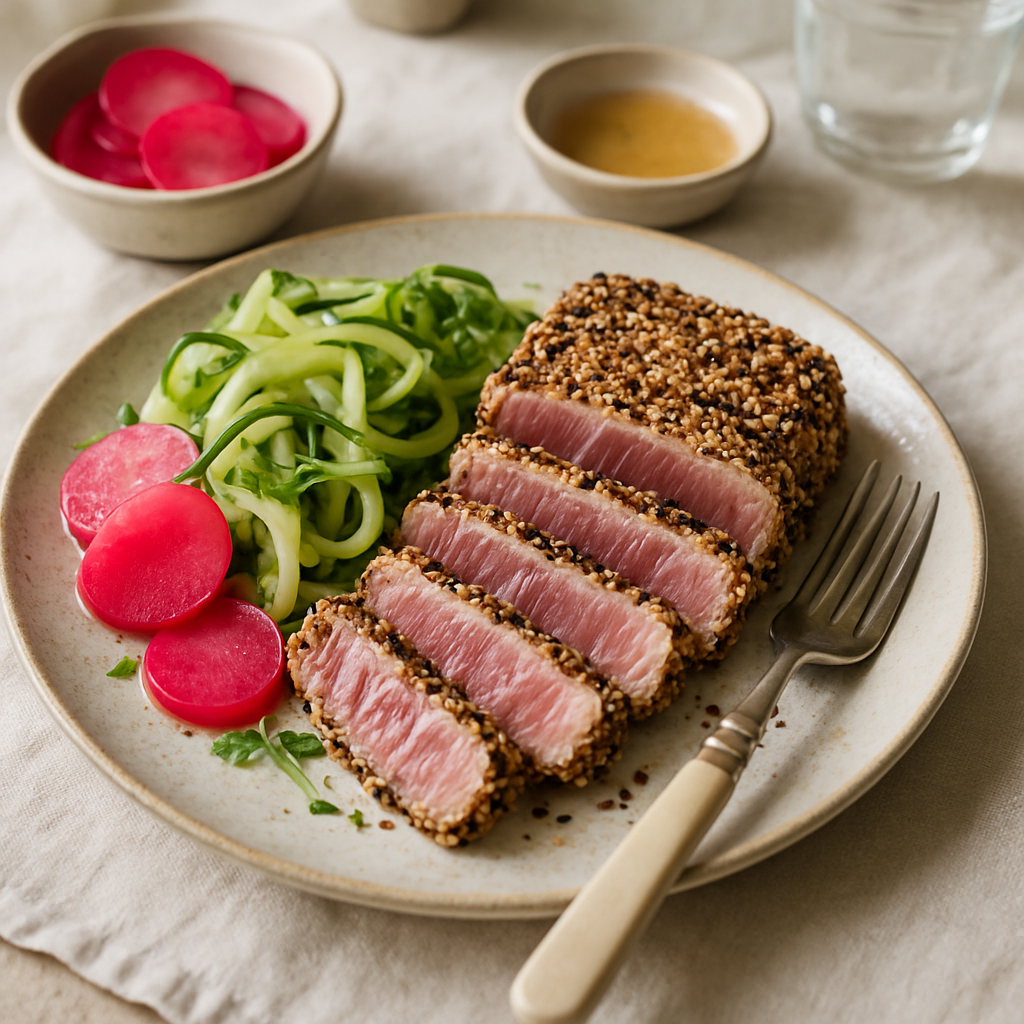
# Sesame Crusted Tuna Steak with Pickled Radish and Cucumber Noodles
There's something almost theatrical about searing a tuna steak — the hiss of the pan, the crust forming in seconds, the moment you slice through to reveal that vivid pink centre. This dish delivers all of that drama, plus a side of bright, punchy pickled radish and cool cucumber noodles that make it feel like a proper restaurant plate.
What You're Making and Why It Works
This is a dish built around contrast. The sesame crust gives you toasty, nutty warmth. The tuna itself is lean, rich, and meaty. The pickled radish brings a sharp, vinegary bite that cuts through the fat. The cucumber noodles add crunch and freshness without weighing anything down.
It's also genuinely fast. From fridge to plate in around 20 minutes, with most of that time being the quick pickle sitting in its brine. There's no complicated technique here — just good timing and a very hot pan.
Ingredients (Serves 2)
For the tuna:
- 2 yellowfin or bigeye tuna steaks (approx. 150–180g each, around 2.5cm thick)
- 4 tbsp mixed black and white sesame seeds
- 1 tbsp soy sauce or tamari
- 1 tsp sesame oil
- Flaky sea salt and black pepper
- 1 tbsp neutral oil (such as sunflower or rapeseed)
For the pickled radish:
- 150g radishes, thinly sliced
- 3 tbsp rice wine vinegar
- 1 tsp caster sugar
- ½ tsp fine salt
- ½ tsp chilli flakes (optional)
For the cucumber noodles:
- 1 large cucumber
- 1 tbsp rice wine vinegar
- 1 tsp sesame oil
- 1 tsp soy sauce or tamari
- 1 tsp toasted sesame seeds
- Small handful of fresh coriander or mint (or both)
Method
Step 1 — Make the pickle first
Combine the rice wine vinegar, sugar, and salt in a small bowl and stir until dissolved. Add the radish slices and chilli flakes if using. Leave to sit for at least 15 minutes — the radishes will soften slightly and turn a beautiful blush pink.
Step 2 — Prepare the cucumber noodles
Use a spiraliser, julienne peeler, or a standard vegetable peeler to create long cucumber ribbons or noodles. Toss with the rice wine vinegar, sesame oil, soy sauce, and sesame seeds. Set aside in the fridge while you prep the tuna — the cold crunch is part of the appeal.
Step 3 — Coat the tuna
Pat the tuna steaks completely dry with kitchen paper — this is essential for getting a proper crust. Brush lightly with soy sauce and sesame oil, then press firmly into the sesame seeds on all sides. Season with a pinch of salt and black pepper.
Step 4 — Sear the tuna
Heat a heavy-based frying pan (cast iron works brilliantly here) over a high heat until it's properly hot — you want it smoking slightly. Add the neutral oil and place the tuna steaks in the pan. Sear for 60–90 seconds per side for a rare to medium-rare centre, or up to 2 minutes per side if you prefer it more cooked through. Resist the urge to move the steaks around — let the crust set.
Step 5 — Rest and slice
Remove the tuna from the pan and leave to rest for a minute or two. Slice against the grain into thick pieces to reveal the gradient from seared exterior to pink centre.
Step 6 — Plate up
Pile the cucumber noodles onto each plate, top with the sliced tuna, and arrange the pickled radish alongside. Scatter any remaining sesame seeds and fresh herbs over the top. Serve immediately.
What Makes This Work Nutritionally
Tuna is one of the better sources of complete protein available — each steak delivers roughly 35–40g of protein for around 180–220 calories, depending on the cut. It's also rich in omega-3 fatty acids, particularly EPA and DHA, which are associated with cardiovascular health and reduced inflammation.
The sesame seeds are doing more than providing texture. They contribute healthy unsaturated fats, calcium, and magnesium — nutrients that are easy to miss in everyday eating. A tablespoon of sesame seeds contains roughly 88mg of calcium, which adds up.
Cucumber is almost entirely water (around 96%), making it exceptionally low in calories while still providing potassium and some vitamin K. The quick pickle on the radishes preserves most of their fibre and sulforaphane content, a compound linked to antioxidant activity in the body.
The overall macro split for this dish comes in at approximately 40g protein, 12g fat, and 14g carbohydrate per serving — genuinely well-balanced without having to engineer it that way.
What the Evidence Shows
Fatty fish like tuna has been consistently highlighted in large-scale dietary research as beneficial for heart health. The PREDIMED study, one of the most significant nutrition trials of the past two decades, found that diets rich in omega-3 sources were associated with reduced risk of major cardiovascular events.
The NHS currently recommends eating at least two portions of fish per week, with one being oily fish. Tuna (particularly fresh, not tinned in brine) qualifies as oily when it comes to omega-3 content, though the canning process does reduce levels somewhat — another reason to go fresh when the recipe suits it.
Fermented and pickled vegetables like the radish here have also attracted growing research interest. While the evidence on specific health benefits is still developing, fermented foods appear in dietary patterns associated with better gut diversity — including the traditional Japanese and Mediterranean diets, both of which feature pickled vegetables regularly.
Common Questions About Cooking Tuna Steak
Can I use frozen tuna? Yes, absolutely. In fact, sushi-grade tuna sold as "sashimi-grade" is often frozen at sea to eliminate parasites, then thawed. Defrost slowly in the fridge overnight and pat very dry before cooking.
What if I don't want it rare? That's completely fine. Cook for an extra minute per side. The texture changes — it becomes more flaky and less dense — but the flavour is still good, and the sesame crust will hold.
Can I make this ahead? The pickle can be made up to 24 hours in advance and kept in the fridge. The cucumber noodles are best made no more than an hour ahead or they start to soften. The tuna itself is always best cooked fresh to order.
Practical Takeaways
- Buy the best tuna you can find. Thickness matters — steaks thinner than 2cm cook through too quickly to hold a rare centre. Ask your fishmonger for yellowfin or bigeye.
- Get the pan properly hot. This is the single most common reason home-cooked tuna disappoints. A lukewarm pan steams rather than sears, and you'll lose the crust.
- Make the pickle earlier in the day. Even 30 minutes gives noticeably better results than 5.
- Don't skip the rest. Even 90 seconds of resting after the pan lets the juices redistribute and keeps the slices clean when you cut.
- Swap the herbs to suit what's in the fridge. Mint, coriander, Thai basil, or even a few sliced spring onions all work well here.
If you want high-protein meals like this one built into a full week of eating — with macros already calculated — Macrology generates macro-perfect meal plans in seconds — https://macrology.app/signin
---
> Macrology tip: Log this meal in Macrology and it'll track your omega-3 intake alongside your macros, making it easier to see where your nutrition is actually at across the week — not just calorie by calorie.
Want meals like this planned to your exact macros?
Macrology generates a personalised meal plan in seconds — breakfast, lunch, dinner and snacks, all hitting your daily targets.
Start your free 14-day trial