Seared Steak with Chimichurri and Roasted New Potatoes
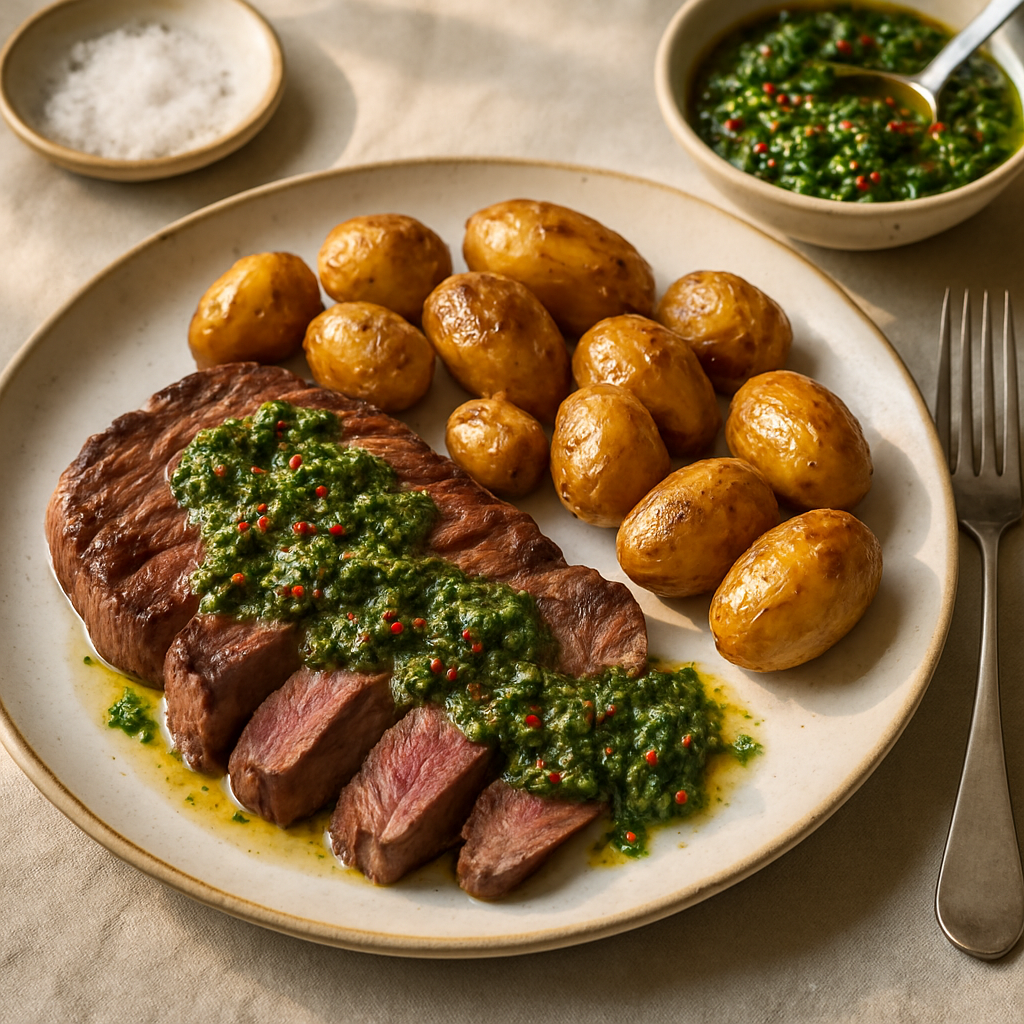
# Seared Steak with Chimichurri and Roasted New Potatoes
There's a reason steak and potatoes has never gone out of fashion — it's one of those combinations that just makes sense. This version lifts the classic with a proper chimichurri, the punchy Argentine herb sauce that turns a good steak into something genuinely memorable.
What You're Making and Why It Works
This recipe pairs a pan-seared sirloin with crispy roasted new potatoes and a vibrant chimichurri loaded with fresh parsley, garlic, and a hit of red wine vinegar. It's the kind of meal that looks impressive but comes together in under 45 minutes with a handful of straightforward ingredients.
The chimichurri does a lot of heavy lifting here. It adds brightness and acidity to cut through the richness of the steak, and it brings a tonne of flavour without any fuss. There's no marinating, no complicated technique — just good ingredients treated well.
Ingredients (Serves 2)
For the steak: - 2 sirloin steaks (around 200g each) - 1 tbsp olive oil - Salt and black pepper - 1 garlic clove, halved (for rubbing)
For the roasted new potatoes: - 500g new potatoes, halved - 2 tbsp olive oil - 1 tsp smoked paprika - Salt and black pepper - A few sprigs of fresh rosemary (optional)
For the chimichurri: - 30g fresh flat-leaf parsley, finely chopped - 3 garlic cloves, minced - 1 small shallot, finely diced - 2 tbsp red wine vinegar - 1 tsp dried oregano - ½ tsp chilli flakes (adjust to taste) - 80ml extra virgin olive oil - Salt and black pepper to taste
Method
Start with the potatoes (they take longest).
Preheat your oven to 220°C / 200°C fan. Toss the halved new potatoes with olive oil, smoked paprika, salt, and pepper. Spread them cut-side down on a baking tray — giving them space is key to getting colour rather than steam. Roast for 30–35 minutes until golden and crisp at the edges, adding the rosemary halfway through if using.
Make the chimichurri while the potatoes roast.
Combine the finely chopped parsley, minced garlic, shallot, red wine vinegar, dried oregano, and chilli flakes in a bowl. Pour over the olive oil, season generously, and stir well. Taste and adjust — more vinegar for sharpness, more chilli for heat. Set aside and let the flavours meld while you cook the steak. Chimichurri genuinely improves as it sits, so don't rush this step.
Cook the steak.
Take the steaks out of the fridge at least 15 minutes before cooking. Pat them completely dry with kitchen paper — this is non-negotiable for a proper sear. Season generously on both sides with salt and pepper, then rub all over with the cut garlic clove.
Get a heavy-based frying pan — cast iron if you have one — over a high heat until it's properly hot. Add the olive oil and, when it shimmers, lay the steaks in. Don't move them. For a 200g sirloin at roughly 2.5cm thick, cook for 2–3 minutes per side for medium-rare. Add 30 seconds per side if you prefer medium.
Rest the steaks on a warm plate, loosely covered with foil, for at least 5 minutes. This step matters — skipping it means losing half the juices on your chopping board.
To serve: Slice the steak against the grain, pile up the roasted potatoes alongside, and spoon the chimichurri generously over everything.
What Makes This Work Nutritionally
This is a genuinely well-balanced plate, and the macros stack up nicely without any compromise on flavour.
Protein is the star. A 200g sirloin provides roughly 40–45g of complete protein, delivering all essential amino acids. Sirloin is also one of the leaner cuts of beef, with less saturated fat than ribeye or brisket while still carrying plenty of flavour from its moderate marbling.
Carbohydrates come from the new potatoes, which are one of the more nutritious ways to hit your carb targets. New potatoes have a lower glycaemic index than floury varieties, meaning a steadier release of energy. They're also a useful source of potassium and vitamin C — particularly when the skin is kept on, as it is here.
Fats come primarily from the olive oil in the chimichurri and the cooking fat. Extra virgin olive oil is rich in monounsaturated fats and polyphenols, and using it unheated (as in chimichurri) preserves more of those compounds than cooking with it at high temperatures.
Per serving, you're looking at approximately 48g protein, 42g carbohydrates, and 32g fat — a macro profile that supports muscle recovery and sustained energy, making it a solid post-training meal or a substantial dinner that won't leave you hunting for snacks an hour later.
What the Evidence Shows
Beef gets a complicated press, but the picture is more nuanced than the headlines suggest. Lean red meat, consumed in moderation, is one of the most bioavailable sources of protein, iron, zinc, and B12 — nutrients that many people in the UK fall short on, particularly women of childbearing age.
Research published in the British Journal of Nutrition has found that including moderate amounts of red meat as part of a varied diet doesn't automatically increase cardiovascular risk, particularly when overall dietary patterns are taken into account. The broader context of what you eat matters far more than any single food.
The potatoes are worth a word too. Despite years of being cast as the villain in low-carb circles, potatoes are one of the most satiating foods per calorie, according to research using the Satiety Index. They're also naturally high in resistant starch when cooled slightly, which feeds beneficial gut bacteria. Roasting them with the skin on preserves more of their fibre and micronutrients.
And the parsley in the chimichurri? It's not just garnish. Fresh parsley is surprisingly high in vitamin K, vitamin C, and folate. Two tablespoons of fresh parsley delivers a meaningful contribution to your daily vitamin K needs — useful for bone health and normal blood clotting.
Common Mistakes to Avoid
Cooking a cold steak straight from the fridge. Cold meat in a hot pan drops the pan temperature sharply, which means you end up steaming rather than searing. Room temperature steak before cooking gives you the crust you're after.
Crowding the potatoes on the tray. If the potatoes are overlapping, they'll steam in each other's moisture. Spread them out, cut-side down, and resist the urge to toss them mid-roast until the last 10 minutes.
Using wet parsley in the chimichurri. If your parsley is still damp from washing, it will make the sauce watery. Pat or spin it dry before chopping.
Cutting the steak immediately after cooking. Resting is what allows the muscle fibres to relax and reabsorb the juices. Five minutes is the minimum — ten is better.
Practical Takeaways
- Prep chimichurri first — it genuinely tastes better after 20–30 minutes of sitting. Make it while the potatoes go in the oven.
- Dry the steak thoroughly before it goes in the pan. Kitchen paper, not a tea towel.
- Use a cast iron or stainless steel pan — non-stick pans can't handle the heat needed for a proper sear.
- Rest before you slice, and slice against the grain to keep the meat tender.
- New potatoes work best here — they hold their shape and crisp up well. Waxy varieties like Charlotte are ideal.
- Double the chimichurri. It keeps in the fridge for 3–4 days and works brilliantly on eggs, grilled chicken, or stirred through grain bowls.
---
If you want meal plans built around high-protein recipes like this one, Macrology generates macro-perfect meal plans in seconds — https://macrology.app/signin
---
> Macrology tip: Add this recipe to your weekly rotation and let Macrology balance it within a full week of meals — hitting your protein targets without eating the same thing every day. https://macrology.app/signin
Want meals like this planned to your exact macros?
Macrology generates a personalised meal plan in seconds — breakfast, lunch, dinner and snacks, all hitting your daily targets.
Start your free 14-day trial