Seared Scallops with Cauliflower Purée, Crispy Capers and Brown Butter
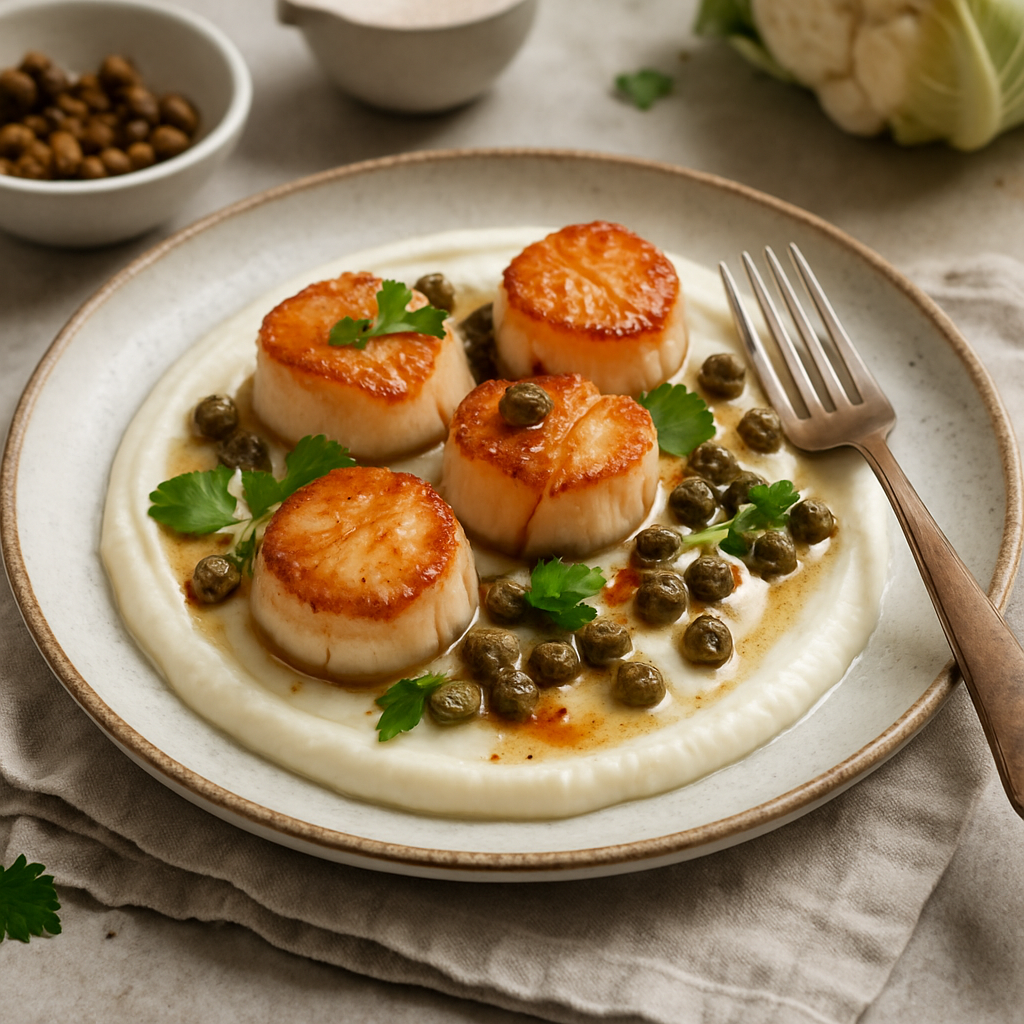
# Seared Scallops with Cauliflower Purée, Crispy Capers and Brown Butter
There's a particular kind of satisfaction in cooking something that looks restaurant-worthy but comes together in under 30 minutes. Seared scallops are exactly that dish — golden, sweet, and surprisingly forgiving once you know a couple of key techniques.
This recipe pairs them with a silky cauliflower purée, nutty brown butter, and crispy capers that add a salty, briny pop to every bite. It's the kind of plate that earns compliments without requiring a culinary degree.
---
Why Scallops Deserve a Spot in Your Rotation
Scallops have a reputation for being a "special occasion" ingredient, but they're genuinely one of the quickest proteins you can cook. From fridge to plate, you're looking at minutes rather than hours.
They're also nutritionally impressive — high in protein, low in fat, and a solid source of several key micronutrients including vitamin B12, zinc, and selenium. More on that shortly.
The other reason to cook scallops at home rather than saving them for restaurants: they're significantly cheaper per portion when you buy them yourself, especially if you source them from a good fishmonger or quality supermarket fish counter.
---
Choosing and Preparing Your Scallops
The biggest variable in this dish is the quality of the scallop itself. Look for hand-dived or king scallops — they should smell of the sea, not fishy, and have a firm, slightly translucent flesh.
Avoid "wet" scallops that have been treated with sodium tripolyphosphate. These are pumped with water to increase their weight, which means they release liquid when they hit the pan and steam rather than sear. You'll know them by their bright white, almost chalky appearance. Dry scallops are ivory or slightly pink and have a clean smell.
Pat them completely dry before cooking. This is non-negotiable. Any surface moisture is the enemy of a good crust. Use kitchen paper and press gently — don't rub.
Remove the tough, slightly opaque muscle tag attached to the side of each scallop if it's still there. It's edible but chewy and worth taking two seconds to pull off.
---
The Recipe
Serves: 2 Prep time: 15 minutes Cook time: 20 minutes
### Ingredients
For the cauliflower purée: - 1 small cauliflower (roughly 500g), cut into florets - 30g unsalted butter - 3–4 tbsp whole milk or single cream - Salt and white pepper to taste
For the crispy capers: - 2 tbsp capers, drained and thoroughly dried - 1 tbsp olive oil
For the scallops and brown butter: - 6 large king scallops, dry and patted dry - 1 tbsp neutral oil (sunflower or rapeseed) - 50g unsalted butter - 1 garlic clove, lightly crushed - A few sprigs of fresh thyme - Salt and black pepper
To finish: - A squeeze of lemon - Fresh flat-leaf parsley, roughly chopped
---
### Method
Step 1 — Make the purée
Boil the cauliflower florets in well-salted water until completely tender, around 12–15 minutes. You want them soft enough to blend without resistance.
Drain thoroughly and allow to steam-dry for a minute or two in the colander — excess water will make the purée thin. Transfer to a blender or food processor with the butter and blitz until smooth, adding milk or cream a tablespoon at a time until you reach a consistency like thick whipped cream. Season generously with salt and white pepper. Keep warm.
Step 2 — Crisp the capers
Heat the olive oil in a small pan over a medium-high heat. Add the dried capers and fry for 2–3 minutes until they open up and turn golden and crisp. Remove with a slotted spoon and drain on kitchen paper. They'll crisp further as they cool.
Step 3 — Sear the scallops
Get a heavy-based frying pan — cast iron is ideal — screaming hot over a high heat. Add the neutral oil and let it shimmer and just begin to smoke.
Season the scallops with salt on both sides immediately before cooking. Place them flat-side down, leaving space between each one. Do not move them. After 90 seconds to 2 minutes, check the underside — you're looking for a deep, caramelised mahogany crust. Flip once and cook for a further 60–90 seconds. The scallop should feel slightly firm at the edges but still have a little give in the centre.
Remove to a warm plate while you make the brown butter in the same pan.
Step 4 — Brown butter
Reduce the heat to medium. Add the butter, garlic, and thyme to the pan. As the butter melts, it will foam — swirl the pan and watch it carefully. Within 2–3 minutes the milk solids will turn golden and the butter will smell intensely nutty. Remove from the heat and squeeze in a little lemon juice (stand back — it will spit).
---
### To Plate
Spoon a generous sweep of cauliflower purée across each plate. Arrange the scallops on top, then spoon over the brown butter, letting it pool slightly around the purée. Scatter the crispy capers and a little fresh parsley over everything. Serve immediately.
---
What Makes This Work Nutritionally
This dish is a genuinely well-balanced plate despite looking like pure indulgence.
Scallops are one of the most protein-dense seafoods available, with around 17–20g of protein per 100g and very little fat. They're also one of the better dietary sources of vitamin B12, which plays a central role in nerve function and red blood cell production, and selenium, an antioxidant mineral that many people in the UK don't get enough of.
The cauliflower purée does a clever job of mimicking the richness of a potato or cream-based sauce while keeping carbohydrates relatively low. Cauliflower is high in fibre, vitamin C, and choline — a nutrient that supports brain health and is often underconsumed.
Brown butter adds fat and flavour, but the portion here is modest. The capers contribute sodium (worth noting if you're watching salt intake) but also small amounts of quercetin, a flavonoid with anti-inflammatory properties.
Per serving, this dish comes in at roughly 350–420 kcal, with around 35g of protein depending on scallop size — making it genuinely satisfying without being heavy.
---
What the Evidence Shows
Seafood consumption in the UK remains well below recommended levels, with most adults eating far less than the suggested two portions per week. Research consistently links regular fish and shellfish intake with lower risk of cardiovascular disease, largely due to their omega-3 fatty acid content and favourable protein-to-fat ratio.
Scallops specifically are lower in omega-3s than oily fish like salmon or mackerel, but they still contribute meaningful amounts alongside a much leaner nutritional profile. A 2020 review published in Nutrients highlighted shellfish as an underappreciated source of several micronutrients that are difficult to obtain in sufficient quantities from plant foods alone — including zinc, iodine, and B12.
For anyone eating less meat, scallops offer a way to meet protein targets without the saturated fat load that comes with red meat. They're also sustainably sourced when hand-dived, making them a lower-impact choice compared to many farmed proteins.
---
Practical Takeaways
A few things to take away from this recipe beyond the dish itself:
- Dry your scallops thoroughly — this single step is what separates a golden crust from a pale, steamed result
- Get the pan properly hot before the scallops go in — a lukewarm pan is the most common mistake
- Make the purée ahead if you're cooking for guests — it reheats well and means you can focus entirely on the scallops at the last minute
- Capers can be crisped hours in advance and stored at room temperature, making the final assembly very simple
- If you can't find king scallops, large queen scallops work — adjust the cooking time down to around 60 seconds per side
---
Macrology Tip
If you want meal plans that include high-protein, restaurant-quality dishes like this one — already mapped to your macros — Macrology generates macro-perfect meal plans in seconds — https://macrology.app/signin
You can log this recipe directly, adjust portion sizes, and get the full macro breakdown without any manual calculation. Cooking well and hitting your targets doesn't have to be two separate things.
Want meals like this planned to your exact macros?
Macrology generates a personalised meal plan in seconds — breakfast, lunch, dinner and snacks, all hitting your daily targets.
Start your free 14-day trial