Seared Duck Breast with Cherries, Red Cabbage and Creamy Celeriac Mash
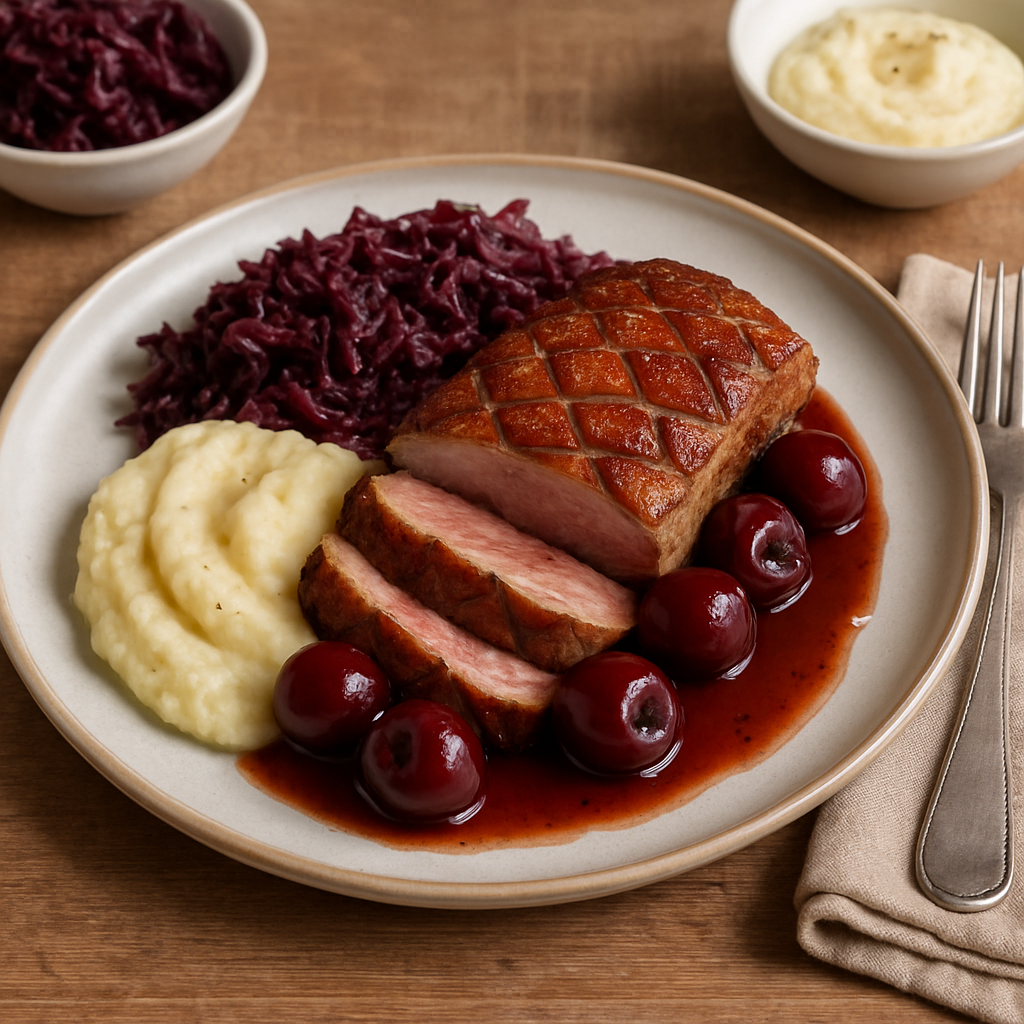
# Seared Duck Breast with Cherries, Red Cabbage and Creamy Celeriac Mash
Duck breast is one of those ingredients that sounds restaurant-worthy but is genuinely straightforward to cook at home. Pair it with a sharp cherry sauce, braised red cabbage, and silky celeriac mash, and you've got a plate that punches well above its effort level.
Why Duck Breast Deserves a Place in Your Meal Plan
Duck often gets overlooked in favour of chicken, but it brings something genuinely different to the table. The flavour is richer, the texture more satisfying, and the fat profile is more interesting than most people expect.
Duck fat is predominantly monounsaturated and saturated fat — a similar makeup to olive oil and beef respectively — rather than the inflammatory polyunsaturated fats you'd find in heavily processed cooking oils. It renders beautifully from the skin during cooking, basting the meat naturally and leaving behind a crisp, golden layer that's hard to argue with.
From a protein standpoint, a 170g duck breast delivers roughly 35–38g of protein alongside meaningful amounts of iron, zinc, B vitamins, and selenium. It's a nutritionally dense choice that earns its place on the plate.
What Makes This Dish Work Nutritionally
This isn't just a flavour combination that happens to look good — each component earns its place from a nutritional standpoint too.
Celeriac is an underrated root vegetable that's significantly lower in carbohydrate than potato (roughly 5g per 100g versus 17g for potato) while still delivering a creamy, comforting mash when blended with a little butter or cream. It's also a decent source of vitamin K, vitamin C, and dietary fibre.
Red cabbage is one of the most nutritionally dense brassicas available. It contains anthocyanins — the plant pigments responsible for its purple-red colour — which have been linked to anti-inflammatory and cardiovascular benefits in observational research. Braising it gently with a splash of vinegar and something sweet preserves much of its structure while developing a deeply savoury flavour.
Cherries, whether fresh or frozen, contribute vitamin C, potassium, and small amounts of melatonin and anthocyanins. The tartness cuts through the richness of the duck fat in a way that apple or orange simply can't replicate — it's a classic pairing for good reason.
The Ingredients You'll Need
Serves 2
For the duck: - 2 duck breasts (skin on, roughly 160–180g each) - Salt and black pepper - 1 tsp fresh thyme leaves
For the cherry sauce: - 200g cherries (fresh and pitted, or frozen and thawed) - 100ml red wine or chicken stock - 1 tbsp balsamic vinegar - 1 tsp honey - 1 small shallot, finely diced - 1 tsp butter
For the braised red cabbage: - ¼ small red cabbage, thinly sliced (roughly 250g) - 1 tbsp red wine vinegar - 1 tbsp redcurrant jelly or a small amount of honey - 100ml water or stock - Salt to taste
For the celeriac mash: - 400g celeriac, peeled and cut into chunks - 30g butter - 3–4 tbsp whole milk or single cream - Salt and white pepper
How to Cook It
Start with the cabbage — it benefits from the longest cooking time and only improves the longer it braises. Combine the sliced red cabbage, vinegar, jelly, and water or stock in a saucepan over a low-medium heat. Cover and cook for 25–30 minutes, stirring occasionally, until tender and glossy. Season to taste.
While the cabbage cooks, prepare the celeriac mash. Boil the celeriac chunks in salted water for 15–18 minutes until completely tender. Drain thoroughly — celeriac holds onto water, so give it a couple of minutes in the warm pan to steam dry. Mash or blend with butter and milk until smooth, seasoning with salt and white pepper. Keep warm over the lowest heat, stirring occasionally.
Score the duck skin in a crosshatch pattern, cutting through the fat but not into the meat. Season generously with salt, pepper, and thyme. Place the breasts skin-side down in a cold, dry frying pan — no oil needed. Turn the heat to medium and let the fat render slowly for 8–10 minutes until the skin is deeply golden and most of the fat has been released. Flip and cook for a further 3–4 minutes for medium (still slightly pink inside). Rest for 5 minutes under loose foil before slicing.
Make the cherry sauce in the same pan while the duck rests. Pour off most of the rendered duck fat (keep it — it's excellent for roasting potatoes). Soften the shallot in a little remaining fat for 2 minutes, then add the cherries, wine or stock, and balsamic vinegar. Cook over a medium-high heat for 4–5 minutes until the cherries have broken down and the sauce has reduced by roughly half. Stir in the honey and butter to finish.
Plate up by spooning a generous mound of celeriac mash, adding the braised red cabbage alongside, slicing the duck breast on the diagonal and fanning it over the top, then spooning the cherry sauce over the meat.
Getting the Duck Right: Common Mistakes to Avoid
The most common error people make with duck breast is treating it like chicken — high heat from the start, oil in the pan, rushing the process. Duck needs a different approach.
Starting in a cold pan allows the thick layer of subcutaneous fat to render gradually rather than searing the outside while leaving a thick, chewy layer of unrendered fat underneath. This is non-negotiable for a good result.
Resting is equally important. Duck breast, like all red meat, benefits from a proper rest — at minimum 5 minutes, ideally closer to 8. Slicing too early sends the juices running onto the board rather than redistributing through the meat.
Internal temperature is worth knowing if you use a probe thermometer: 55–58°C gives you a rosy, medium result; 60–63°C is closer to medium-well. Duck is safe to eat slightly pink in the middle — unlike chicken, the muscle structure doesn't carry the same bacterial risk throughout.
What the Evidence Shows
The combination of protein, fat, and fibre in this meal is worth paying attention to from a satiety perspective. Research consistently shows that meals higher in protein are associated with greater feelings of fullness and reduced appetite in the hours that follow — with some studies suggesting protein at 25–30% of total calories producing the most notable effect.
The fibre from celeriac and red cabbage also plays a role here. Soluble fibre slows gastric emptying and feeds beneficial gut bacteria, contributing to longer-lasting satiety and more stable blood glucose levels after eating.
This isn't a "light" dish — it's meant to be genuinely satisfying. The combination of high-quality protein, healthy fats, and plenty of vegetables hits most macro and micronutrient bases in a single plate.
Practical Takeaways
- Score the skin before seasoning — it helps the salt penetrate and the fat render more evenly.
- Don't skip the resting step — 5–8 minutes makes a visible difference to the final texture.
- Frozen cherries work just as well as fresh for the sauce and are often more economical, particularly outside summer months.
- Make extra braised cabbage — it reheats beautifully the next day and works alongside eggs, cold meats, or grilled sausages.
- The rendered duck fat left in the pan is a bonus ingredient — refrigerate it in a small jar and use it for roasting potatoes or root vegetables.
- Celeriac mash can be made ahead and reheated gently with a splash of extra milk to loosen.
---
If you want a week's worth of meals that hit your macros as satisfyingly as this one, Macrology generates macro-perfect meal plans in seconds — https://macrology.app/signin
> Macrology tip: Add this recipe to your weekly plan inside Macrology and it'll automatically calculate the macros per serving, adjust quantities for your household size, and slot it into a balanced week of eating — so a plate like this becomes the norm, not the exception.
Want meals like this planned to your exact macros?
Macrology generates a personalised meal plan in seconds — breakfast, lunch, dinner and snacks, all hitting your daily targets.
Start your free 14-day trial