Seared Chicken Thighs with White Bean Mash and Salsa Verde
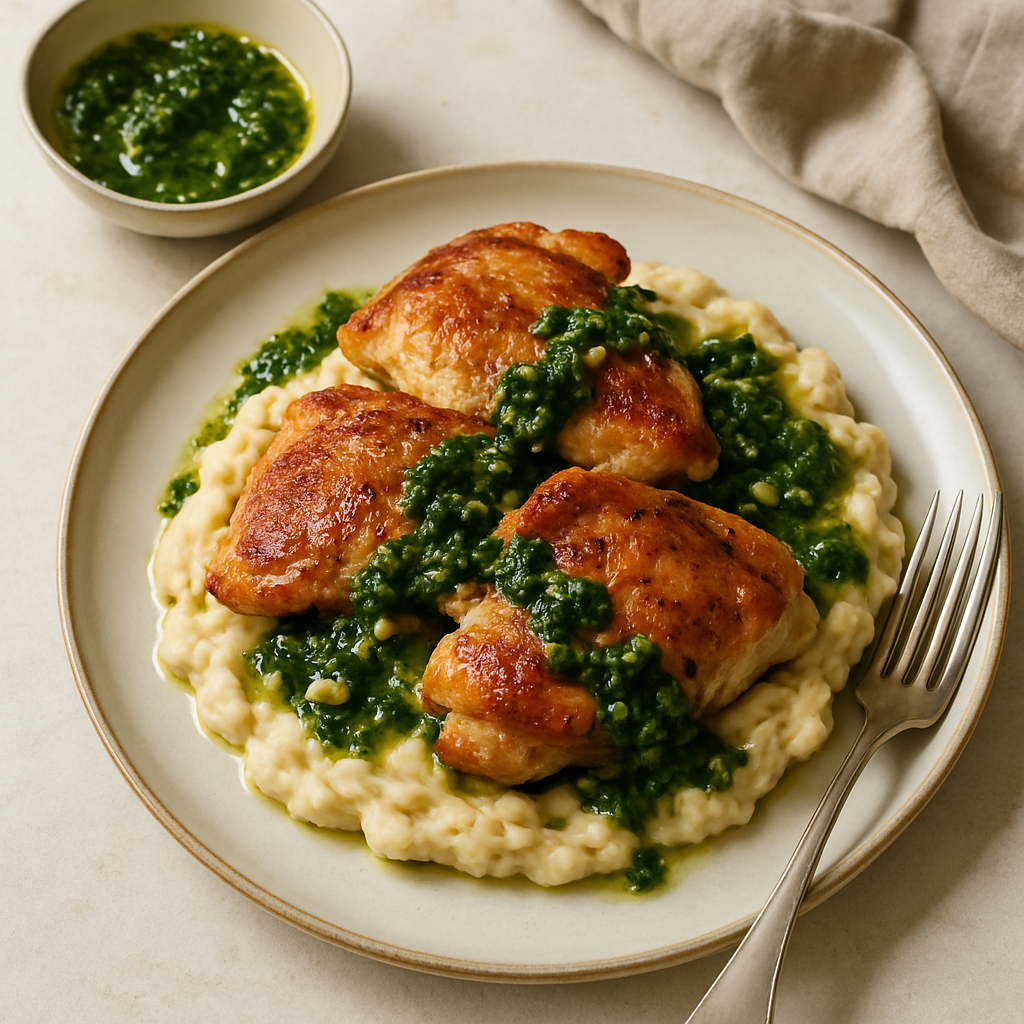
# Seared Chicken Thighs with White Bean Mash and Salsa Verde
There's a particular kind of weeknight dinner that feels like it belongs in a restaurant but takes less than 40 minutes to pull together. This is one of those meals — crispy-skinned chicken thighs, a silky white bean mash, and a punchy herb salsa verde that ties the whole plate together.
Why Chicken Thighs Deserve More Credit
Chicken breast gets all the attention in the fitness world, but thighs are arguably the more useful cut for everyday cooking. They're more forgiving, more flavourful, and — this might surprise you — nutritionally comparable in most of the ways that actually matter.
Thighs contain slightly more fat than breast meat, which is largely what gives them their depth of flavour. But that fat is predominantly unsaturated, and the additional calories are modest — we're talking roughly 50–70 extra calories per 100g compared to breast, depending on preparation. In return, you get a cut that's far harder to overcook and infinitely more satisfying to eat.
For this recipe, bone-in, skin-on thighs are the move. The bone helps retain moisture during cooking, and the skin crisps up into something golden and genuinely delicious when seared properly.
The White Bean Mash — Better Than You'd Expect
If you've been reaching for potato every time a recipe calls for a starchy base, white beans are worth getting acquainted with. They mash beautifully, absorb flavour readily, and bring a nutritional profile that potatoes simply can't match on their own.
Cannellini beans or butter beans both work well here. Either will give you a mash that's creamy and substantial without feeling heavy. A splash of good olive oil, a crushed garlic clove cooked briefly in butter, and a little warm stock to loosen the texture — that's genuinely all you need.
What sets the bean mash apart from a standard side is the protein and fibre combination. A 200g serving of cooked cannellini beans delivers around 15g of protein and 10g of fibre. Alongside the chicken, this dish clocks up a serious macro profile without any complicated prep.
Making the Salsa Verde
Salsa verde is one of those things that sounds more technical than it is. At its core, it's a handful of fresh herbs blitzed or chopped with oil, acid, and something savoury — and it transforms almost anything it touches.
For this version, use a combination of flat-leaf parsley and basil, with a small amount of mint if you have it. Add a tablespoon of capers, half a small clove of garlic, a teaspoon of Dijon mustard, a squeeze of lemon juice, and enough olive oil to bring it together into a loose, spoonable sauce.
The mustard acts as an emulsifier, keeping the sauce cohesive rather than splitting into oil and herbs. The capers add a sharp, briny note that cuts through the richness of both the chicken and the bean mash. If you want a bit more heat, a small amount of fresh chilli works well without overpowering the herbs.
The Sear — Where Most People Go Wrong
The difference between a properly seared chicken thigh and a pale, steamed-in-its-own-juices disappointment comes down to two things: dry skin and patience.
Pat the thighs completely dry with kitchen paper before they go anywhere near the pan. Any surface moisture will steam the skin rather than crisp it. Season generously with salt and pepper, then let them sit at room temperature for 15–20 minutes before cooking.
Get your oven-safe frying pan — ideally cast iron or stainless steel — properly hot before adding any oil. When the thighs go in skin-side down, don't move them. Leave them undisturbed for 8–10 minutes. You'll hear the sizzle calm down as the moisture renders out, and eventually the skin will release naturally from the pan when it's properly golden. Flip, add a knob of butter, and finish in a 200°C oven for 15–18 minutes until cooked through.
Resting the chicken for 5 minutes before serving isn't optional — it's what keeps the juices in the meat rather than on your plate.
What Makes This Work Nutritionally
This dish is built around a high-protein, high-fibre foundation that keeps you full without relying on excessive calories. Here's how the key elements contribute:
Chicken thighs provide complete protein — all the essential amino acids your body can't make itself — along with meaningful amounts of iron, zinc, and B vitamins, particularly B6 and B12. These micronutrients play a role in energy metabolism and immune function, though you'll rarely see them mentioned in the fitness content that tends to focus only on grams of protein per serving.
White beans are one of the best plant-based protein sources you can build a meal around. Their combination of resistant starch and soluble fibre supports digestive health and helps moderate blood sugar response — useful if you're eating later in the evening and want steady energy rather than a spike and crash.
Olive oil, used both in the mash and the salsa verde, contributes monounsaturated fatty acids associated in research with cardiovascular health markers. It also helps your body absorb the fat-soluble nutrients in the herbs — a small point, but worth noting.
The herbs in the salsa verde aren't just there for colour. Parsley is a source of vitamin K and vitamin C, and the garlic contains allicin compounds that have been studied for their anti-inflammatory properties. None of this transforms a meal into medicine, but it's a reminder that flavour and nutrition aren't at odds.
What the Evidence Shows
Research on dietary protein consistently points to higher-protein meals being more satiating than their lower-protein equivalents — meaning you're less likely to be hungry again an hour later. A 2015 review in the American Journal of Clinical Nutrition found that increased protein intake was associated with greater feelings of fullness across a range of meal patterns.
The fibre from white beans is also backed by solid evidence. The NHS recommends 30g of dietary fibre per day for adults, a target most people in the UK fall well short of. A single serving of this dish gets you meaningfully closer to that goal.
There's also emerging evidence around the role of polyphenols — compounds found in olive oil and fresh herbs — in supporting the gut microbiome. The research is still developing, but the direction is consistently positive.
None of this means you need to think of this dinner as a health intervention. It's just a well-constructed meal that happens to do a lot of things right at once.
The Full Recipe
Serves: 2 Time: 40 minutes
Ingredients
- 4 bone-in, skin-on chicken thighs
- 2 x 400g tins cannellini or butter beans, drained
- 1 garlic clove, crushed
- 30g butter
- 100ml chicken stock (warm)
- 3 tbsp olive oil
- Salt and pepper
For the salsa verde: - Large handful flat-leaf parsley - Small handful basil - 1 tbsp capers, drained - ½ small garlic clove - 1 tsp Dijon mustard - Juice of ½ lemon - 4–5 tbsp extra virgin olive oil
Method
1. Pat the chicken thighs completely dry. Season well and leave to come to room temperature for 15–20 minutes. 2. Preheat your oven to 200°C (180°C fan). 3. Heat an oven-safe frying pan over a high heat. Add a thin layer of oil, then place the thighs skin-side down. Cook undisturbed for 8–10 minutes until the skin is deep golden. 4. Flip the thighs, add a knob of butter, and transfer the pan to the oven. Cook for 15–18 minutes until cooked through. Rest for 5 minutes. 5. While the chicken cooks, warm the butter and garlic in a saucepan until fragrant. Add the drained beans and warm stock, then mash to your preferred consistency. Season well. 6. Blitz or finely chop all salsa verde ingredients together. Season and adjust with more lemon or oil as needed. 7. Serve the chicken over the bean mash with the salsa verde spooned generously over the top.
Practical Takeaways
Make extra salsa verde. It keeps in the fridge for 3–4 days and works on eggs, roasted vegetables, grilled fish, or stirred through pasta. Making a larger batch takes the same amount of effort.
The bean mash reheats well. Loosen it with a splash of stock or water when reheating and it comes back together easily — useful for meal prep.
Swap the protein if needed. This exact approach works with salmon fillets (skin-side down in the pan, no oven required) or pork tenderloin. The salsa verde and bean mash are flexible enough to carry different proteins without the recipe feeling like a repetition.
Season at every stage. The beans need seasoning in the pan, not just at the table. Underseasoned beans are the most common reason this kind of dish falls flat.
---
If you want a week's worth of balanced, macro-tracked meals built around dishes like this one, Macrology generates macro-perfect meal plans in seconds — https://macrology.app/signin
---
> Macrology tip: Add this recipe to your Macrology plan and the app will automatically balance the rest of your day's meals around its macros — so you get the full picture without the spreadsheet.
Want meals like this planned to your exact macros?
Macrology generates a personalised meal plan in seconds — breakfast, lunch, dinner and snacks, all hitting your daily targets.
Start your free 14-day trial