Roasted Tomato and Prawn Orzo with Feta, Olives and Fresh Basil
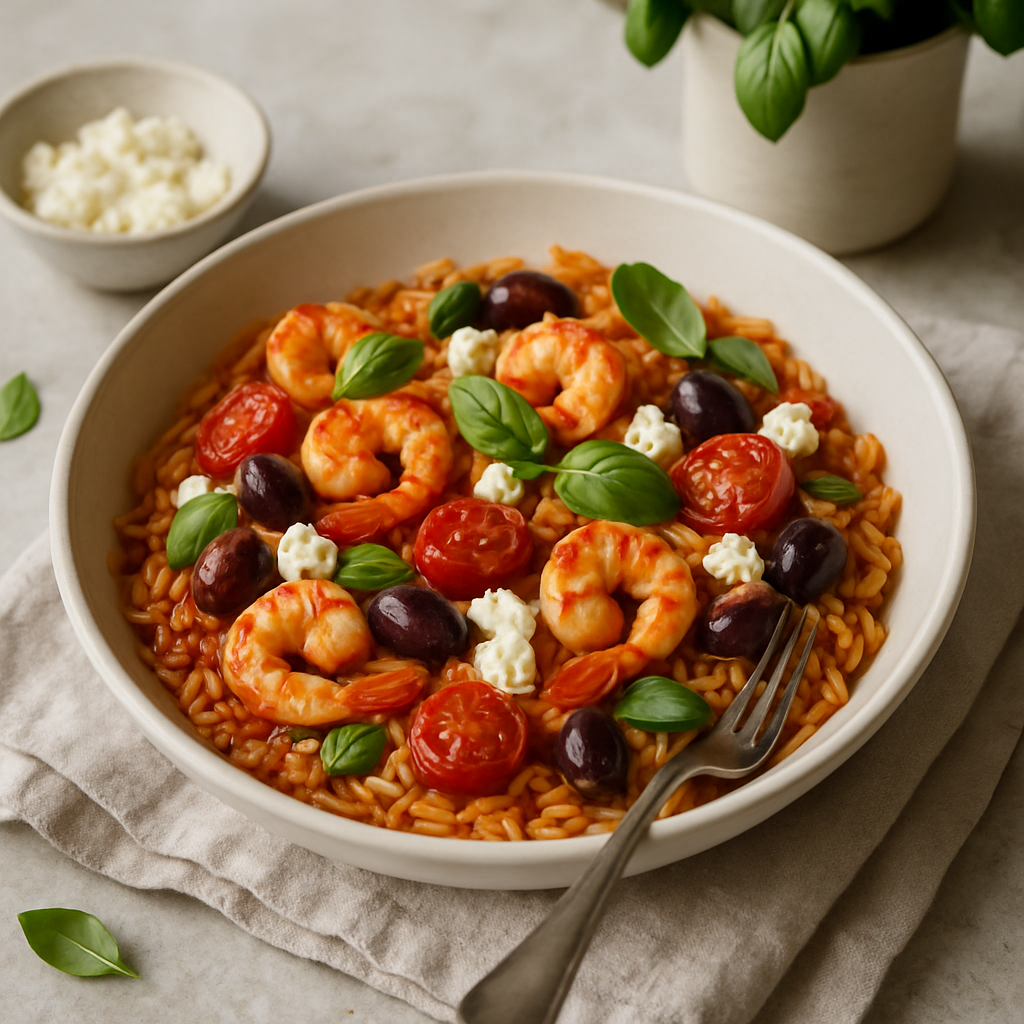
# Roasted Tomato and Prawn Orzo with Feta, Olives and Fresh Basil
There's a particular kind of meal that feels like more effort than it actually is — the kind you'd order at a beachside restaurant and assume took hours. This is one of those meals.
Roasted tomato and prawn orzo with feta, olives and fresh basil is weeknight-friendly, genuinely flavourful, and the sort of dish that makes everyone at the table quiet for a few minutes. That's always a good sign.
---
What is orzo, and why does it work so well here?
Orzo is a small, rice-shaped pasta that originates from Italy, though it's become a staple across Mediterranean cooking. It cooks quickly — usually in around eight to ten minutes — and has a lovely silky texture that absorbs sauces and cooking liquids beautifully.
What makes orzo particularly well-suited to this recipe is how it bridges the gap between a pasta dish and a risotto. It's starchy enough to create a creamy, cohesive sauce without needing cream or excessive butter. The cooking liquid — a combination of stock and the roasted tomato juices — gets absorbed directly into the orzo as it cooks, packing flavour into every bite.
It's also more forgiving than rice-based dishes. You don't need to stir it constantly or worry about it catching on the bottom of the pan.
---
The ingredients
Serves 4
- 400g cherry tomatoes
- 3 tbsp olive oil, plus extra to finish
- 4 garlic cloves, thinly sliced
- 1 tsp smoked paprika
- ½ tsp dried chilli flakes (optional)
- 300g orzo
- 700ml chicken or vegetable stock (warm)
- 400g raw king prawns, peeled and deveined
- 100g pitted Kalamata olives, halved
- 150g feta cheese, crumbled
- 1 lemon, zest and juice
- Large handful of fresh basil leaves
- Salt and black pepper
You'll need: A large, deep oven-safe frying pan or a wide casserole dish that can go from hob to oven.
---
How to make it
Step 1 — Roast the tomatoes
Preheat your oven to 200°C (180°C fan). Tip the cherry tomatoes into your oven-safe pan with 2 tablespoons of olive oil, the sliced garlic, smoked paprika, chilli flakes if using, and a good pinch of salt and pepper. Toss everything together and roast for 20–25 minutes, until the tomatoes are blistered and beginning to collapse.
Don't rush this step. The roasting concentrates the tomatoes' natural sweetness and creates those slightly caramelised, jammy edges that give the whole dish its depth of flavour.
Step 2 — Toast the orzo
Remove the pan from the oven and place it over a medium heat on the hob. Add the remaining tablespoon of olive oil and tip in the orzo. Stir it around for about two minutes until it smells lightly nutty and looks very lightly golden. This quick toasting step adds another layer of flavour and helps the orzo hold its texture as it cooks.
Step 3 — Add the stock and simmer
Pour in the warm stock and stir well, scraping up any sticky bits from the bottom of the pan. Bring to a gentle simmer and cook, stirring occasionally, for around 8–10 minutes. You're looking for the orzo to be just slightly underdone — it will finish cooking in the next step.
If the pan looks dry before the orzo is cooked, add a splash more stock or hot water.
Step 4 — Add the prawns and olives
Stir in the prawns and olives, then cook for a further 3–4 minutes until the prawns are pink and cooked through. Prawns cook quickly, so keep an eye on them — overcooked prawns turn rubbery, and that's the only real way to go wrong here.
Step 5 — Finish and serve
Take the pan off the heat. Squeeze over the lemon juice and stir through about half the feta. Taste and adjust seasoning. Scatter the remaining feta on top along with the fresh basil leaves and a little lemon zest. A drizzle of good olive oil over the top finishes it off nicely.
Serve straight from the pan.
---
What makes this work nutritionally
This recipe delivers a genuinely well-rounded macronutrient profile without any deliberate engineering — it just falls that way naturally.
Prawns are one of the leanest, highest-protein seafood options available. A 100g serving of cooked king prawns contains roughly 20–24g of protein and very little fat, making them an excellent base for a meal where you want to hit decent protein numbers without a heavy caloric load.
Orzo provides the carbohydrate backbone of the dish. As a pasta, it has a moderate glycaemic index compared to white rice, meaning it tends to raise blood sugar more gradually — particularly useful when it's cooked in the way described here, where the starch absorbs stock and develops a denser, more resistant structure.
The olive oil, olives, and feta contribute healthy unsaturated fats alongside some saturated fat from the dairy. The Mediterranean dietary pattern — which this dish sits firmly within — is one of the most consistently well-supported eating patterns in the scientific literature for cardiovascular health, largely because of the types of fat and fibre-rich plant foods it includes.
Tomatoes, particularly when roasted, are a concentrated source of lycopene, a carotenoid with antioxidant properties. Interestingly, lycopene becomes more bioavailable when tomatoes are cooked and paired with fat — which is exactly what's happening here when they roast in olive oil.
A rough nutritional breakdown per serving: approximately 520–560 kcal, 38–40g protein, 55g carbohydrates, 16–18g fat. These will vary depending on exact quantities and the stock used.
---
What the evidence shows about Mediterranean-style eating
It's worth pausing on the broader dietary context here, because the ingredients in this recipe aren't just chosen for flavour.
The Mediterranean diet is one of the most extensively studied dietary patterns in nutrition science. The PREDIMED trial, one of the largest randomised dietary intervention studies ever conducted, found that a Mediterranean diet supplemented with olive oil or nuts reduced major cardiovascular events by around 30% compared to a low-fat control diet.
More broadly, research consistently associates Mediterranean-style eating with lower rates of type 2 diabetes, cognitive decline, and all-cause mortality. It's not any single ingredient doing the work — it's the cumulative effect of regular oily fish, legumes, vegetables, whole grains, olive oil, and moderate portions of dairy and lean protein.
This recipe isn't a health claim. It's just a dish that happens to use ingredients your body tends to respond well to. No reinvention needed.
---
Common variations and swaps
No prawns? Chicken thigh pieces work well — dice them small, season generously, and brown them in the pan before the tomatoes go in. Alternatively, a drained tin of butter beans or chickpeas makes this entirely plant-based without losing the protein contribution significantly.
Stock choice matters more than you might think. A good-quality fish or seafood stock will deepen the flavour considerably if you can get hold of one. Chicken stock is the reliable everyday option. Vegetable stock works, though the dish will be slightly lighter in flavour.
Kalamata vs. other olives. Kalamata olives have a rich, slightly briny, almost fruity flavour that stands up to roasted tomatoes well. Green olives will work, but the flavour profile shifts — nuttier, sharper. Both are perfectly valid.
Feta alternatives. A well-drained ricotta or goat's cheese will give you the creamy contrast without the salt hit of feta. Worth considering if the overall dish is already quite saline from the stock.
---
Practical takeaways
- Roast the tomatoes properly. Twenty-five minutes at high heat creates a completely different result from a quick ten-minute stint. The collapse and caramelisation is where the flavour lives.
- Toast the orzo before adding liquid. It takes two minutes and adds measurable depth.
- Warm your stock before adding it. Cold stock hitting a hot pan slows the cooking and can make the orzo cook unevenly.
- Add prawns last, and watch them. Three to four minutes is usually enough. Pink and curled means done.
- Season at the end. Feta and olives are both salty, so taste before reaching for the salt.
- Serve immediately. Orzo continues to absorb liquid as it sits, so this one is best eaten fresh from the pan rather than kept warm.
---
If you want macro-balanced meals like this one planned out for your whole week — without the spreadsheet — Macrology generates macro-perfect meal plans in seconds — https://macrology.app/signin
---
> Macrology tip: Log this recipe in Macrology to see exactly how it fits your daily targets. You can adjust portion sizes and swap ingredients directly in the app to match your macros without losing the flavour balance that makes the dish work.
Want meals like this planned to your exact macros?
Macrology generates a personalised meal plan in seconds — breakfast, lunch, dinner and snacks, all hitting your daily targets.
Start your free 14-day trial