Roasted Garlic and White Bean Soup with Crispy Pancetta and Sourdough
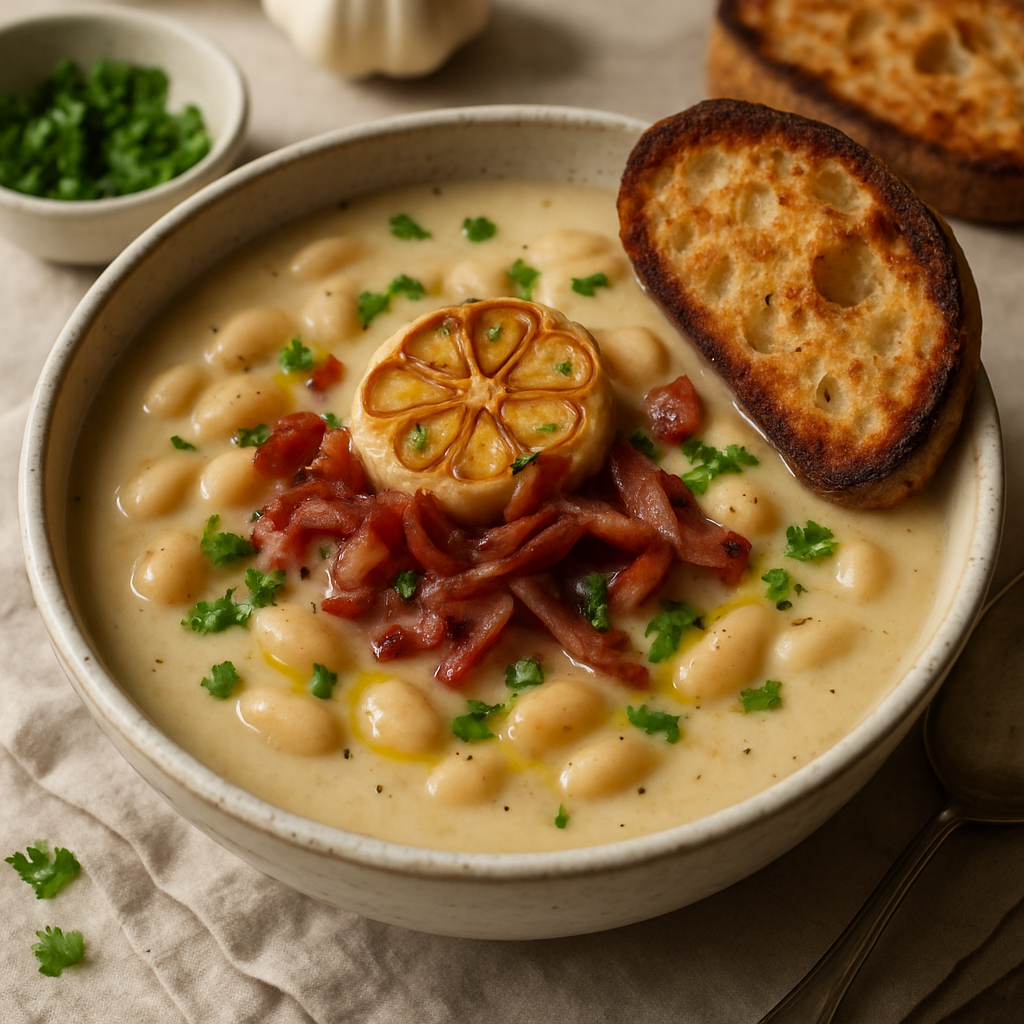
# Roasted Garlic and White Bean Soup with Crispy Pancetta and Sourdough
There's a particular kind of soup that doesn't feel like a consolation prize for not cooking a "proper" meal. This is one of them. Roasted garlic and white bean soup is deeply savoury, genuinely filling, and comes together with minimal fuss — the sort of thing you'll make once and find yourself thinking about all week.
Why This Soup Is Worth Making
White bean soup has been a staple across southern Europe for centuries, and for good reason. It's built on cheap, shelf-stable ingredients, scales easily, and delivers a thick, creamy texture without needing a drop of cream.
The magic here comes from roasting the garlic rather than just sweating it raw. That single step transforms the flavour from sharp and pungent to sweet, mellow, and almost nutty. Combined with the earthy creaminess of white beans and the salty crunch of crispy pancetta, you get a bowl that feels far more considered than the effort involved.
This recipe is also genuinely macro-friendly. It's high in protein, rich in fibre, and satisfying enough that you won't be raiding the biscuit tin an hour later.
The Ingredients You'll Need
Serves 4
- 2 whole bulbs of garlic
- 2 × 400g tins of cannellini beans, drained and rinsed
- 150g pancetta, diced (or smoked bacon lardons)
- 1 medium white onion, finely diced
- 2 sticks of celery, finely diced
- 1 litre good-quality chicken stock (or vegetable stock)
- 2 tbsp olive oil, plus extra for the garlic
- 1 tsp fresh thyme leaves (or ½ tsp dried)
- 1 bay leaf
- Salt and black pepper
- 4 thick slices of sourdough, to serve
- A small handful of flat-leaf parsley, roughly chopped
Optional but excellent: a Parmesan rind dropped into the soup while it simmers, and a drizzle of extra virgin olive oil to finish.
How to Make It
Step 1 — Roast the garlic
Preheat your oven to 200°C (180°C fan). Slice the top off each garlic bulb to expose the cloves, drizzle with olive oil, wrap loosely in foil, and roast for 40–45 minutes until the cloves are completely soft and golden. Set aside to cool slightly.
Step 2 — Build the base
While the garlic is roasting, heat a heavy-bottomed pan or Dutch oven over a medium heat. Add a splash of olive oil and fry the pancetta until crispy and golden — around 5–6 minutes. Remove with a slotted spoon and set aside, leaving the rendered fat in the pan.
Add the onion and celery to the pan and cook gently in the pancetta fat for 8–10 minutes until completely soft and translucent. Don't rush this — the slow-cooked base is what gives the soup its depth.
Step 3 — Add the beans and stock
Add the thyme, bay leaf, and drained cannellini beans to the pan. Squeeze the roasted garlic cloves out of their skins directly into the pot — they should slip out easily. Add the Parmesan rind if using.
Pour in the stock, season lightly with salt and pepper, and bring to a gentle simmer. Cook for 15–20 minutes to let the flavours meld together.
Step 4 — Blend and finish
Remove the bay leaf (and Parmesan rind if you used one). Use a hand blender to blitz roughly half the soup — this gives you a thick, creamy base while keeping some texture from the whole beans. Alternatively, blend it fully smooth if you prefer.
Taste and adjust the seasoning. If it's thicker than you'd like, loosen with a splash more stock or water.
Step 5 — Serve
Toast or griddle the sourdough. Ladle the soup into bowls, scatter over the crispy pancetta and chopped parsley, and finish with a drizzle of extra virgin olive oil. Serve the sourdough on the side for dunking.
What Makes This Work Nutritionally
This isn't just a comforting bowl of soup — it's genuinely well-constructed from a nutrition standpoint.
Cannellini beans are one of the better plant-based protein sources available. A 400g tin provides roughly 20–22g of protein and around 15g of fibre, the latter of which feeds the beneficial bacteria in your gut and supports steady blood sugar levels. The fibre content is also a key reason this soup keeps you full — it slows gastric emptying, meaning you stay satisfied for longer than a comparable calorie meal without beans would manage.
Garlic, especially when roasted, retains many of its beneficial compounds including allicin precursors and sulphur-containing molecules associated with cardiovascular and immune support. The research here is nuanced — most of the strongest evidence comes from garlic extract studies rather than culinary quantities — but roasting rather than discarding it is a no-brainer.
Pancetta serves a functional role beyond flavour. The rendered fat provides fat-soluble vitamin absorption from other ingredients, and the salt and umami it adds means you need far less seasoning overall to achieve a well-balanced dish.
Sourdough is a better companion here than standard white bread. The long fermentation process partially breaks down the phytic acid in wheat, which can interfere with mineral absorption, and produces a lower glycaemic response compared to standard bread — meaning less of an energy spike and crash after eating.
What the Evidence Shows
The broader dietary pattern that this soup belongs to — high in legumes, olive oil, vegetables, and wholegrains — is one of the most consistently supported eating patterns in nutritional research.
A landmark 2013 study published in the New England Journal of Medicine (the PREDIMED trial) found that a Mediterranean-style diet supplemented with olive oil or nuts significantly reduced the risk of major cardiovascular events compared to a low-fat control diet. Subsequent analyses and the updated PREDIMED-Plus trial have reinforced these findings across different populations.
White beans specifically have been studied in the context of satiety and glycaemic control. Research published in Obesity and the American Journal of Clinical Nutrition has shown that regular legume consumption is associated with better weight management outcomes, partly through the mechanisms already mentioned — fibre-driven satiety, protein content, and a lower glycaemic response compared to refined carbohydrates.
None of this means soup cures anything. But it does mean that building meals around ingredients like these is a genuinely reasonable approach if you care about eating well without obsessing over it.
Common Mistakes to Avoid
Using raw garlic instead of roasted. You can absolutely make a white bean soup with raw garlic — it'll be fine. But roasting converts the sharp, sulphurous compounds into sweeter, more complex ones. It's 45 minutes in the oven while you do something else. It's worth it.
Blending the whole lot. Fully blended white bean soup can end up with a slightly gluey, baby-food texture. Keeping some whole beans in the mix gives it body and makes it feel more like a proper meal.
Under-seasoning. Beans absorb a lot of salt. Taste as you go, especially after blending, and don't be shy with the black pepper.
Skipping the finishing drizzle. A little extra virgin olive oil over the top isn't just aesthetic — it rounds out the flavour and adds a pleasant richness that brings the whole bowl together.
Practical Takeaways
- Roast the garlic in advance. Whole roasted garlic bulbs keep in the fridge for up to a week, so make double while you're at it.
- This soup freezes brilliantly. Make a big batch and portion it into freezer bags or containers. It keeps well for up to three months.
- Keep pancetta optional. If you want a vegetarian version, skip the pancetta and use a good vegetable stock. Add a tablespoon of white miso paste at the end for depth.
- Use dried beans if you have time. Soak and cook your own cannellini beans for a noticeably creamier result — roughly 250g dried will replace the two tins.
- The Parmesan rind is a free flavour upgrade. Keep them in the freezer and drop one into any soup or braise.
If you want high-protein, satisfying meal plans built around recipes like this one, Macrology generates macro-perfect meal plans in seconds — https://macrology.app/signin
---
Macrology tip: Log this soup in Macrology to get an accurate macro breakdown and see how it fits into your daily targets. You can also use the meal planner to build a full week of meals around high-fibre, protein-rich dishes like this one.
Want meals like this planned to your exact macros?
Macrology generates a personalised meal plan in seconds — breakfast, lunch, dinner and snacks, all hitting your daily targets.
Start your free 14-day trial