Roasted Butternut Squash and Sage Gnocchi with Brown Butter and Walnuts
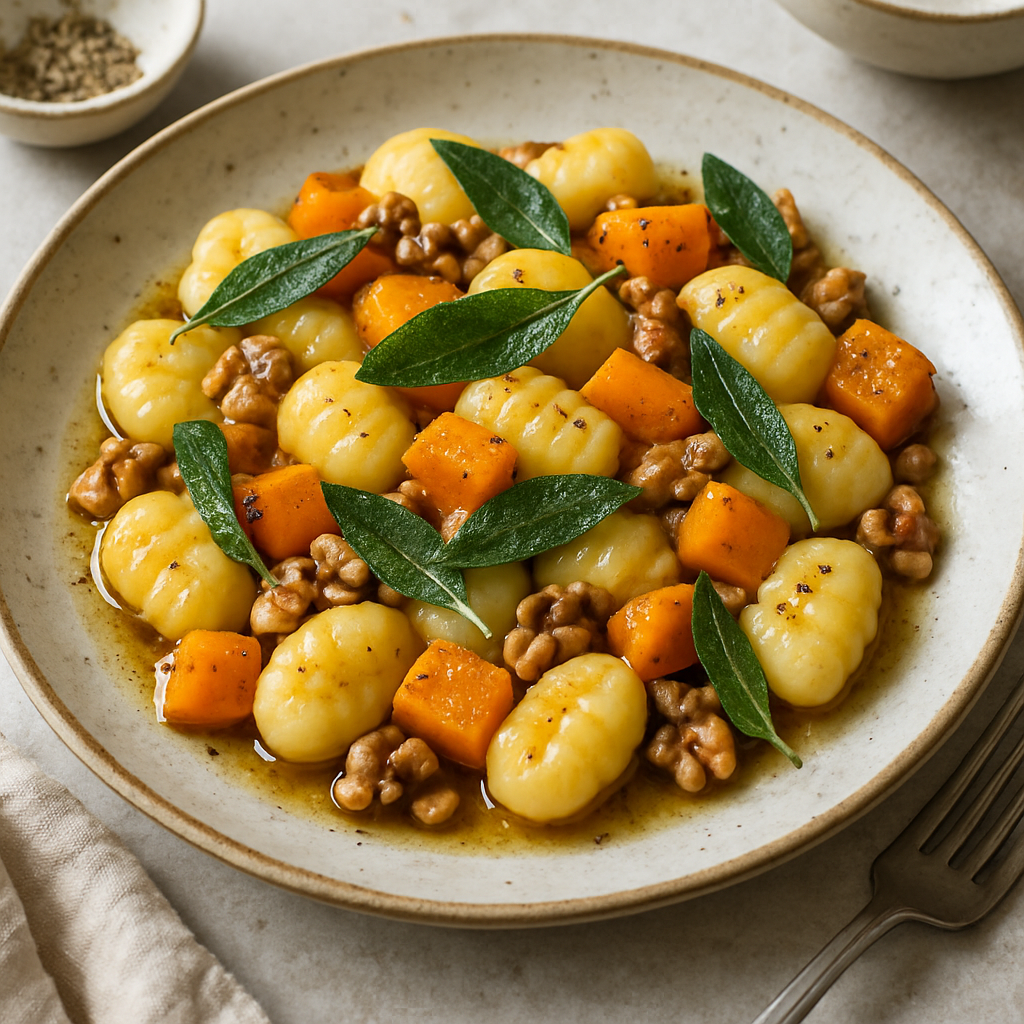
# Roasted Butternut Squash and Sage Gnocchi with Brown Butter and Walnuts
There's something about gnocchi that feels like a proper treat — soft, pillowy, golden at the edges — but it has a reputation for being fiddly and time-consuming. This version takes the pressure off by leaning on roasted butternut squash, which does most of the heavy lifting in terms of flavour, colour, and texture.
The result is a bowl that tastes like autumn in the best possible way: nutty brown butter, crispy sage, toasted walnuts, and gnocchi that are genuinely straightforward to make at home.
What Makes This Dish Worth Making
Butternut squash gnocchi sits in a different category to the standard potato version. The squash adds a natural sweetness and a deep orange colour, while its lower water content (compared to some potato varieties) makes the dough easier to handle without adding excess flour.
Brown butter is one of those techniques that sounds fancy but takes about three minutes and transforms an ordinary sauce into something deeply savoury and nutty. Pair it with walnuts and crispy sage, and you've got layers of texture and flavour with minimal effort.
This is the kind of recipe that works as a weeknight dinner or something you'd serve to guests without apology.
What the Evidence Shows: Is Gnocchi Actually Good for You?
Gnocchi tends to get lumped in with the "bad carbs" narrative, which isn't particularly useful or accurate. What matters nutritionally is the full picture of the dish — not just one ingredient in isolation.
Butternut squash is a genuinely nutrient-dense base. It's rich in beta-carotene (which the body converts to vitamin A), vitamin C, potassium, and fibre. A 2021 review in Nutrients highlighted that beta-carotene from whole food sources is well absorbed, particularly when consumed alongside fat — which the brown butter in this recipe conveniently provides.
Walnuts bring more to the table than crunch. They're one of the few plant sources of ALA omega-3 fatty acids, and research consistently links walnut consumption to improved cardiovascular markers. A meta-analysis published in Circulation found that regular walnut intake was associated with reduced LDL cholesterol.
The brown butter adds fat-soluble nutrient absorption and flavour. In modest amounts, it rounds out the macros of a dish that's otherwise carbohydrate-led. The sage, while used in small quantities, contains rosmarinic acid — a compound with antioxidant properties noted in food science literature.
This is a carbohydrate-forward dish, which is perfectly appropriate for most people, particularly those who are active or need sustained energy throughout the day. It's not a protein powerhouse, but adding a side salad or a sprinkle of Parmesan can shift the balance meaningfully.
What Makes This Work Nutritionally
The combination of roasted squash and plain flour creates gnocchi with more micronutrients than a standard all-potato version. The fat from butter and walnuts slows digestion slightly and aids the absorption of fat-soluble vitamins from the squash.
Walnuts specifically contribute:
- Healthy unsaturated fats
- A small but meaningful amount of plant-based protein
- Magnesium and copper, both of which support energy metabolism
Sage, though a garnish here, has been studied for its mild cognitive and anti-inflammatory properties. You're not adding it for health reasons — you're adding it because it tastes incredible with butter — but it's a nice bonus.
The overall macro profile per serving lands at roughly 450–520 kcal, with a decent carbohydrate base, moderate fat from the butter and walnuts, and light protein. It's a satisfying meal that doesn't leave you heavy.
Ingredients (Serves 4)
For the gnocchi:
- 800g butternut squash, peeled and cubed
- 200–250g plain flour, plus extra for dusting
- 1 egg yolk
- ½ tsp fine sea salt
- ¼ tsp freshly grated nutmeg
For the brown butter sauce:
- 80g unsalted butter
- 12–15 fresh sage leaves
- 60g walnuts, roughly broken
- Salt and black pepper
- Optional: 30g finely grated Parmesan, to serve
- Optional: a squeeze of lemon juice
Method
1. Roast the squash
Preheat your oven to 200°C (180°C fan). Spread the squash cubes on a lined baking tray, drizzle with a little oil, and roast for 30–35 minutes until completely soft and starting to caramelise at the edges. This step is important — you want as much moisture to evaporate as possible, which gives you more workable gnocchi dough.
2. Make the dough
Allow the squash to cool slightly, then mash it thoroughly or pass it through a ricer for a smoother result. Spread it on a clean surface and let any remaining steam escape for a few minutes. Add the egg yolk, salt, and nutmeg, then gradually incorporate the flour. Mix gently until a soft, slightly tacky dough forms. Resist the urge to add too much flour — a soft dough makes lighter gnocchi.
3. Shape the gnocchi
Divide the dough into 4 portions. On a lightly floured surface, roll each portion into a rope about 2cm thick, then cut into 2–3cm pieces. If you want the classic ridged look, roll each piece over the back of a fork. Set aside on a floured tray.
4. Cook the gnocchi
Bring a large pan of salted water to the boil. Cook the gnocchi in batches — they're ready when they float to the surface, usually after 2–3 minutes. Remove with a slotted spoon and set aside. For extra texture, pan-fry the boiled gnocchi in a little oil or butter for 1–2 minutes until golden on one side.
5. Make the brown butter sauce
In a wide frying pan over a medium heat, melt the butter. Continue cooking, swirling occasionally, until it turns a deep golden colour and smells nutty — around 3–4 minutes. Add the sage leaves and let them crisp up for 30 seconds. Add the walnuts, toss briefly, then add the gnocchi and coat everything in the sauce. Season well and finish with a squeeze of lemon if you like.
6. Serve immediately
Divide between four bowls and top with Parmesan if using. Eat straight away — gnocchi waits for no one.
Tips for Getting the Gnocchi Right
The most common issue with homemade gnocchi is a heavy, dense texture — usually caused by too much flour or excess moisture in the squash. Here's how to avoid it:
Roast, don't steam or boil. Roasting removes more water from the squash, giving you a drier base to work from. Boiled or steamed squash retains too much liquid and forces you to add more flour, which makes the gnocchi chewy.
Use flour gradually. Start with 200g and only add more if the dough is genuinely unworkable. It should be soft and slightly sticky — that's fine.
Don't overwork the dough. Treat it gently, like pastry. Overworking develops gluten and makes the gnocchi tough.
Taste the water. It should taste like the sea. Properly salted water makes a noticeable difference to the final flavour.
Practical Takeaways
- Roast the squash well in advance — it can sit in the fridge for up to two days, saving you time on the day
- Shaped, uncooked gnocchi freezes brilliantly: freeze on a tray first, then transfer to a bag — cook straight from frozen, just add an extra minute
- The brown butter sauce comes together in under five minutes, so prep everything else before you start it
- If you don't have walnuts, toasted pecans or pine nuts work well; hazelnuts are excellent here too
- A handful of wilted spinach or some crumbled goat's cheese stirred through at the end adds protein and rounds out the meal
---
If you want to hit your macro targets without giving up meals like this one, Macrology generates macro-perfect meal plans in seconds — [https://macrology.app/signin](https://macrology.app/signin)
> Macrology tip: Building a meal plan around higher-carbohydrate dinners like this gnocchi? Macrology can balance your day automatically — adjusting breakfast and lunch to complement your evening meal so your overall targets stay on track without any manual maths.
Want meals like this planned to your exact macros?
Macrology generates a personalised meal plan in seconds — breakfast, lunch, dinner and snacks, all hitting your daily targets.
Start your free 14-day trial