Roasted Beetroot, Lentil and Halloumi Traybake with Herbed Yoghurt and Dukkah
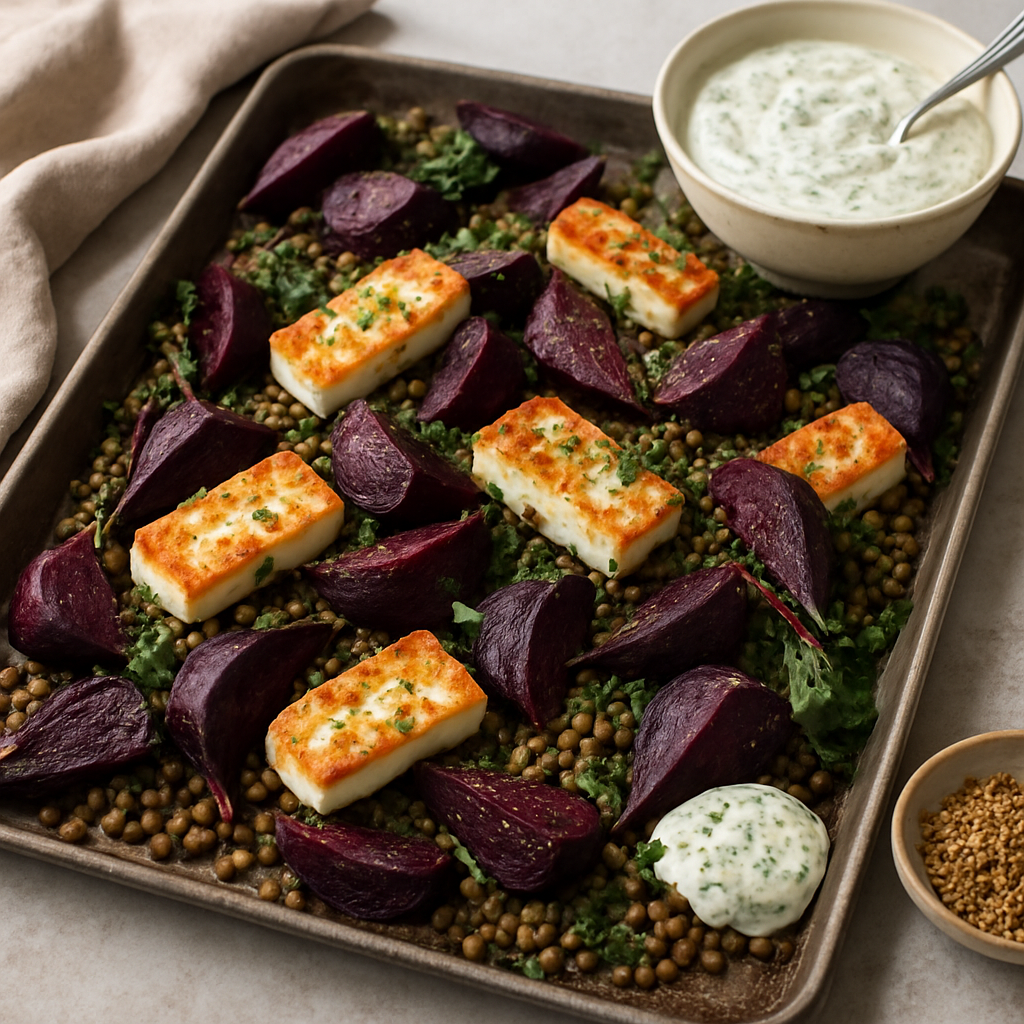
# Roasted Beetroot, Lentil and Halloumi Traybake with Herbed Yoghurt and Dukkah
One pan, bold flavours, and a meal that genuinely looks like you tried. This traybake brings together earthy roasted beetroot, crispy halloumi, and protein-packed lentils — finished with a cooling herbed yoghurt and a scattering of dukkah that adds crunch to every bite.
Why This Traybake Works So Well
Traybakes have earned their place in the weekly rotation for good reason — minimal washing up, hands-off cooking time, and the kind of caramelisation you just can't fake on the hob. But this one goes a step further by layering genuinely interesting textures and flavours that make it feel like restaurant food rather than a weeknight shortcut.
The combination of beetroot, lentils, and halloumi isn't accidental. Beetroot caramelises beautifully at high heat, developing a sweet, almost jammy quality that balances the salty, squeaky halloumi. The lentils act as a base that absorbs the roasting juices, and the herbed yoghurt and dukkah on top add freshness and crunch that stop the whole thing feeling heavy.
It's vegetarian, filling, and genuinely satisfying — the kind of meal where nobody's thinking about what's missing.
Ingredients (Serves 2–3)
For the traybake:
- 3 medium beetroot (about 400g), peeled and cut into wedges
- 1 x 400g tin of green or Puy lentils, drained and rinsed
- 1 red onion, cut into wedges
- 225g halloumi, sliced into 1cm rounds
- 3 tbsp olive oil
- 1 tsp smoked paprika
- 1 tsp ground cumin
- ½ tsp ground coriander
- Salt and black pepper
For the herbed yoghurt:
- 150g full-fat Greek yoghurt
- 1 small garlic clove, grated
- Handful of fresh mint and flat-leaf parsley, roughly chopped
- Juice of half a lemon
- Pinch of salt
For the dukkah:
- 3 tbsp mixed nuts (hazelnuts, almonds, or a mix), roughly chopped
- 1 tbsp sesame seeds
- 1 tsp cumin seeds
- ½ tsp coriander seeds
- Pinch of flaky salt
---
Method
Step 1 — Roast the beetroot and onion
Preheat your oven to 200°C fan. Toss the beetroot wedges and red onion with 2 tbsp of the olive oil, the smoked paprika, cumin, coriander, and a generous pinch of salt and pepper. Spread across a large roasting tray in a single layer and roast for 25 minutes.
Step 2 — Add the lentils and halloumi
After 25 minutes, push the beetroot and onion to the edges of the tray. Add the drained lentils to the centre, drizzle with the remaining olive oil, and season. Lay the halloumi slices on top of the lentils. Return to the oven for a further 15–18 minutes, until the halloumi is golden and the beetroot is tender and slightly caramelised at the edges.
Step 3 — Make the herbed yoghurt
While everything roasts, mix together the Greek yoghurt, grated garlic, chopped herbs, lemon juice, and salt. Taste and adjust — more lemon if it needs brightness, more herbs if you want it fresher. Set aside in the fridge until you're ready to serve.
Step 4 — Toast the dukkah
In a dry frying pan over medium heat, toast the cumin and coriander seeds for about a minute until fragrant. Add the nuts and sesame seeds and toast for another 2–3 minutes, stirring frequently. Tip onto a board, roughly chop everything together, and season with flaky salt. Keep a close eye on it — nuts go from golden to burnt quickly.
Step 5 — Assemble and serve
Spoon the herbed yoghurt across the tray or onto a serving plate, pile the roasted traybake on top, and finish with a generous scattering of dukkah. Serve immediately, with flatbreads or crusty bread on the side if you want to make it go further.
---
What Makes This Work Nutritionally
This isn't just a good-looking meal — the nutritional profile is genuinely well-balanced.
Lentils are the unsung hero here. A single tin provides roughly 18–20g of protein and a significant hit of dietary fibre, which supports digestive health and helps you feel full for longer. They're also a useful source of iron, folate, and B vitamins — particularly relevant if you don't eat meat regularly.
Halloumi adds another solid chunk of protein — around 18–20g per 225g serving — along with calcium and fat that helps carry the fat-soluble spices and makes the meal more satiating. It is higher in sodium than most cheeses, so there's no need to add much extra salt when seasoning the rest of the tray.
Beetroot brings more to the table than its colour. It's rich in nitrates, which the body converts into nitric oxide — a compound that supports blood flow and has been linked to improved exercise performance in the research literature. It also contains betalains, the pigments responsible for its deep red colour, which have antioxidant properties.
The Greek yoghurt in the dressing adds a further protein boost, plus gut-friendly live cultures if you choose a live yoghurt. And the olive oil used throughout provides monounsaturated fats that help absorb the fat-soluble vitamins — like vitamin K — found in the herbs.
Per serving (based on 3 servings), this traybake comes in at approximately 480–520 calories, 32–35g protein, 38–42g carbohydrates, and 22–25g fat — making it a well-rounded main that doesn't need much added to feel complete.
---
What the Evidence Shows
The combination of plant protein and complex carbohydrates in a single meal is something dietitians often point to as a practical way to support satiety without relying on calorie restriction. Lentils in particular have a low glycaemic index, meaning they release energy more gradually than refined carbohydrates — a pattern associated with steadier energy levels and reduced hunger between meals.
There's also growing evidence around the role of dietary diversity in gut health. A 2022 paper in Cell found that diet variety — particularly variety in plant foods — was one of the strongest predictors of microbiome diversity. A meal like this, combining lentils, beetroot, red onion, fresh herbs, nuts, seeds, and yoghurt, hits a wide range of plant types in a single sitting, which is a meaningful contribution to weekly diversity without any particular effort.
Dukkah, while often dismissed as a garnish, is worth taking seriously. Nuts and seeds are calorie-dense, but research consistently shows that regular nut consumption is associated with better cardiovascular markers and is not linked to weight gain in the long term — likely because the fat and protein they contain increases satiety.
---
Common Mistakes to Avoid
Don't crowd the tray. Beetroot needs space to roast rather than steam. If your tray is too small, use two — or the beetroot will go soft and watery rather than caramelised and flavourful.
Pat the halloumi dry before roasting. Halloumi releases moisture as it cooks, and a damp slice will steam rather than colour. A quick pat with kitchen paper before it goes on the tray makes a real difference to the final texture.
Don't skip the lemon in the yoghurt. The acidity is doing important work — it cuts through the richness of the halloumi and the earthiness of the lentils, and lifts the whole dish. Taste as you go, and don't be shy with it.
---
Practical Takeaways
- Prep the dukkah in advance — it keeps in an airtight jar for up to two weeks and is excellent on eggs, salads, or soup
- Tinned lentils are a genuine time-saver here and nutritionally equivalent to cooked from dried — no need to complicate it
- Beetroot stains everything, including your chopping board and hands. Use an old board or line it with baking paper when prepping
- This dish works well for meal prep — roast a double batch of the beetroot and lentils, and they'll keep in the fridge for three days. Add fresh halloumi when reheating
- Pre-made dukkah is widely available in UK supermarkets (Waitrose, Sainsbury's, and M&S all stock it) if you want to cut a step
---
> Macrology tip: If you want to hit your protein and macro targets without guesswork, Macrology generates macro-perfect meal plans in seconds — [https://macrology.app/signin](https://macrology.app/signin)
Want meals like this planned to your exact macros?
Macrology generates a personalised meal plan in seconds — breakfast, lunch, dinner and snacks, all hitting your daily targets.
Start your free 14-day trial