Roasted Aubergine and Chickpea Traybake with Harissa and Herbed Couscous
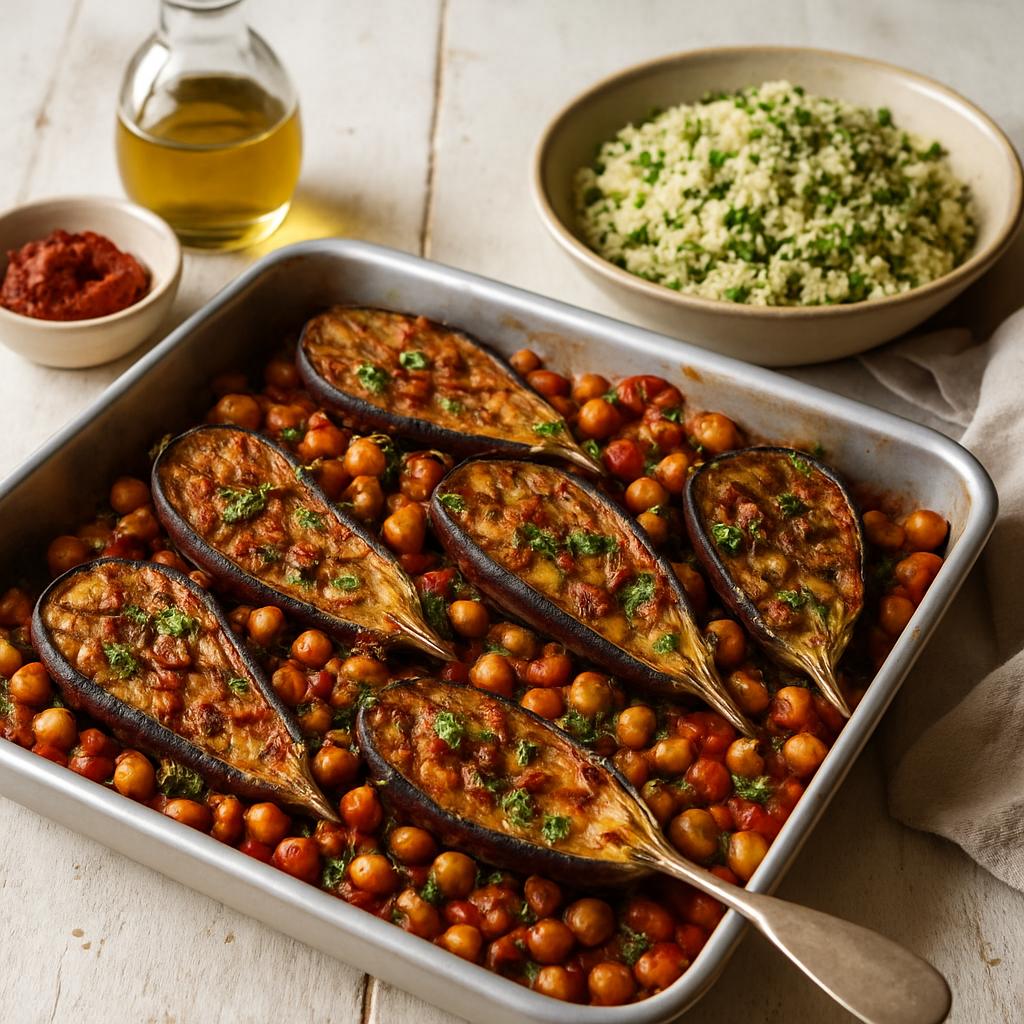
# Roasted Aubergine and Chickpea Traybake with Harissa and Herbed Couscous
There's a particular kind of weeknight dinner that requires almost no thought, barely any washing up, and still manages to taste like something you'd order at a restaurant. This traybake is exactly that — bold North African flavours, proper protein from the chickpeas, and couscous that comes together in the time it takes the tray to come out of the oven.
What You'll Need
This recipe serves 2, but scales up effortlessly if you're cooking for more.
For the traybake:
- 1 large aubergine, cut into 2–3cm chunks
- 1 x 400g tin of chickpeas, drained and rinsed
- 1 red pepper, deseeded and cut into strips
- 3 tbsp olive oil
- 2 tbsp harissa paste (rose harissa works beautifully here)
- 1 tsp ground cumin
- 1 tsp smoked paprika
- ½ tsp garlic granules
- Salt and black pepper
For the herbed couscous:
- 150g couscous
- 200ml hot vegetable stock
- Juice of half a lemon
- 2 tbsp olive oil
- A large handful of fresh parsley, roughly chopped
- A handful of fresh mint, roughly chopped
- 4 spring onions, finely sliced
To serve:
- 4 tbsp Greek yoghurt or a dairy-free alternative
- A drizzle of extra harissa
- Lemon wedges
How to Make It
Step 1 — Preheat and prep. Get your oven on to 220°C fan (200°C conventional). Line a large baking tray — the bigger the better, because crowding the veg leads to steaming rather than roasting.
Step 2 — Season the tray. Tip the aubergine chunks, chickpeas, and red pepper strips onto the tray. Drizzle over the olive oil and harissa, then scatter over the cumin, smoked paprika, garlic granules, and a generous pinch of salt and black pepper. Toss everything together well so every piece gets coated, then spread into a single layer.
Step 3 — Roast. Slide the tray into the oven for 30–35 minutes, turning once halfway through. You're looking for the aubergine to be soft and slightly caramelised at the edges, and the chickpeas to have a little crispiness to them. Don't rush this — the caramelisation is where the flavour lives.
Step 4 — Make the couscous. About 5 minutes before the tray comes out, put your couscous in a heatproof bowl and pour over the hot vegetable stock. Cover with a plate or cling film and leave for 5 minutes. Fluff with a fork, then stir through the olive oil, lemon juice, parsley, mint, and spring onions. Season to taste.
Step 5 — Bring it together. Spoon the herbed couscous into bowls or onto plates, pile the roasted aubergine and chickpeas on top, add a generous dollop of yoghurt, and finish with an extra drizzle of harissa and a squeeze of lemon.
What Makes This Work Nutritionally
This dish punches well above its weight in nutritional terms, and not just because it's vegetable-forward.
Chickpeas are doing serious lifting here. A 400g tin delivers roughly 19–22g of protein between two servings, along with a substantial amount of fibre — particularly the soluble kind that helps slow digestion and contributes to satiety. They're also a useful source of iron, folate, and zinc, which are nutrients worth paying attention to on a plant-based diet.
Aubergine is often underestimated. It's low in calories but high in volume, which makes it genuinely filling. It also contains nasunin, an antioxidant found in the purple skin, and contributes to the overall fibre count of the meal.
Harissa isn't just flavour. The chillies in harissa contain capsaicin, which has been the subject of considerable research around metabolic health and appetite regulation — though the amounts in a recipe like this are modest, so this isn't a magic ingredient, just a genuinely interesting one.
Couscous sits at a moderate glycaemic index compared to refined white pasta, and when combined with the fibre and protein from the chickpeas, the overall glycaemic response of the meal is blunted further. The olive oil adds healthy unsaturated fats, which also slow digestion and help with the absorption of fat-soluble nutrients.
The rough macros per serving (with yoghurt) come in at around 550–600 kcal, 25–28g protein, 65–70g carbohydrate, and 18–20g fat — a well-balanced plate that holds you comfortably through an evening.
What the Evidence Shows
Plant-based meals built around legumes have a strong evidence base behind them, and it's worth understanding why.
Research published in journals including the American Journal of Clinical Nutrition has consistently linked regular legume consumption with better cardiovascular markers, improved blood sugar regulation, and lower rates of certain chronic diseases. Chickpeas specifically have been studied for their effect on LDL cholesterol, with several trials showing a meaningful reduction with regular intake.
The Mediterranean-style eating pattern — which this dish fits loosely within — is one of the most robustly supported dietary approaches in nutrition science. It's characterised by high consumption of vegetables, legumes, whole grains, olive oil, and herbs, and is associated with a range of positive health outcomes across large population studies.
Harissa's North African origin places this dish closer to Maghrebi cuisine than strictly Mediterranean, but the principles overlap significantly: vegetables, legumes, good fat, and herbs as the backbone of the meal.
Worth noting: couscous is made from semolina wheat, so it's not suitable for anyone with coeliac disease or a wheat intolerance. Swapping in buckwheat or quinoa keeps the dish gluten-free and adds a slightly different nutritional profile (buckwheat is notably high in magnesium and resistant starch).
Common Questions and Useful Tweaks
Can I add more protein? Yes — crumbling in some feta before serving adds around 7–8g of extra protein per 30g serving and works brilliantly with the harissa. Alternatively, a poached egg on top is a simple weeknight move.
What if I want to meal prep this? The traybake component keeps well in the fridge for up to 3 days and actually improves overnight as the flavours develop. Store the couscous and roasted veg separately, and keep the yoghurt dressing on the side until you're ready to eat.
Is rose harissa worth it? Rose harissa has a slightly more floral, complex flavour than standard harissa. Belazu is widely available in UK supermarkets and is genuinely good. Standard harissa works perfectly well — just taste before adding to check the heat level, as brands vary significantly.
Can I use dried chickpeas? Absolutely. Soak overnight and cook until tender before roasting. Dried chickpeas tend to crisp up even better on the tray, and you'll save a bit of money if you cook large batches and freeze them.
Practical Takeaways
- Use a large tray — crowded veg steams instead of roasting, and you'll miss that caramelisation
- Don't skip the resting time for the couscous — 5 full minutes under cover makes the difference between fluffy and gluey
- Taste the harissa before you commit — spice levels vary wildly between brands
- Make double the couscous — it works brilliantly as a packed lunch the next day with some leftover roasted veg stirred through
- The yoghurt is load-bearing — it cools the heat, adds creaminess, and contributes meaningful protein; don't leave it out
---
If you want balanced, flavour-forward meals like this one — with the macros already worked out — Macrology generates macro-perfect meal plans in seconds: https://macrology.app/signin
> Macrology tip: Add this traybake to your weekly Macrology plan and the app will adjust portion sizes to hit your specific protein and calorie targets — no guesswork, no calculator needed.
Want meals like this planned to your exact macros?
Macrology generates a personalised meal plan in seconds — breakfast, lunch, dinner and snacks, all hitting your daily targets.
Start your free 14-day trial