New Research: What UK Studies Reveal About the Link Between Vitamin E Intake and Cardiovascular Health
# New Research: What UK Studies Reveal About the Link Between Vitamin E Intake and Cardiovascular Health
Most people could name vitamin C or vitamin D without blinking, but vitamin E tends to fly under the radar — despite decades of research linking it to one of the UK's biggest health concerns. Heart disease remains the leading cause of death in Britain, and scientists have been quietly building a picture of how this overlooked nutrient fits into that story.
Why Vitamin E Keeps Coming Up in Heart Health Research
Vitamin E isn't a single compound — it's a family of eight fat-soluble molecules, with alpha-tocopherol being the form most active in the human body. Its reputation in cardiovascular research stems largely from its role as an antioxidant: it helps neutralise free radicals, the unstable molecules that can damage LDL cholesterol and contribute to the build-up of arterial plaque.
The theory, at least in principle, is straightforward. Oxidised LDL cholesterol is thought to be a key driver of atherosclerosis — the hardening and narrowing of arteries that underlies most heart attacks and strokes. Vitamin E, by intercepting that oxidation process, could theoretically slow or reduce that damage.
That's the hypothesis. The evidence, as ever, is more complicated.
What the Evidence Shows
UK-based research has contributed meaningfully to the global picture, though the findings don't point in one neat direction.
The Cambridge Heart Antioxidant Study (CHAOS), one of the most cited British trials in this area, followed over 2,000 patients with confirmed coronary artery disease. Published in The Lancet in 1996, it found that participants taking high-dose vitamin E supplements (400–800 IU daily) had a significantly lower risk of non-fatal heart attacks. At face value, that sounds promising.
But the same trial also found no significant reduction in cardiovascular deaths — and subsequent larger trials, including the Heart Protection Study run by Oxford's Clinical Trial Service Unit, painted a less optimistic picture. That study, involving over 20,000 UK adults at high cardiovascular risk, found no meaningful benefit from antioxidant supplementation including vitamin E on major vascular events, cancer incidence, or overall mortality.
More recent UK Biobank analyses have added nuance. Observational data from the Biobank — which draws on the health records and lifestyle data of around 500,000 British adults — has generally supported an association between higher dietary vitamin E intake and lower markers of cardiovascular risk, including lower levels of systemic inflammation and better lipid profiles. The crucial distinction here is dietary intake versus supplementation, a gap that keeps cropping up in the literature.
The Supplement vs. Food Gap — and Why It Matters
This is where the science gets genuinely interesting, and where a lot of public understanding falls short.
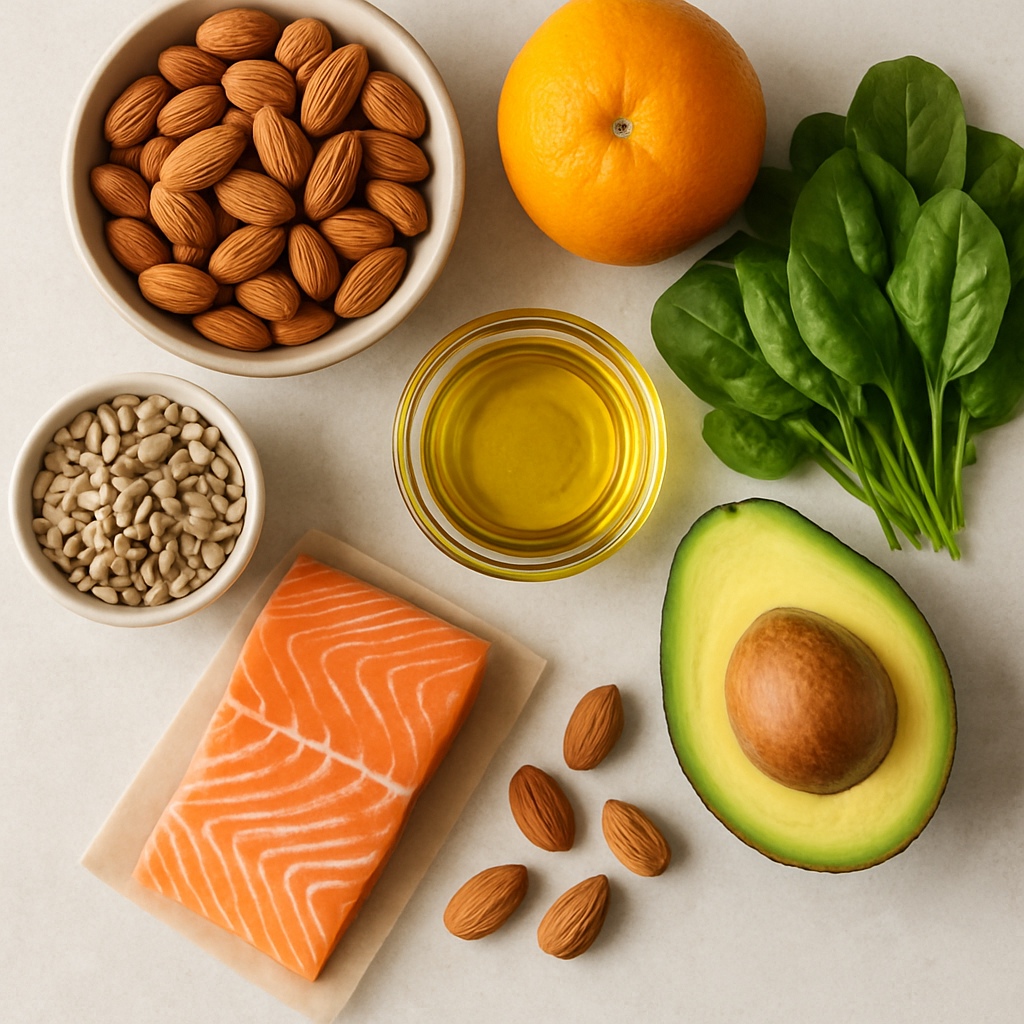
When vitamin E is consumed through food — think sunflower seeds, almonds, wheat germ oil, spinach, and avocado — it arrives alongside a complex matrix of other nutrients: other tocopherols, polyphenols, healthy fats, and fibre. Researchers increasingly believe that this nutritional context matters enormously. Isolating one compound and taking it in megadose form may not replicate, and could even interfere with, what happens when that compound is part of a whole food.
There's also a dosing concern. The UK Reference Nutrient Intake (RNI) for vitamin E is modest — around 4mg per day for women and 7mg for men — and most people eating a varied diet meet that without thinking about it. High-dose supplements, particularly above 400 IU, have in some trials been associated with unexpected outcomes, including one large meta-analysis (Miller et al., 2005) that controversially suggested high-dose supplementation might actually increase all-cause mortality, though that finding has been disputed on methodological grounds.
The takeaway from the science isn't "supplements are bad" — it's that the evidence for food-derived vitamin E is considerably more consistent than for supplemental forms.
Who Might Be at Greater Risk of Low Intake?
For most people in the UK eating a reasonably varied diet, outright vitamin E deficiency is rare. It does, however, occur in people with fat malabsorption conditions — since vitamin E is fat-soluble, it requires dietary fat to be absorbed properly. Conditions like Crohn's disease, cystic fibrosis, and certain liver disorders can compromise absorption significantly.
There's also a quieter concern about suboptimal intake — not deficiency exactly, but habitually low consumption — in people following very low-fat diets. Because the richest dietary sources of vitamin E tend to be nuts, seeds, and plant oils, those who actively restrict fat across the board may find their intake lower than they'd expect.
Older adults in the UK are another group worth noting. Some research suggests that ageing affects the efficiency of vitamin E utilisation, and cardiovascular risk rises with age, making the overlap between the two a reasonable area of interest for researchers.
Common Misconceptions Worth Clearing Up
"Taking a vitamin E supplement will protect my heart." The clinical trial evidence doesn't support this as a blanket statement, particularly for people who don't have an established deficiency. The CHAOS trial results were genuinely interesting, but they haven't been consistently replicated — and the Heart Protection Study, which was larger and better powered, found no benefit.
"I need to eat loads of specific 'superfoods' to get enough." Not really. A handful of almonds, a drizzle of sunflower oil, and some leafy greens across the day will get most people to a reasonable intake without any special effort.
"All antioxidants work the same way." They don't. Vitamin E is fat-soluble and works primarily in fatty environments — cell membranes, LDL particles — which is precisely why its relationship with cardiovascular health is specific and distinct from, say, vitamin C's role in the body.
What This Means for Everyday Eating
The research picture, taken as a whole, suggests that getting enough vitamin E through food is worth paying attention to — not as a magic bullet, but as one piece of a broader dietary pattern that supports cardiovascular health. Specifically, the foods richest in vitamin E also tend to be associated with better heart health outcomes for other reasons: nuts and seeds provide healthy unsaturated fats, avocados offer potassium and fibre, leafy greens contribute folate and nitrates.
Eating in a way that naturally includes these foods — rather than treating vitamin E as a target to hit — is both more practical and more consistent with what the evidence actually supports.
Practical Takeaways
Here are a few simple ways to support a good dietary vitamin E intake without overcomplicating things:
- Add a small handful of almonds or sunflower seeds to your breakfast or as a mid-morning snack — a 30g portion of sunflower seeds provides around 7mg of vitamin E, close to the male RNI in one go.
- Use plant oils in cooking and dressing — sunflower, rapeseed, and wheat germ oil are among the richest sources. Rapeseed oil, in particular, is widely available and affordable in the UK.
- Include leafy greens regularly — spinach and Swiss chard won't single-handedly transform your intake, but they contribute meaningfully as part of a varied diet.
- If you're considering supplements, it's worth speaking to your GP first, especially if you're on anticoagulant medication — high-dose vitamin E can affect blood clotting.
- Don't chase a number obsessively. The evidence supports dietary patterns over isolated nutrient targeting. A Mediterranean-style eating pattern, which is well-studied in UK populations, tends to provide adequate vitamin E as a matter of course.
If you want to build a diet that naturally hits your key nutrient targets — vitamin E included — without spending hours planning every meal, Macrology generates macro-perfect meal plans in seconds — https://macrology.app/signin
---
The research in this area continues to evolve. This article reflects the current state of the evidence and is intended for general informational purposes. If you have specific concerns about your cardiovascular health or nutrient intake, speak with a registered dietitian or your GP.
Want meals like this planned to your exact macros?
Macrology generates a personalised meal plan in seconds — breakfast, lunch, dinner and snacks, all hitting your daily targets.
Start your free 14-day trialMore from news
New Research: What UK Studies Reveal About the Link Between Food Delivery App Usage and Dietary Quality
7 min readNew Research: What UK Studies Reveal About the Link Between Food Environment at Home and Children's Eating Habits
7 min readNew Research: What UK Studies Reveal About the Link Between Cooking Frequency at Home and Overall Diet Quality
7 min read