New Research: What UK Studies Reveal About the Link Between Probiotic Supplementation and Digestive Health
# New Research: What UK Studies Reveal About the Link Between Probiotic Supplementation and Digestive Health
There are more bacterial cells in your gut than there are human cells in your entire body — and scientists are only beginning to understand what that means for your health. Probiotic supplements have gone from niche health food shop curiosity to a multi-billion pound global industry, but the science behind them is more complicated, and more interesting, than the marketing suggests.
What Are Probiotics, and Why Do They Matter?
Probiotics are live microorganisms — mostly bacteria, sometimes yeasts — that, when consumed in adequate amounts, confer a health benefit on the host. That definition comes from the World Health Organisation, and it matters because it sets a high bar: not every product with "live cultures" on the label qualifies.
Your gut microbiome — the vast ecosystem of microorganisms living in your digestive tract — plays a role in everything from nutrient absorption and immune function to mood and inflammation. The idea behind probiotic supplementation is straightforward: introduce beneficial strains to tip the balance in favour of health. Whether that works in practice depends enormously on the strain, the dose, the individual, and the condition being targeted.
The UK Research Landscape
The UK has become an increasingly active hub for gut microbiome research, with institutions including the Quadram Institute Bioscience in Norwich, King's College London, and the University of Reading producing significant work in this area.
One of the most practically useful contributions from UK researchers has been a focus on strain specificity. A 2021 systematic review published in The Lancet Gastroenterology & Hepatology, involving researchers from several UK institutions, reinforced what many scientists had suspected: lumping all probiotic strains together in research or recommendations is a fundamental error. Lactobacillus rhamnosus GG behaves very differently from Bifidobacterium longum 1714, which behaves differently again from Saccharomyces boulardii. The strain is the thing — not the category.
King's College London's research group, partly associated with the British Gut Project (now part of the ZOE Health Study), has also contributed substantial data on how diet and the microbiome interact at a population level. Their work highlights that microbiome composition varies dramatically between individuals — a point that has real consequences for how we interpret probiotic trials.
What the Evidence Shows
So what does the research actually say about probiotics and digestive health? The honest answer is: it depends on what you're trying to address.
Irritable bowel syndrome (IBS) is one of the most studied areas. A 2023 meta-analysis drawing on European and UK cohort data found that certain probiotic strains — particularly multi-strain formulations containing Lactobacillus and Bifidobacterium species — produced modest but statistically significant reductions in bloating, abdominal pain, and irregular bowel habits compared to placebo. The effect sizes weren't dramatic, but for a condition with limited treatment options, even modest relief matters.
Antibiotic-associated diarrhoea is probably where the evidence is strongest. NHS guidance already acknowledges that Lactobacillus rhamnosus GG and Saccharomyces boulardii have reasonable evidence behind them for reducing the risk of diarrhoea when taking antibiotics. A 2022 Cochrane review — the gold standard of evidence synthesis — found that probiotics reduced the incidence of antibiotic-associated diarrhoea by around 37% in adults. That's a meaningful number.
Where the evidence is weaker or more contested is in areas like general gut "maintenance", vague digestive discomfort without a diagnosed condition, or claims around immune boosting. The marketing around these benefits often runs well ahead of the science.
The Microbiome Individuality Problem
One of the most fascinating — and practically frustrating — findings to emerge from UK research is just how individual the microbiome is. A landmark study from the Weizmann Institute (widely cited in UK gut health discussions) found that people's blood sugar responses to identical foods varied enormously based on their unique microbiome composition. UK researchers at ZOE replicated and extended this work, finding similar patterns at scale.
What does this mean for probiotics? It suggests that the same supplement could have markedly different effects in different people — and this may be why trials show such variable results. Two people with IBS taking the same probiotic might have completely different responses, not because one is imagining the benefit, but because their underlying microbiome environment is different.
This is an area where personalised nutrition research is genuinely exciting. The future of probiotic recommendations is likely to involve microbiome testing alongside tailored strain selection — though that technology isn't yet widely accessible or affordable for most people.
Common Misconceptions Worth Clearing Up
There are a few persistent myths around probiotics that the research fairly consistently contradicts.
"More is better." Higher CFU (colony-forming unit) counts don't automatically mean greater benefit. Some well-evidenced strains work effectively at relatively modest doses — what matters is whether the strain has been studied at that dose for that specific outcome.
"Probiotics permanently colonise your gut." Most supplemental probiotic strains are transient visitors. They don't typically take up permanent residence in your microbiome. This doesn't mean they're useless — they can still influence the gut environment while passing through — but it does mean that any benefit generally requires continued supplementation.
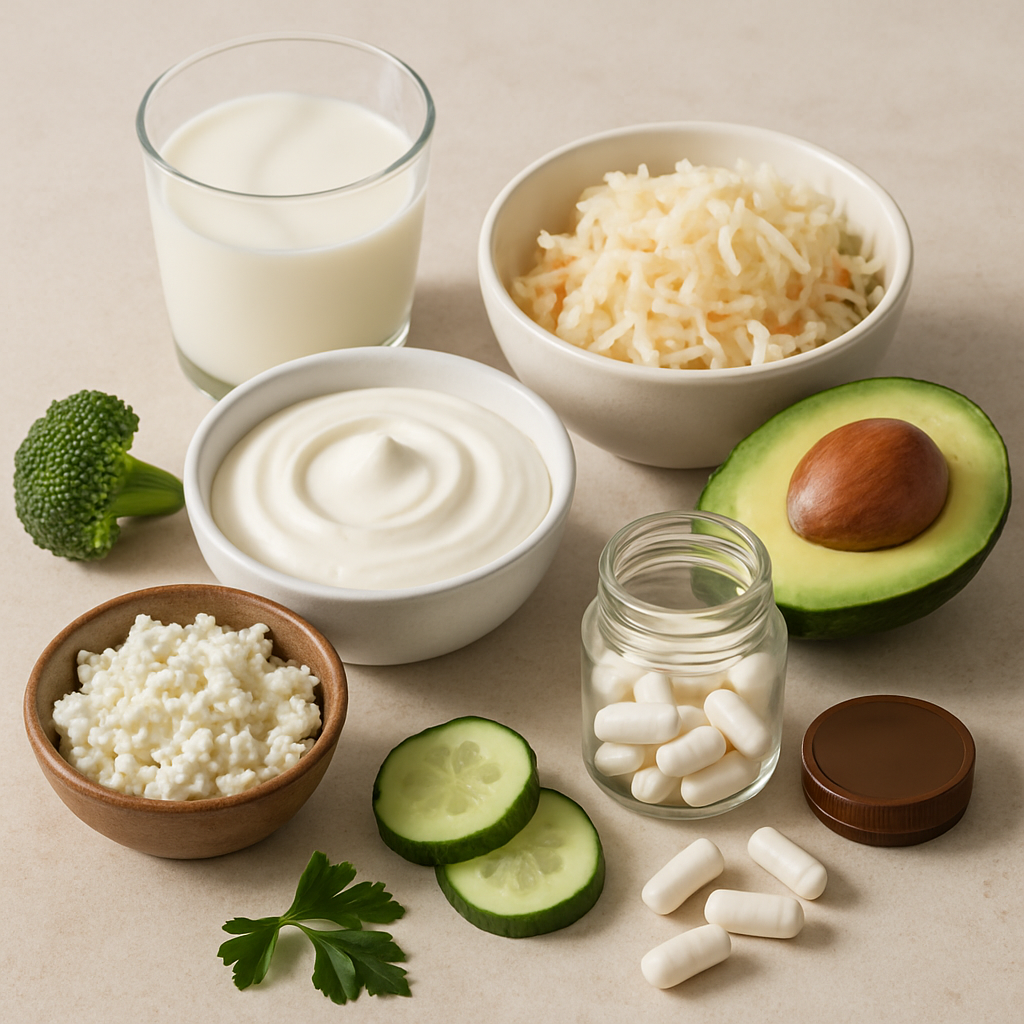
"Fermented foods and probiotic supplements are interchangeable." Yoghurt, kefir, kimchi, and sauerkraut all contain live cultures, but the strains and quantities vary widely and are often not the same as those studied in clinical trials. That doesn't make fermented foods less worth eating — they have other nutritional merits — but they shouldn't be treated as a direct substitute for a clinically evidenced probiotic if you're targeting a specific outcome.
What UK Regulatory Bodies Say
The UK's approach to probiotic health claims is worth understanding, particularly post-Brexit. The European Food Safety Authority (EFSA) famously rejected all probiotic health claims in 2012 on the basis that the evidence wasn't strain-specific or condition-specific enough — a position that remains relevant to products sold in the UK market.
The Food Standards Agency (FSA) currently requires that health claims on supplements meet a high evidential bar, but enforcement in the probiotic supplement sector has been inconsistent. This means products on UK shelves range from those with genuine clinical evidence behind specific strains to those making vague wellness claims with little to back them up.
When buying, look for products that name the specific strain (genus, species, and strain code — e.g., Lactobacillus rhamnosus GG), state the CFU count at end of shelf life rather than manufacture, and where possible link to published research for that specific strain and the condition you're interested in.
Practical Takeaways
If you're thinking about probiotic supplementation for digestive health, here's what the current evidence supports in plain terms:
For antibiotic-associated diarrhoea: This is where probiotics have the strongest evidence. Starting a course of Lactobacillus rhamnosus GG or Saccharomyces boulardii alongside antibiotics (a few hours apart) has reasonable support behind it. It's worth a conversation with your pharmacist.
For IBS symptoms: Multi-strain probiotics containing Lactobacillus and Bifidobacterium strains show modest promise, particularly for bloating and abdominal discomfort. Results vary considerably between individuals, so a four-to-eight week trial is a sensible way to assess whether a specific product works for you.
For general digestive health: The evidence base is thinner. A diet rich in diverse plant foods — vegetables, legumes, wholegrains, nuts, seeds — consistently shows strong support for microbiome diversity in the research. That's not a reason to dismiss probiotics, but it's a reason to see diet as the foundation rather than supplementation.
Check the label carefully: Strain name, CFU at end of shelf life, and storage requirements all matter. A probiotic stored incorrectly or past its viability date may contain far fewer live organisms than advertised.
If you want to build your meals around foods that genuinely support your gut health alongside any supplementation you're exploring, Macrology generates macro-perfect meal plans in seconds — https://macrology.app/signin
The gut microbiome is genuinely one of the most exciting frontiers in nutritional science, and UK researchers are contributing meaningfully to our understanding. The honest takeaway is that probiotics can be a useful tool in specific situations, but they work best as part of a broader approach to eating — not as a shortcut to digestive wellbeing.
Want meals like this planned to your exact macros?
Macrology generates a personalised meal plan in seconds — breakfast, lunch, dinner and snacks, all hitting your daily targets.
Start your free 14-day trialMore from news
New Research: What UK Studies Reveal About the Link Between Food Delivery App Usage and Dietary Quality
7 min readNew Research: What UK Studies Reveal About the Link Between Food Environment at Home and Children's Eating Habits
7 min readNew Research: What UK Studies Reveal About the Link Between Cooking Frequency at Home and Overall Diet Quality
7 min read