New Research: What UK Studies Reveal About the Link Between Dietary Patterns and Mental Health
# New Research: What UK Studies Reveal About the Link Between Dietary Patterns and Mental Health
The idea that what you eat affects how you feel isn't new — but the science behind it has become considerably more robust in recent years. UK researchers in particular have been producing some striking findings about the relationship between dietary patterns and mental health outcomes.
---
The gut-brain connection isn't just a buzzword
For a long time, the idea that gut health could influence mood was treated with scepticism outside specialist circles. That's changed. There is now a well-established field of research exploring the gut-brain axis — the two-way communication system between your digestive system and your brain, largely mediated by the vagus nerve and the microbiome.
The gut produces roughly 90% of the body's serotonin, a neurotransmitter heavily involved in mood regulation. What you eat directly shapes the composition of your gut microbiome, which in turn influences this production. This isn't speculation — it's the basis of an entire emerging subspecialty sometimes called nutritional psychiatry.
---
What the evidence shows
Some of the most compelling UK-based research has come from large cohort studies that track thousands of people over time, rather than short-term lab experiments.
A major analysis drawing on data from the UK Biobank — one of the largest health databases in the world, with half a million participants — found significant associations between dietary quality and depression risk. Participants with diets higher in fruits, vegetables, wholegrains, and legumes had measurably lower rates of depressive symptoms compared to those eating diets dominated by ultra-processed foods, refined sugars, and low-fibre options.
The SMILES trial, while conducted in Australia, has been highly influential in UK clinical thinking. It was one of the first randomised controlled trials to show that dietary intervention could lead to significant reductions in depression symptoms — with participants following a Mediterranean-style diet showing more than twice the improvement of those in a social support control group.
Closer to home, researchers at UCL and the University of Bristol have published work using the ALSPAC cohort (the "Children of the 90s" study) showing that dietary patterns in adolescence are associated with mental health outcomes in early adulthood. Young people whose diets were higher in processed foods showed greater risk of depression and anxiety by their mid-twenties, even after controlling for socioeconomic factors, physical activity, and other confounders.
It's worth noting that most of this research is observational — association doesn't equal causation, and there are genuine methodological challenges in this field. People who are already experiencing depression may eat less well, making it difficult to untangle cause and effect. Researchers are aware of this limitation, and the most careful studies attempt to control for it, but it's a nuance worth keeping in mind.
---
Ultra-processed foods and mood: a growing concern
The UK has one of the highest rates of ultra-processed food (UPF) consumption in Europe. According to research published in the BMJ, UPFs account for around 57% of energy intake in the average UK adult diet — a figure that rises even higher in younger age groups.
UPFs are defined not just by their ingredients but by how they're made: they're industrially formulated products that typically contain additives, emulsifiers, and flavourings not found in home cooking. Common examples include many packaged breads, breakfast cereals, crisps, flavoured yoghurts, and ready meals.
A 2023 study published in Nature Mental Health, which included substantial UK data, found that higher UPF consumption was associated with a 22% increased risk of depression and a 48% increased risk of anxiety. Critically, the researchers found that artificial sweeteners and artificial colours showed particularly strong associations with adverse mental health outcomes — raising questions that go beyond simple calorie or nutrient considerations.
The mechanisms are still being worked out, but leading hypotheses include disruption of the gut microbiome, increased systemic inflammation (itself linked to depression), and effects on blood sugar regulation that influence energy and mood.
---
Nutrients that appear to matter most
Rather than focusing on single "superfoods," the most useful research tends to look at nutrients in the context of overall dietary patterns. That said, several specific nutrients have emerged as particularly relevant to mental health.
Omega-3 fatty acids — found in oily fish like salmon, mackerel, and sardines, as well as flaxseed and walnuts — have the most robust evidence base. Multiple meta-analyses have found associations between higher omega-3 intake and reduced risk of depression. The UK population, on average, consumes well below recommended levels of oily fish.
B vitamins, particularly folate (B9) and B12, are critical for the synthesis of neurotransmitters including serotonin and dopamine. Deficiency in either is associated with depressive symptoms. B12 is found almost exclusively in animal products, making it a particular consideration for people eating plant-heavy diets. Folate is abundant in dark leafy greens, lentils, and fortified foods.
Magnesium has attracted attention more recently. It plays a role in hundreds of enzymatic reactions and is involved in the regulation of the HPA axis — the stress response system. UK dietary surveys suggest a meaningful proportion of the population consumes less than the recommended amount. Good sources include nuts, seeds, wholegrains, and dark chocolate.
Fermented foods — natural yoghurt, kefir, kimchi, sauerkraut — have shown promising results in smaller studies for their effect on microbiome diversity and, by extension, mood. A 2022 Stanford study (not UK-based, but widely discussed in UK nutritional circles) found that a diet high in fermented foods increased microbiome diversity and reduced markers of inflammation over a 10-week period.
---
Why "eat more fruit and veg" doesn't cut it as advice
One of the challenges in this space is that public health messaging has historically been oversimplified. "Five a day" remains the most recognised dietary guideline in the UK, despite the fact that most evidence suggests seven or more portions of fruit and vegetables is more closely associated with health benefits — and that the type of plant foods matters.
Fibre diversity is increasingly understood to be important for microbiome health. Eating a wide variety of plant foods — different colours, different types — supports a more diverse microbiome than eating the same two or three vegetables repeatedly. Researchers at King's College London, through the British Gut Project, found that eating 30 or more different plant foods per week was one of the strongest predictors of microbiome diversity in their dataset of thousands of UK participants.
This doesn't require an overhaul of how you cook. Adding a handful of mixed seeds to porridge, swapping between different tinned legumes, or varying the herbs and spices you use all count toward plant diversity.
---
Practical takeaways
The research in this area is genuinely exciting, but it can feel abstract. Here are some specific, grounded ways to act on what the evidence suggests:
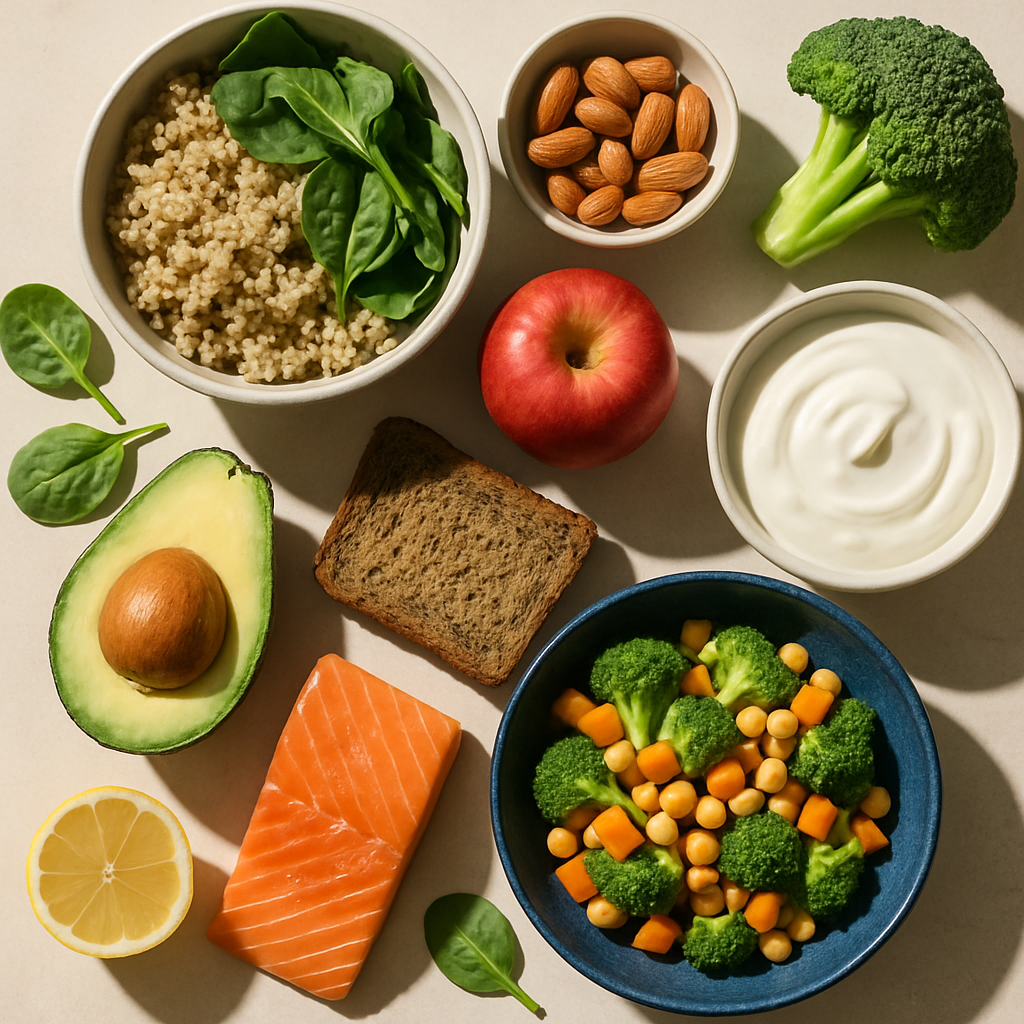
- Add before you subtract. Rather than removing foods you enjoy, focus on increasing the variety and volume of plant foods in your diet — vegetables, fruits, legumes, wholegrains, nuts, and seeds.
- Eat oily fish twice a week if that works for you. Salmon, mackerel, sardines, and herring are the most accessible and affordable sources of omega-3s in the UK.
- Try to vary your plants. Aim for different colours and types throughout the week rather than always reaching for the same options. Frozen vegetables count and are often nutritionally equivalent to fresh.
- Include fermented foods regularly — a small pot of natural yoghurt, a splash of kefir in a smoothie, or miso in a soup or dressing are easy starting points.
- Don't stress individual meals. The research consistently points to overall dietary patterns over time, not individual food choices. One meal doesn't define your diet.
- Check your B12 if you eat a predominantly plant-based diet. A straightforward blood test via your GP can confirm whether supplementation makes sense.
---
If you want a practical way to build meals that actually cover your nutritional bases day to day, Macrology generates macro-perfect meal plans in seconds — [https://macrology.app/signin](https://macrology.app/signin)
The science linking food and mental health is still developing, but the direction of travel is clear enough to be useful. You don't need to wait for perfect certainty to start paying attention to what's on your plate.
Want meals like this planned to your exact macros?
Macrology generates a personalised meal plan in seconds — breakfast, lunch, dinner and snacks, all hitting your daily targets.
Start your free 14-day trialMore from news
New Research: What UK Studies Reveal About the Link Between Food Delivery App Usage and Dietary Quality
7 min readNew Research: What UK Studies Reveal About the Link Between Food Environment at Home and Children's Eating Habits
7 min readNew Research: What UK Studies Reveal About the Link Between Cooking Frequency at Home and Overall Diet Quality
7 min read