New Research: What UK Studies Reveal About the Link Between Dietary Cholesterol and Heart Health
# New Research: What UK Studies Reveal About the Link Between Dietary Cholesterol and Heart Health
For decades, eggs were the villain. Butter was banned from breakfast tables, and prawns came with a quiet warning. But the science around dietary cholesterol has shifted considerably — and recent UK research is helping to untangle what we actually need to worry about.
What Is Dietary Cholesterol, and Why Did We Fear It?
Dietary cholesterol is the cholesterol found in food — eggs, shellfish, meat, full-fat dairy. For much of the late 20th century, public health guidance assumed a fairly direct line between eating cholesterol and having high blood cholesterol, which in turn raises the risk of heart disease.
The logic seemed reasonable at the time. Cholesterol is a key component of arterial plaques. Blood cholesterol levels — particularly LDL cholesterol — are a well-established risk factor for cardiovascular disease. So limiting the cholesterol you eat made intuitive sense.
The problem is that the human body is more complicated than that. The liver produces roughly 80% of the cholesterol in your bloodstream, adjusting its output based on how much you consume from food. For most people, eating more dietary cholesterol simply prompts the liver to produce less. The net effect on blood cholesterol is often surprisingly small.
How UK Guidelines Have Evolved
In 2019, Public Health England quietly updated its position on dietary cholesterol. Unlike the United States — where explicit numerical limits on daily cholesterol intake were dropped from federal dietary guidelines in 2015 — the UK approach had already been more cautious about placing hard caps on specific nutrients.
The British Heart Foundation currently states that for most people, it is the type of fat in the diet rather than dietary cholesterol itself that has the greater impact on blood cholesterol levels. Saturated fat, trans fat, and overall dietary patterns are now considered more important levers than simply counting milligrams of cholesterol from food.
This doesn't mean dietary cholesterol is irrelevant — but it has been repositioned from primary villain to a more nuanced supporting character in a much larger story.
What the Evidence Shows
A significant body of research has accumulated over the past decade, and UK cohort studies have contributed meaningfully to the picture.
The EPIC-Norfolk study, one of the largest UK dietary cohort studies, tracked over 25,000 participants in Norfolk over many years. Findings from this cohort have consistently pointed towards overall dietary patterns — particularly fruit and vegetable intake, fibre, and saturated fat — as stronger predictors of cardiovascular outcomes than individual nutrients like dietary cholesterol in isolation.
Research published in the British Medical Journal in 2020 analysed data from six prospective cohort studies and found that higher egg consumption was not significantly associated with cardiovascular disease risk in European populations. This was notable given that eggs are one of the most concentrated sources of dietary cholesterol in typical diets.
However, the picture is not entirely without nuance. A subset of the population — estimated at around 25–30% of people — are "hyper-responders" to dietary cholesterol. In these individuals, eating more cholesterol does cause a more pronounced rise in LDL cholesterol. Genetics, particularly variants in the APOE gene, appear to play a role here. For this group, being more mindful of dietary cholesterol intake may still be warranted.
It is also worth noting that dietary cholesterol rarely travels alone. Foods high in cholesterol — processed meats, pastries, certain fast foods — often arrive packaged with saturated fat, refined carbohydrates, and excess sodium. Studies that fail to control for these co-passengers can end up attributing harm to cholesterol that may actually originate elsewhere in the dietary pattern.
The Saturated Fat and LDL Connection
If dietary cholesterol has been somewhat rehabilitated, saturated fat has not. This distinction matters, because the two are often found together in food and frequently conflated in public conversation.
Saturated fat reliably raises LDL cholesterol across a wide range of studies and populations. The mechanism is well understood: saturated fatty acids reduce the activity of LDL receptors in the liver, meaning LDL particles remain in circulation for longer. UK dietary guidelines still recommend that saturated fat makes up no more than 10% of total energy intake — roughly 20g per day for women and 30g for men.
The practical implication is that a full English breakfast is more likely to be problematic because of the processed meat and the cooking method than because of the eggs. The eggs themselves, consumed in reasonable amounts, appear to be largely neutral for most healthy adults.
What About HDL Cholesterol?
Conversations about heart health often fixate on LDL while giving less attention to HDL — the so-called "good" cholesterol. HDL particles help transport cholesterol back to the liver for processing, and higher HDL levels are generally associated with lower cardiovascular risk.
Some research suggests that dietary cholesterol may actually modestly increase HDL levels alongside any LDL rise, meaning the ratio of LDL to HDL may not worsen significantly in most people. A study from the University of Surrey found that moderate egg consumption in healthy adults led to increases in both LDL and HDL, with the overall lipid profile remaining broadly similar.
This ratio-based thinking is increasingly favoured by researchers over looking at LDL in isolation, though it is worth noting that it remains a contested area and not all cardiologists are equally persuaded by the HDL argument.
Who Still Needs to Be Cautious?
For some groups, a more careful eye on dietary cholesterol remains sensible. People with familial hypercholesterolaemia — a genetic condition affecting around 1 in 250 people in the UK — have a significantly impaired ability to clear LDL from the blood, and dietary choices have a more pronounced effect on their risk profile.
People with type 2 diabetes may also respond differently to dietary cholesterol. Some research suggests that in this group, higher egg intake is associated with increased cardiovascular risk, though the evidence is not entirely consistent and the broader dietary context still matters.
If you have been told you have high cholesterol or a family history of heart disease, it is worth having a conversation with your GP or a registered dietitian rather than drawing your own conclusions from population-level research. Individual variation is real, and personalised guidance is more useful than blanket rules.
Practical Takeaways
The research paints a more relaxed picture around dietary cholesterol than most people grew up believing — but it also points towards where the real effort is best spent.
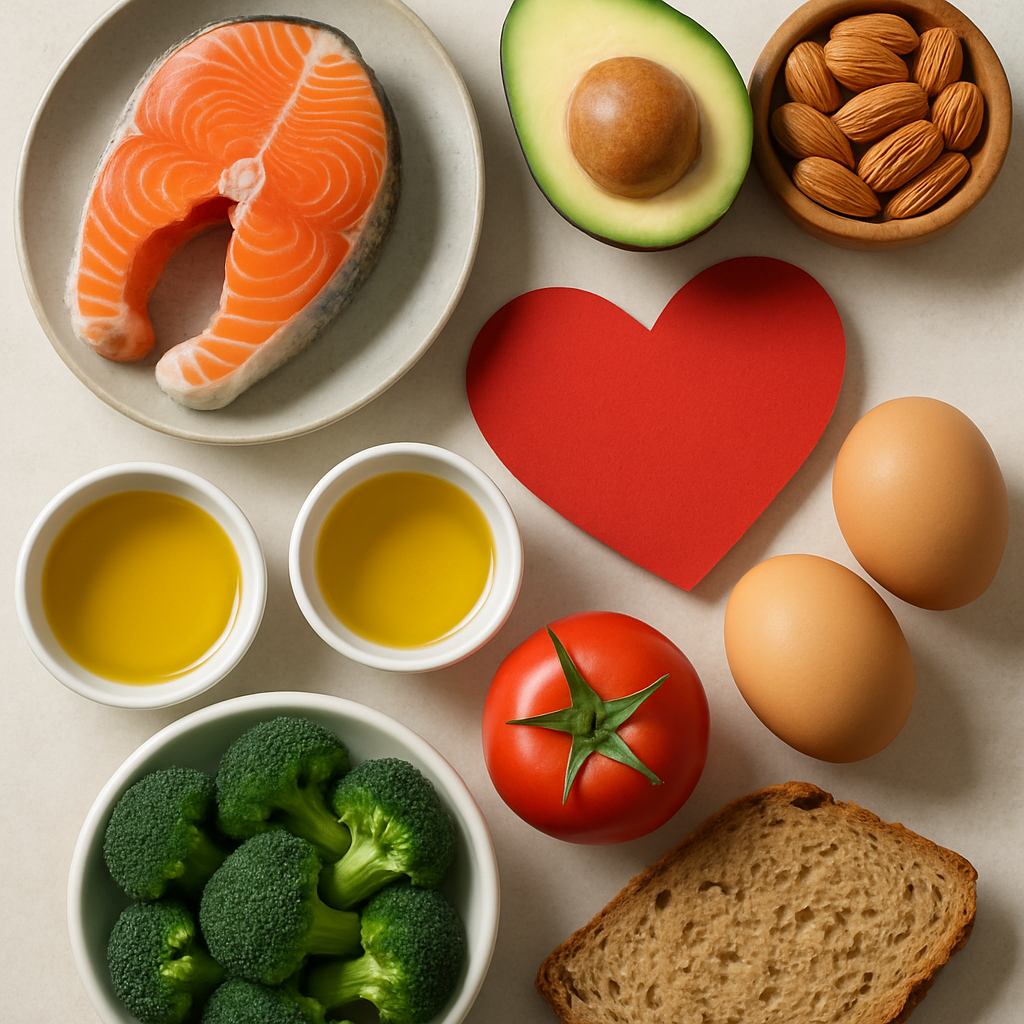
Focus on overall dietary pattern first. The strongest and most consistent evidence links Mediterranean-style eating — plenty of vegetables, pulses, oily fish, wholegrains, and olive oil — with reduced cardiovascular risk. No single food makes or breaks this.
Keep an eye on saturated fat, not just cholesterol. If you are looking to support healthy blood cholesterol levels, reducing processed meats, pastries, and hard cheeses will likely have more impact than cutting eggs or shellfish.
Eggs are fine for most people. Current British Heart Foundation guidance suggests that most healthy adults can eat eggs as part of a balanced diet without a specific limit. Around one to two eggs a day appears well within a reasonable range for the majority of people.
Know your own context. If you have familial hypercholesterolaemia, type 2 diabetes, or have been told your cholesterol is elevated, the general population research may not fully apply to you. A conversation with a healthcare professional is worth more than any blog article, this one included.
Read food labels for saturated fat, not cholesterol. UK nutrition labels do not routinely list cholesterol content — they show saturated fat, which is the more useful number to track for most people anyway.
If you want to build a heart-friendly diet without spending hours second-guessing every meal, Macrology generates macro-perfect meal plans in seconds — https://macrology.app/signin
---
The research on dietary cholesterol is still evolving, and large UK cohort studies continue to add detail to the picture. What is clear is that the old, simple story — eat less cholesterol, protect your heart — has given way to something more interesting and, for most people, considerably less restrictive.
Want meals like this planned to your exact macros?
Macrology generates a personalised meal plan in seconds — breakfast, lunch, dinner and snacks, all hitting your daily targets.
Start your free 14-day trialMore from news
New Research: What UK Studies Reveal About the Link Between Food Delivery App Usage and Dietary Quality
7 min readNew Research: What UK Studies Reveal About the Link Between Food Environment at Home and Children's Eating Habits
7 min readNew Research: What UK Studies Reveal About the Link Between Cooking Frequency at Home and Overall Diet Quality
7 min read