New Research: What UK Studies Reveal About the Link Between Antioxidant Intake and Skin Health
# New Research: What UK Studies Reveal About the Link Between Antioxidant Intake and Skin Health
There's a growing body of evidence suggesting that what you eat plays a more significant role in your skin's appearance and resilience than most people realise. And increasingly, UK researchers are turning their attention to one particular group of nutrients — antioxidants — and how they interact with the skin from the inside out.
Why Antioxidants Matter for Skin
Your skin is constantly under attack. UV radiation, air pollution, and even normal metabolic processes generate unstable molecules called free radicals, which damage cells and accelerate the visible signs of ageing — think fine lines, uneven skin tone, and loss of elasticity.
Antioxidants are compounds that neutralise free radicals before they can cause significant harm. The body produces some of its own, but dietary antioxidants — found in fruits, vegetables, nuts, and other whole foods — provide additional protection that the body can't manufacture on its own.
The relationship between diet and skin health has historically been dismissed as anecdotal, but that's starting to change. Rigorous research is now providing clearer mechanistic explanations for why what ends up on your plate eventually shows up on your face.
What the Evidence Shows
Several studies conducted in the UK and across Europe have started to fill in the gaps. Research published through the British Journal of Dermatology and the British Skin Foundation has highlighted associations between low dietary antioxidant intake and increased markers of skin ageing and inflammation.
One particularly notable area of research involves carotenoids — the pigments found in orange, red, and yellow plant foods like carrots, tomatoes, and sweet peppers. A study from Newcastle University found that higher carotenoid levels in the skin were associated with a more even complexion and reduced oxidative stress in skin tissue. Interestingly, the study also noted that participants with higher fruit and vegetable consumption had measurably different skin colouration — a yellowish hue that people independently rated as looking healthier and more attractive than a sun-tanned complexion.
Meanwhile, research from the University of Manchester has explored the role of lycopene — the antioxidant that makes tomatoes red — in protecting skin from UV-induced damage. Participants who consumed tomato paste daily showed measurably greater protection against UV-related skin reddening compared to a control group. The protection wasn't dramatic, but it was statistically significant and suggests a genuine biological mechanism at work.
Vitamin C and Collagen: A Well-Established Connection
Of all the antioxidants studied in relation to skin, vitamin C arguably has the strongest evidence base. It's essential for the synthesis of collagen — the structural protein that keeps skin firm and plump — and it also functions as a direct antioxidant in skin tissue.
The UK's National Diet and Nutrition Survey (NDNS) has consistently found that a meaningful proportion of the population falls below recommended vitamin C intakes, particularly younger adults and those with lower diet quality. This matters because even modest vitamin C deficiency can impair collagen production, potentially contributing to skin that appears dull or loses its firmness earlier than expected.
Foods richest in vitamin C include red and green peppers, blackcurrants, kiwi fruit, strawberries, and broccoli — not just the usual suspect of orange juice, which is often consumed alongside a lot of sugar. A single red pepper, for instance, contains roughly twice the vitamin C of an orange.
Polyphenols, Green Tea, and the Gut–Skin Axis
One of the more exciting areas of emerging research concerns polyphenols — a large family of plant compounds found in tea, berries, dark chocolate, red wine, and olive oil. UK researchers, including teams at King's College London, have been investigating how polyphenols interact with gut bacteria and what downstream effects this might have on skin inflammation.
The gut–skin axis is a relatively new concept in nutritional science, but the evidence is accumulating. The idea is that gut bacteria metabolise polyphenols into bioactive compounds that can influence inflammation systemically — including in the skin. Some research suggests this pathway may be relevant to conditions like acne, rosacea, and eczema, though it's important to note that this is still an evolving field and most studies are observational rather than clinical trials.
Green tea deserves a specific mention here. It contains a polyphenol called EGCG (epigallocatechin gallate), which has been shown in multiple studies to have anti-inflammatory and photoprotective properties. A review published in the journal Nutrients found that both topical and dietary EGCG showed promise in reducing UV-induced damage, though the authors noted that human trials remain limited in scale.
Common Misconceptions Worth Addressing
It's worth being clear about what the research does and doesn't show, because this area attracts a lot of oversimplification.
Antioxidant supplements are not equivalent to dietary antioxidants. Several large trials — including the ATBC and CARET studies — found that high-dose beta-carotene supplements actually increased cancer risk in certain populations. The food matrix matters: nutrients from whole foods come packaged with fibre, other compounds, and a delivery mechanism that supplements simply don't replicate.
It's also a misconception that more is always better. The body tightly regulates absorption of many antioxidants, and flooding the system with mega-doses from supplements doesn't necessarily translate into better outcomes. Where the evidence is strongest, it tends to support consistent, varied dietary intake rather than targeted supplementation.
Finally, diet works alongside — not instead of — other skin health factors. Sun protection, hydration, sleep quality, and smoking status all have significant and well-documented effects on skin. Antioxidant-rich foods are one piece of a larger picture.
Which Foods Actually Deliver
Based on the available UK research, the dietary patterns most consistently associated with better skin health outcomes share a few common features: high in colourful plant foods, rich in healthy fats (particularly omega-3s from oily fish and olive oil), and relatively low in ultra-processed foods.
Specific standouts supported by evidence include:
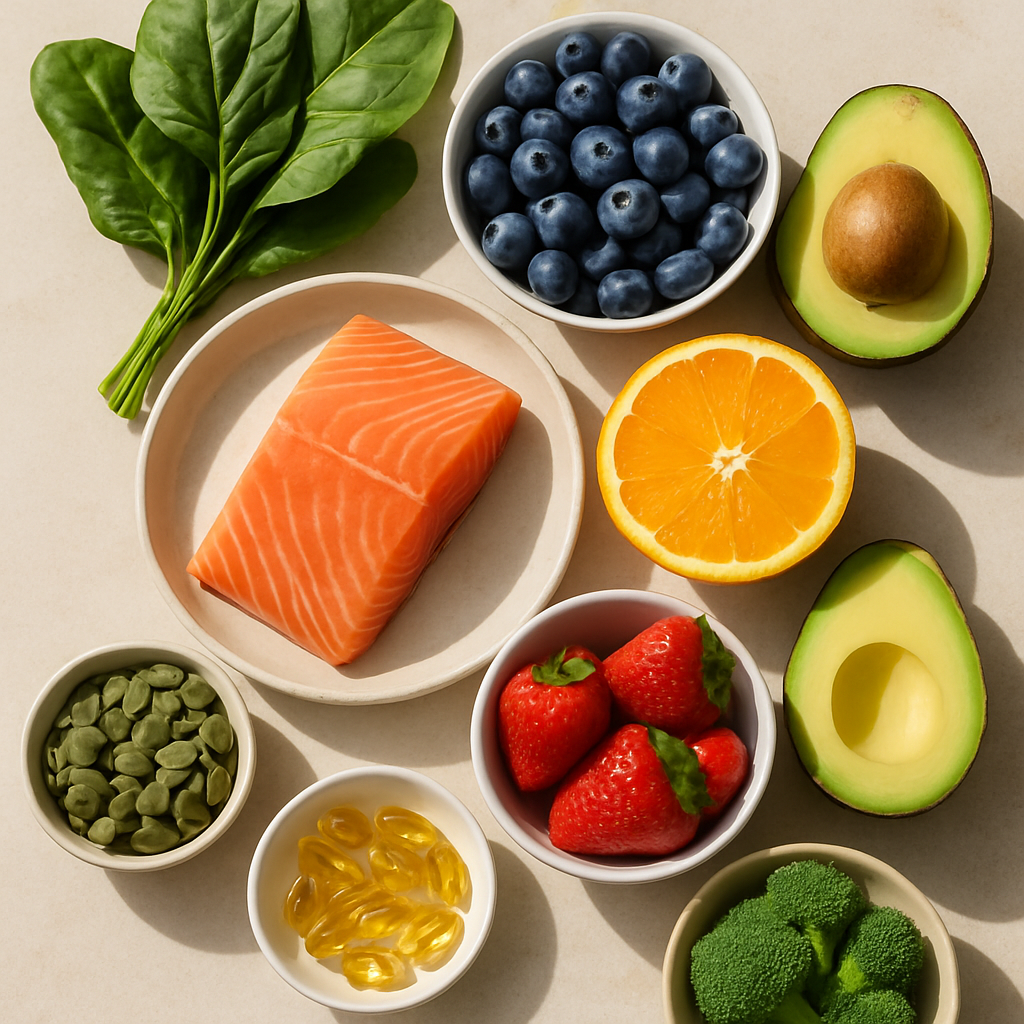
- Tomatoes and tomato-based products — cooked tomatoes have higher bioavailable lycopene than raw, particularly when consumed with a little fat
- Red and yellow peppers — among the highest vitamin C sources available
- Berries — particularly blueberries and blackcurrants, which are rich in anthocyanins
- Oily fish (salmon, mackerel, sardines) — for omega-3 fatty acids, which support the skin's lipid barrier
- Walnuts — a plant-based source of omega-3s and vitamin E
- Green tea — for EGCG and general anti-inflammatory polyphenols
- Dark leafy greens — spinach and kale provide lutein and zeaxanthin, which have been studied for their role in protecting against UV damage
The Mediterranean-style eating pattern, which emphasises many of these foods, has the most consistent association with reduced skin ageing in observational research — though it's worth noting that it's difficult to isolate individual dietary components in large population studies.
Practical Takeaways
The research is clear enough to offer some genuinely useful direction, even if the full picture is still being established.
Prioritise variety in your plant foods. Different antioxidants work through different mechanisms, so a wide range of colourful vegetables and fruits will cover more bases than optimising around any single food or nutrient.
Cook your tomatoes. Lycopene becomes more bioavailable through cooking, especially when eaten with olive oil or another fat. A simple tomato-based sauce is doing more for your skin than a raw tomato salad, in this specific respect.
Don't overlook vitamin C sources beyond citrus. Red peppers, kiwi fruit, and blackcurrants are all excellent sources and easy to incorporate into everyday meals.
Think about consistency over perfection. The studies showing meaningful skin benefits involve sustained dietary patterns over weeks and months — not a week of eating well followed by a return to old habits. Small, maintainable changes tend to produce better long-term results than dramatic short-term overhauls.
If you want your daily eating to consistently hit the right nutrients for skin health and overall wellbeing, Macrology generates macro-perfect meal plans in seconds — [https://macrology.app/signin](https://macrology.app/signin)
The science is increasingly pointing in a clear direction: skin health is not just a cosmetic concern managed from the outside. What you eat is one of the most modifiable factors influencing how your skin ages — and the research coming out of UK institutions is helping to explain precisely why.
Want meals like this planned to your exact macros?
Macrology generates a personalised meal plan in seconds — breakfast, lunch, dinner and snacks, all hitting your daily targets.
Start your free 14-day trialMore from news
New Research: What UK Studies Reveal About the Link Between Food Delivery App Usage and Dietary Quality
7 min readNew Research: What UK Studies Reveal About the Link Between Food Environment at Home and Children's Eating Habits
7 min readNew Research: What UK Studies Reveal About the Link Between Cooking Frequency at Home and Overall Diet Quality
7 min read