New Research: What UK Studies Reveal About the Link Between Protein Intake and Satiety
# New Research: What UK Studies Reveal About the Link Between Protein Intake and Satiety
Most of us have noticed it at some point — a bowl of porridge holds you until lunch, but a pile of toast leaves you raiding the biscuit tin by 10am. The difference often comes down to one nutrient: protein. UK researchers have been quietly building a compelling picture of exactly why that is, and the findings are more nuanced than "just eat more chicken".
Why Protein and Satiety Keep Coming Up in Research
Hunger isn't just willpower — it's biology. When you eat, your gut, hormones, and brain are all in constant conversation, sending signals that either tell you to keep eating or call time on the meal. Protein is unusually good at triggering the "stop eating" side of that conversation.
The interest in protein and satiety has grown significantly over the past decade, partly driven by rising rates of obesity in the UK and a broader shift in nutritional science away from fat and carbohydrates as the primary focus. UK research institutions — including teams at the University of Leeds, University of Sussex, and the MRC Epidemiology Unit in Cambridge — have contributed meaningfully to understanding how dietary protein interacts with the body's hunger-regulating systems.
What makes this research particularly valuable is that much of it uses real-world dietary data from British populations, meaning the findings are directly relevant to the way people in the UK actually eat.
What the Evidence Shows
One of the most consistent findings in UK-based nutritional research is that higher protein intake is associated with greater post-meal satiety — the feeling of fullness that keeps hunger at bay between meals.
A landmark series of studies from the University of Leeds investigated how different macronutrient compositions affect appetite hormones in adults. Their work consistently found that protein stimulates the release of GLP-1 (glucagon-like peptide-1) and PYY (peptide YY) — two gut hormones that signal fullness to the brain — more effectively than equivalent calories from carbohydrates or fat. This hormonal response begins in the gut within minutes of eating and can persist for several hours.
Research published in the British Journal of Nutrition has also looked at the thermic effect of protein — the fact that your body burns more energy digesting protein than it does digesting carbohydrates or fat. Protein has a thermic effect of roughly 20–30% compared to 5–10% for carbohydrates. In practical terms, this means some of the calories you consume from protein are "used up" just processing it, which contributes to feeling satisfied without a large caloric surplus.
A further study from Imperial College London, which analysed data from the UK Biobank — one of the largest health databases in the world — found that individuals with higher habitual protein intake reported fewer episodes of excessive hunger and were less likely to snack frequently between meals. Crucially, these effects held up even after controlling for total calorie intake, suggesting protein's satiety effect is real and independent of simply eating more food overall.
The Protein Leverage Hypothesis
One of the more thought-provoking ideas to emerge from protein research is the protein leverage hypothesis, developed in part by researchers with ties to UK academic institutions. The theory, originally proposed by David Raubenheimer and Stephen Simpson, suggests that humans have a strong biological drive to hit a target protein intake — and that if the diet is diluted with low-protein foods, we'll keep eating until we reach that protein target, often overshooting on total calories in the process.
UK dietary surveys, including the National Diet and Nutrition Survey (NDNS), suggest that while most British adults technically meet the Reference Nutrient Intake (RNI) for protein of 0.75g per kilogram of body weight per day, many are consuming protein as a smaller percentage of their total diet than in previous decades — largely because of increased consumption of ultra-processed foods that are calorie-dense but protein-poor.
If the protein leverage hypothesis holds, this shift could help explain why many people feel persistently hungry even when they're eating plenty of food. It's not a personal failing — it's the diet's composition nudging appetite upwards.
How Much Protein Actually Makes a Difference?
This is where the research gets especially practical. The UK RNI of 0.75g per kilogram of body weight is a floor — the minimum needed to prevent deficiency — not an optimum.
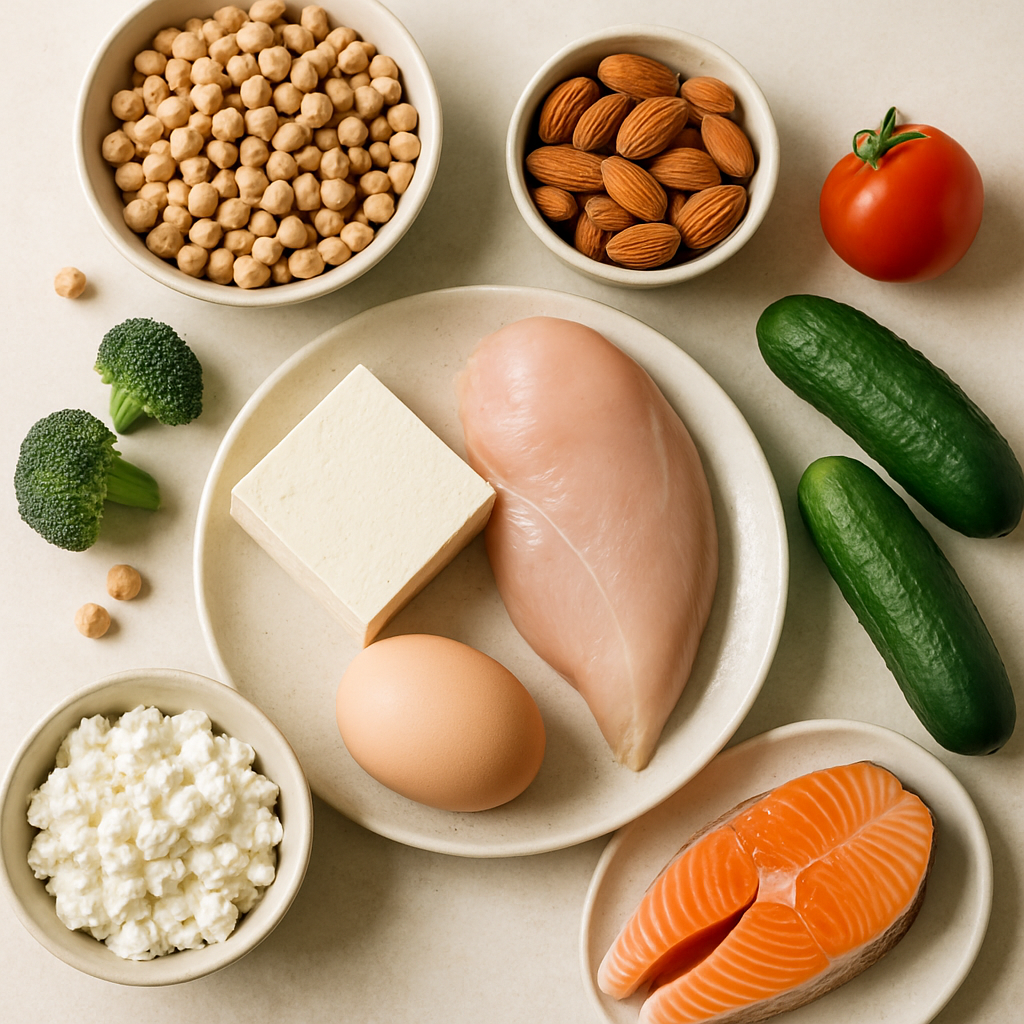
Studies looking at satiety specifically tend to find meaningful effects at intakes of 1.2–1.6g per kilogram of body weight per day. For a 75kg adult, that translates to roughly 90–120g of protein per day. To put that in food terms: a large chicken breast contains around 40–45g of protein, two eggs provide around 12g, and 200g of Greek yoghurt adds another 16–18g. Getting there is entirely achievable across three meals without any dramatic dietary overhaul.
It's also worth noting that protein distribution across the day matters, not just the daily total. Research from UK and European cohorts suggests that spreading protein intake relatively evenly across meals — rather than concentrating it at dinner, which is a common British eating pattern — produces better satiety outcomes throughout the day. A protein-rich breakfast, in particular, has been shown to reduce appetite and snacking in the afternoon and evening.
Common Misconceptions Worth Addressing
A few persistent myths tend to cloud the conversation around protein and hunger.
"High protein diets are just for bodybuilders." This one deserves to be put to rest. The research on protein and satiety spans sedentary adults, older populations, people managing their weight, and everyone in between. The benefits of adequate protein intake for appetite regulation are not dependent on going to the gym.
"More protein always means more meat." Not at all. UK studies increasingly include plant-based protein sources in their analyses, and legumes, tofu, tempeh, dairy, eggs, and wholegrains all contribute meaningfully. A 2022 analysis in the European Journal of Nutrition found that plant-based proteins produced comparable satiety responses to animal proteins when matched for total protein content — good news for anyone reducing meat intake.
"If I eat more protein, I'll automatically eat less overall." The relationship is real but not automatic. Protein improves satiety signals, but food environment, stress, sleep, and eating habits all play a role too. Protein is a powerful lever, not a magic switch.
What This Means for Everyday Eating
The research doesn't ask for perfection — it points to a few consistent patterns that genuinely move the needle.
Prioritising protein at breakfast is one of the most evidence-backed changes you can make. Swapping a low-protein breakfast for one built around eggs, Greek yoghurt, cottage cheese, or smoked salmon has been shown in multiple UK and European trials to reduce overall daily calorie intake without any conscious effort to eat less.
Including a protein source in every meal — rather than loading it all at dinner — helps keep appetite hormones balanced throughout the day. And choosing minimally processed protein sources where possible means you're also getting the fibre, vitamins, and minerals that support overall health rather than just hitting a number.
None of this requires tracking every gram obsessively or overhauling everything at once. Even modest increases in protein — particularly at breakfast and lunch — appear to produce meaningful improvements in satiety in the short term.
Practical Takeaways
- Aim for protein at every meal, not just dinner — distribution matters as much as total intake
- A protein-rich breakfast (eggs, Greek yoghurt, cottage cheese) is one of the most evidence-supported ways to reduce hunger later in the day
- The satiety sweet spot for most adults appears to be around 1.2–1.6g of protein per kilogram of body weight per day
- Plant-based proteins — lentils, tofu, beans, dairy — are genuinely comparable to animal proteins for satiety when portions are matched
- Ultra-processed, protein-poor foods may drive overeating not because of lack of willpower, but because the diet isn't hitting your protein target — worth bearing in mind when building meals
If you want to hit your protein targets without spending hours planning meals, Macrology generates macro-perfect meal plans in seconds — https://macrology.app/signin
Want meals like this planned to your exact macros?
Macrology generates a personalised meal plan in seconds — breakfast, lunch, dinner and snacks, all hitting your daily targets.
Start your free 14-day trialMore from news
New Research: What UK Studies Reveal About the Link Between Food Delivery App Usage and Dietary Quality
7 min readNew Research: What UK Studies Reveal About the Link Between Food Environment at Home and Children's Eating Habits
7 min readNew Research: What UK Studies Reveal About the Link Between Cooking Frequency at Home and Overall Diet Quality
7 min read