New Research: What UK Studies Reveal About the Link Between Polyphenol Intake and Long-Term Cognitive Health
# New Research: What UK Studies Reveal About the Link Between Polyphenol Intake and Long-Term Cognitive Health
There's something quietly remarkable happening in nutritional science right now. Researchers are beginning to untangle exactly why certain diets seem to protect the brain over decades — and polyphenols keep turning up at the centre of the conversation.
If you've never heard the word before, don't worry. These aren't supplements or superfoods you need to track down at a specialist shop. Polyphenols are natural compounds found in everyday foods — berries, tea, dark chocolate, olive oil, red wine, legumes — and they appear to do something meaningful for long-term brain health.
What Are Polyphenols, Exactly?
Polyphenols are a broad family of plant-based compounds that plants produce naturally, often as a defence against environmental stress. There are over 8,000 identified types, grouped into categories including flavonoids, phenolic acids, stilbenes, and lignans.
You encounter them constantly without realising it. The bitter edge in your morning coffee, the astringency in black tea, the deep colour of blueberries — all polyphenols at work. What makes them interesting from a health perspective is their antioxidant and anti-inflammatory activity, and increasingly, their apparent effect on the brain.
Flavonoids — particularly a subgroup called flavanols — have received the most research attention. Foods like cocoa, apples, berries, and green tea are rich sources, and these are now being studied seriously in relation to memory, processing speed, and the risk of cognitive decline.
What the Evidence Shows
The UK is contributing meaningfully to this area of research. The EPIC-Norfolk cohort study, one of the largest long-term dietary studies in Europe, has tracked the health of over 25,000 people in Norfolk since the early 1990s. Data from this cohort has repeatedly suggested that higher intakes of flavonoids are associated with reduced risk of cognitive decline in older adults.
A 2023 analysis published in Nutrients drawing on UK Biobank data — a resource covering half a million participants — found that people reporting higher habitual polyphenol intake performed significantly better on cognitive tests, even after adjusting for confounding factors like physical activity, socioeconomic status, and overall diet quality.
Separately, researchers at King's College London have investigated how specific flavanols found in cocoa and tea affect cerebral blood flow. Their findings suggest that flavanol consumption can increase blood flow to the brain within hours of ingestion — a plausible mechanism through which long-term intake might slow cognitive ageing.
It's worth being clear about what this evidence does and doesn't show. Most of the strongest data is observational, meaning it reveals associations rather than direct cause and effect. People who eat more polyphenol-rich foods may also have other health-protective habits. That said, the consistency across different study designs — including several well-designed randomised controlled trials — makes the association increasingly compelling.
The Gut-Brain Connection
One reason polyphenol research has accelerated recently is a better understanding of the gut-brain axis — the communication pathway between the digestive system and the central nervous system.
Most polyphenols aren't absorbed intact in the small intestine. They travel to the large intestine, where gut bacteria break them down into smaller metabolites. These metabolites can cross the blood-brain barrier and appear to have direct neuroprotective effects.
This means the diversity and health of your gut microbiome directly influences how much benefit you get from polyphenol-rich foods. A 2022 study published in Nature Communications, partly involving UK researchers, found that microbiome composition modulated the cognitive benefits associated with flavonoid intake — helping explain why results vary between individuals eating similar diets.
This is a genuinely new frontier. It reframes polyphenol intake not just as a dietary question but as an ecosystem question, where fibre intake, fermented foods, and overall dietary variety all interact with the picture.
Common Misconceptions Worth Addressing
A few things tend to get muddled in popular coverage of this topic.
Supplements aren't equivalent to food. Several polyphenol supplements have been marketed on the back of this research — resveratrol capsules in particular enjoyed a media boom a decade ago. The evidence for isolated polyphenol supplements remains weak. The benefit seen in dietary studies is likely due to the synergistic effect of multiple compounds working together in a food matrix, not any single molecule in isolation.
Red wine is not a health drink. Yes, red wine contains resveratrol and other polyphenols. But the alcohol content carries well-documented risks that outweigh any polyphenol benefit at realistic consumption levels. The polyphenols in red wine can be obtained from grape juice, berries, and other sources without the associated downsides.
More isn't necessarily better. Polyphenol metabolism is dose-dependent and individual. There's no established "target dose" in the way there is for vitamins and minerals. The practical message from the research is about regular, varied intake — not maximising any single compound.
What UK Eating Habits Look Like Right Now
UK population data suggests most adults are falling well short of what researchers consider a high-polyphenol dietary pattern.
The National Diet and Nutrition Survey consistently shows low fruit and vegetable consumption across most age groups, with intake of berries, pulses, and wholegrains — among the richest polyphenol sources — particularly limited. Tea is a notable exception: the UK's tea-drinking culture does contribute meaningfully to population-level flavonoid intake, and some researchers have suggested this may partly explain certain health patterns in British cohorts.
There's also a socioeconomic dimension that doesn't get enough attention. Access to fresh produce, cooking time, and food literacy all influence polyphenol intake. Research using UK Biobank data has highlighted that the cognitive benefits associated with higher polyphenol intake are observed across income groups — but barriers to achieving that intake are not evenly distributed.
Which Foods Are Worth Knowing About
Rather than a rigid list, it helps to think in terms of colour, variety, and frequency.
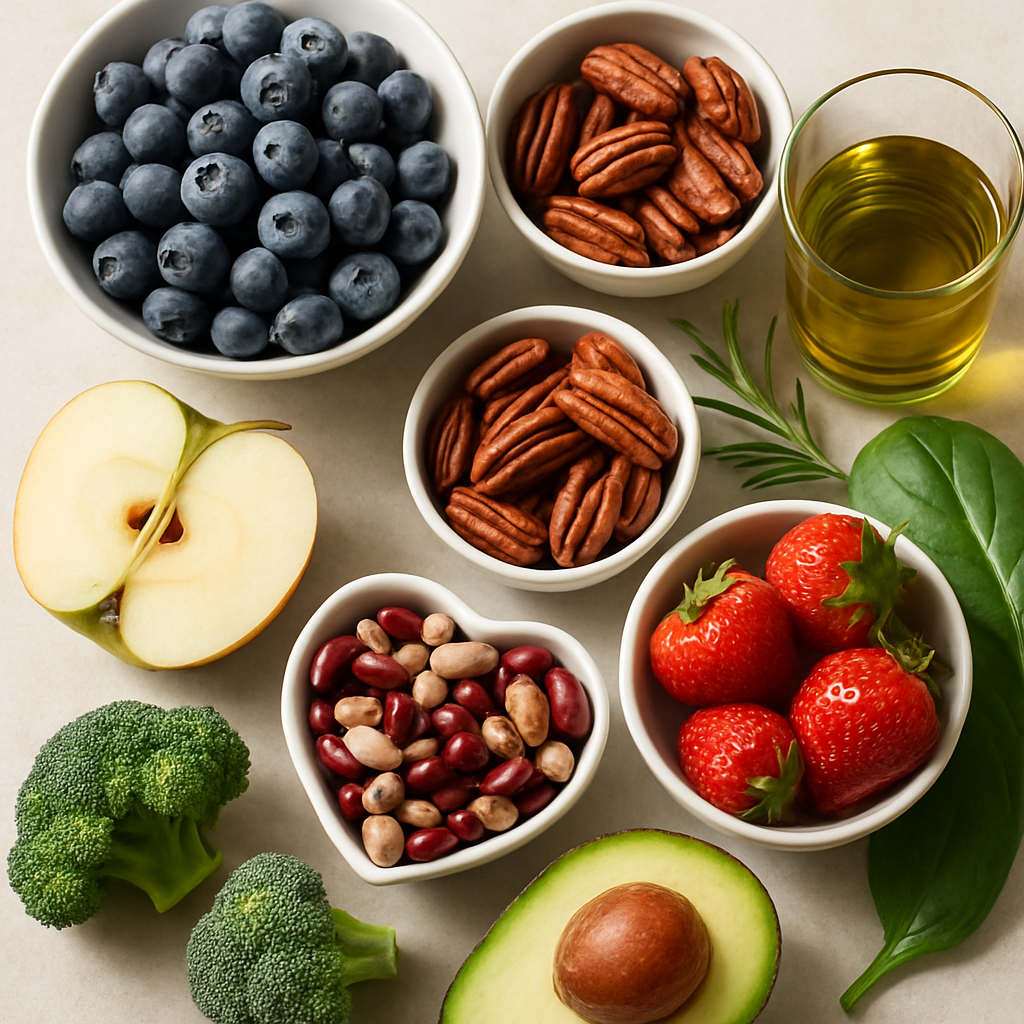
Deeply coloured fruits and vegetables tend to be the richest sources — blueberries, blackberries, cherries, red cabbage, beetroot, and dark leafy greens. Legumes — lentils, chickpeas, black beans — are underrated sources, particularly of phenolic acids. Wholegrains, especially oats and rye, contribute lignans. Tea and coffee are two of the most significant contributors to polyphenol intake in the UK diet, purely because of how consistently they're consumed.
Extra virgin olive oil deserves a mention because its polyphenol content — particularly oleocanthal — has been independently associated with reduced markers of neuroinflammation in several studies.
The consistent thread in the research isn't any single food but dietary patterns that include a wide range of plant foods consumed regularly over time. The Mediterranean and MIND diets both score well on polyphenol density, and both have accumulated solid evidence linking them to slower cognitive ageing.
Practical Takeaways
The research is pointing in a clear direction, even if all the mechanistic detail isn't settled yet. Here's what that means practically:
Prioritise variety over perfection. Rotating the types of fruit, vegetables, and legumes you eat regularly will naturally broaden your polyphenol intake without needing to track anything.
Make the most of what you already drink. If you drink tea regularly, you're already taking in a meaningful source of flavonoids. Green and black tea both count; it's the habit that matters.
Add colour incrementally. Frozen berries are nutritionally comparable to fresh and considerably cheaper — a practical option for adding flavonoid-rich fruit to porridge, yoghurt, or smoothies without the cost barrier.
Eat more legumes. Lentil soups, bean-based stews, and hummus are all accessible, affordable, and polyphenol-rich. They also support the gut microbiome that helps you metabolise those polyphenols effectively.
Think long-term, not acutely. The cognitive benefits in the research are associated with habitual intake over years, not short-term interventions. This is about building consistent patterns, not optimising any single meal.
If you want a meal plan that naturally builds in a wide range of polyphenol-rich foods alongside your macro targets, Macrology generates macro-perfect meal plans in seconds — https://macrology.app/signin
The science here is still developing, but the direction of travel is consistent: eating a varied, plant-forward diet over time appears to be one of the most meaningful things you can do for your brain's long-term health. Not because any single food is magic, but because the cumulative effect of that dietary pattern — day after day, year after year — seems to matter considerably.
Want meals like this planned to your exact macros?
Macrology generates a personalised meal plan in seconds — breakfast, lunch, dinner and snacks, all hitting your daily targets.
Start your free 14-day trialMore from news
New Research: What UK Studies Reveal About the Link Between Food Delivery App Usage and Dietary Quality
7 min readNew Research: What UK Studies Reveal About the Link Between Food Environment at Home and Children's Eating Habits
7 min readNew Research: What UK Studies Reveal About the Link Between Cooking Frequency at Home and Overall Diet Quality
7 min read