New Research: What UK Studies Reveal About the Link Between Fermented Foods and Gut Health
# New Research: What UK Studies Reveal About the Link Between Fermented Foods and Gut Health
There's a good chance you've noticed fermented foods quietly taking over the supermarket shelves — kimchi next to the coleslaw, kefir alongside the yoghurt, kombucha where the fizzy drinks used to be. But beyond the trend, something genuinely interesting is happening in the science behind these foods, and UK researchers are increasingly at the centre of it.
What Are Fermented Foods, Actually?
Fermented foods are produced when microorganisms — bacteria, yeasts, or fungi — break down sugars and starches in food. The result is a product that's chemically different from what you started with, often more acidic, more complex in flavour, and teeming with live microbes.
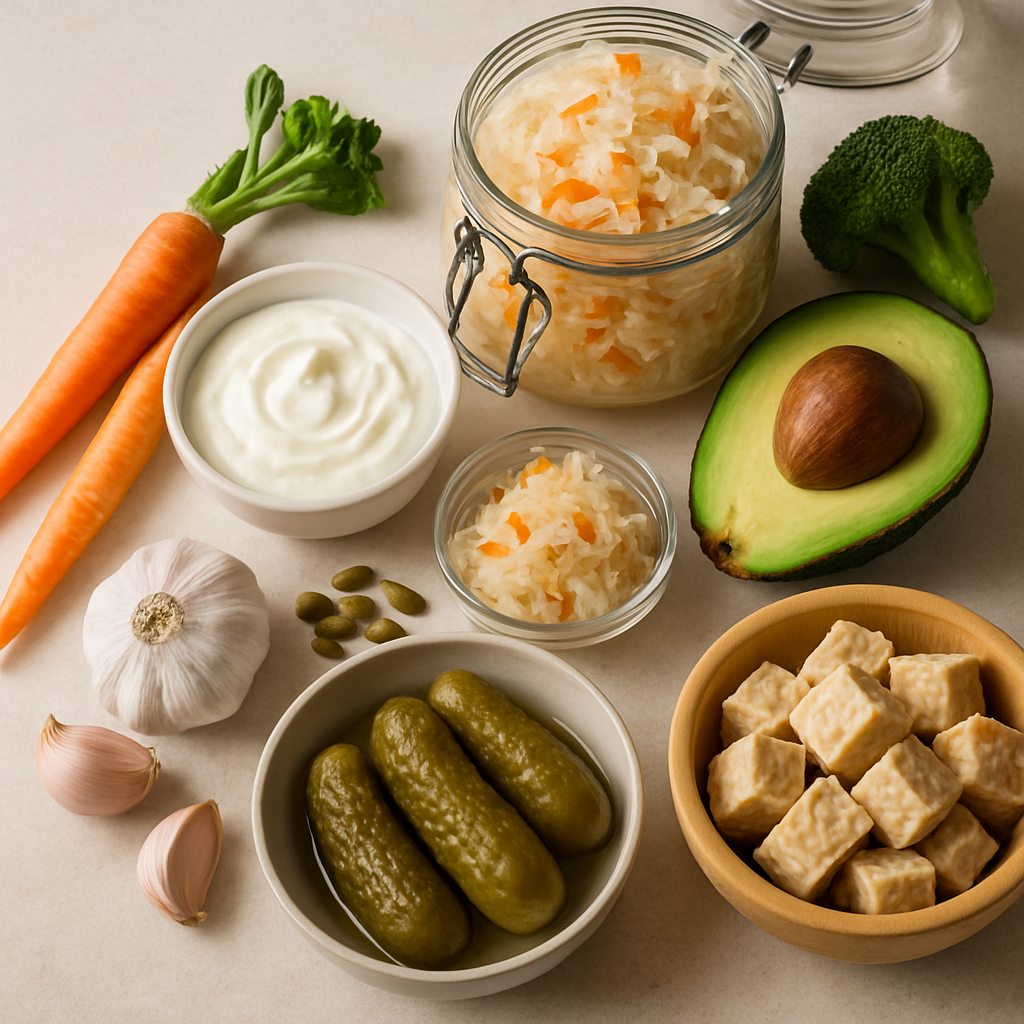
The category is broader than most people realise. Yes, it includes the trendy options like kimchi, kefir, and kombucha. But it also includes foods that have been part of British kitchens for generations — natural yoghurt, sourdough bread, mature cheddar, miso, sauerkraut, and live-culture pickles.
Not all fermented foods contain live cultures by the time you eat them. Sourdough bread, for example, is baked at temperatures that kill the bacteria responsible for fermentation. The benefit there comes from how fermentation has changed the structure of the food — not from live microbes passing through your gut.
Why Gut Health Matters More Than You Might Think
The gut microbiome — the vast community of trillions of microorganisms living in your digestive tract — has moved from niche science to mainstream conversation over the past decade, and for good reason.
Research has linked the diversity and composition of the gut microbiome to everything from immune function and inflammation to mood, metabolic health, and even sleep quality. A 2022 review published in Nature Reviews Gastroenterology & Hepatology described the microbiome as "a central mediator of human health" — which is a significant statement from a peer-reviewed journal.
What makes gut health complicated is that it's deeply individual. Two people can eat identical diets and develop quite different microbiomes. Genetics, stress, sleep, antibiotic history, and even where you grew up all shape your gut. That context matters when we start interpreting the research on fermented foods.
What the Evidence Shows
The most influential study in recent years came from Stanford University in 2021, published in Cell. Researchers randomised participants to either a high-fibre diet or a high-fermented-food diet for ten weeks. The fermented food group showed a significant increase in microbiome diversity and a decrease in markers of immune activation — both generally considered positive outcomes. The fibre group showed more variable results, particularly in people with lower baseline microbiome diversity.
That study wasn't UK-based, but it sparked a wave of follow-up research, including work from British institutions. King's College London's PREDICT studies — led by Professor Tim Spector and his team at ZOE — have generated some of the most detailed real-world data on how diet affects the gut microbiome at a population level. Their work consistently highlights fermented foods as one of the dietary factors associated with better microbiome diversity.
A 2024 paper from the Quadram Institute Bioscience in Norwich, one of the UK's leading gut health research centres, examined how regular kefir consumption affected the gut microbiome in adults over eight weeks. The findings suggested measurable changes in microbial composition, though the researchers were careful to note that the clinical significance of those changes — meaning whether they actually improve health outcomes — still requires longer-term study.
The honest picture is this: the evidence is promising and growing, but it's not yet definitive. Most studies are relatively short, use small sample sizes, and measure surrogate markers (like microbial diversity) rather than concrete health outcomes like reduced disease risk. That's not a reason to dismiss the research — it's a reason to interpret it accurately.
The Fibre Connection
One thing UK researchers keep returning to is the relationship between fermented foods and dietary fibre. These two aren't competing strategies for gut health — they work together.
Fibre acts as a prebiotic: it feeds the beneficial bacteria in your gut, helping them thrive. Fermented foods introduce new microbes and potentially help them colonise. Think of fibre as laying down the habitat and fermented foods as populating it.
The British Gut Project, a citizen science initiative that collected microbiome samples from thousands of UK participants, found that people who ate a wide variety of plants — 30 or more different types per week — had significantly more diverse microbiomes. Pairing that plant diversity with regular fermented food consumption appears, based on current evidence, to be a sensible dual approach.
This is also where the nuance matters. Eating a pot of flavoured yoghurt with high sugar content alongside an otherwise low-fibre diet is unlikely to deliver the gut benefits that the headlines promise. The food matrix — everything else you're eating — shapes how fermented foods function in your body.
Common Misconceptions Worth Addressing
Misconception 1: More fermented food is always better. There's no meaningful evidence that consuming five different fermented foods a day is superior to regularly including one or two. Consistency over time appears to matter more than volume at any one moment.
Misconception 2: Kombucha is a health drink. Kombucha does contain live cultures and organic acids produced during fermentation, but many commercial versions also contain significant amounts of added sugar. The research on kombucha specifically lags behind that on kefir and yoghurt. It's not harmful, but it's worth reading the label.
Misconception 3: Fermented foods can fix a poor diet. The gut microbiome responds to your whole dietary pattern, not individual superfoods. UK dietary surveys consistently show that adults fall short on fibre intake — the average is around 18g per day against a recommended 30g. No amount of kimchi compensates for a diet low in vegetables, legumes, and wholegrains.
Misconception 4: If it's fermented, it contains probiotics. The term "probiotic" has a specific scientific definition: live microorganisms that, when consumed in adequate amounts, confer a health benefit. Most fermented foods don't meet the threshold required to make that claim. That doesn't mean they're without value — it means the language around them is often imprecise.
What This Means for Everyday Eating
The practical upshot of where the research currently stands is relatively straightforward.
Including a variety of fermented foods regularly — natural yoghurt, kefir, live-culture cheese, miso, kimchi, or sauerkraut — is a reasonable and evidence-supported approach to supporting gut health. The key word is variety, because different fermented foods introduce different microbial strains.
Pairing those fermented foods with a genuinely fibre-rich diet — lots of vegetables, fruit, legumes, wholegrains, nuts, and seeds — gives you the best foundation based on current evidence.
And it's worth remembering that the less processed a fermented food is, the more likely it is to retain its live cultures. A natural live yoghurt from the chilled aisle is a more reliable source than a shelf-stable fermented product that's been heat-treated after production.
Practical Takeaways
Here's what you can act on today, based on the available evidence:
- Add one fermented food regularly — a daily pot of natural live yoghurt or a splash of kefir in a smoothie is a realistic, low-effort starting point
- Check for "live cultures" on the label — this tells you the product still contains active bacteria
- Diversify your plants — aim for 30 different plant foods per week across vegetables, fruit, wholegrains, legumes, nuts, seeds, and herbs
- Go easy on the sugar — choose plain or low-sugar versions of fermented dairy products where possible
- Be consistent — the research suggests regular consumption over weeks and months, not a single bowl of kimchi, is what shifts microbiome composition
If you want to build a diet that supports gut health without the guesswork, Macrology generates macro-perfect meal plans in seconds — https://macrology.app/signin
The science of the gut microbiome is still young, and there will almost certainly be findings in the next few years that refine or challenge what we currently understand. But the emerging picture from UK and international research is consistent enough to say: fermented foods, eaten as part of a varied, fibre-rich diet, are a worthwhile addition to most people's eating patterns.
Want meals like this planned to your exact macros?
Macrology generates a personalised meal plan in seconds — breakfast, lunch, dinner and snacks, all hitting your daily targets.
Start your free 14-day trialMore from news
New Research: What UK Studies Reveal About the Link Between Food Delivery App Usage and Dietary Quality
7 min readNew Research: What UK Studies Reveal About the Link Between Food Environment at Home and Children's Eating Habits
7 min readNew Research: What UK Studies Reveal About the Link Between Cooking Frequency at Home and Overall Diet Quality
7 min read