New Research: What UK Studies Reveal About the Link Between Dietary Sodium and Kidney Health
# New Research: What UK Studies Reveal About the Link Between Dietary Sodium and Kidney Health
Most people know salt is "bad for blood pressure" — but the full story is more layered than that, and UK researchers have been quietly building a compelling picture of how dietary sodium affects the kidneys specifically.
Recent findings from British cohort studies are adding real nuance to what we thought we knew, and some of the results are worth paying attention to.
---
Why the Kidneys Are Central to the Sodium Story
The kidneys are the primary regulators of sodium in the body. Every time you eat something salty, your kidneys work to filter, reabsorb, or excrete that sodium through urine — a constant balancing act that keeps blood pressure and fluid levels stable.
When sodium intake is persistently high, that workload increases. Over time, this can raise pressure within the tiny filtering units of the kidney — called glomeruli — and contribute to a gradual decline in kidney function. This process is slow and largely symptomless, which is part of what makes it worth understanding early.
The kidneys and cardiovascular system are also deeply intertwined. High sodium raises blood pressure, and high blood pressure is one of the leading causes of chronic kidney disease (CKD) in the UK. It's not always easy to separate cause from effect, but the relationship is well-established enough that researchers are now asking more precise questions: how much sodium is too much, what does the source of that sodium matter, and who is most at risk?
---
What UK Research Has Been Finding
The UK Biobank — one of the largest population health databases in the world — has provided a remarkable resource for studying dietary patterns and long-term health outcomes in British adults.
A notable study using UK Biobank data, published in recent years, examined spot urine sodium measurements as a proxy for habitual intake and found meaningful associations between higher estimated sodium excretion and markers of kidney stress. Crucially, this wasn't just a story about people eating extraordinarily salty diets — even moderate excesses above recommended levels appeared to track with unfavourable kidney outcomes over time.
Separate work from the University of Glasgow and other UK institutions has reinforced the link between dietary sodium and albuminuria — the presence of protein in the urine, which is one of the earliest detectable signs that the kidneys are under strain. Higher sodium intake was associated with greater likelihood of albuminuria, independent of blood pressure levels in some analyses. That last point is significant: it suggests sodium may be affecting the kidneys through mechanisms beyond blood pressure alone.
---
What the Evidence Shows
The broader international evidence, much of which is reflected in UK dietary guidelines, paints a consistent picture. The NHS recommends adults consume no more than 6 grams of salt per day (roughly 2.4g of sodium), yet surveys consistently show UK adults average closer to 8–9g daily.
A landmark meta-analysis published in the BMJ found that each additional gram of sodium per day was associated with a measurable increase in the risk of CKD progression. The effect sizes were modest at the individual level but substantial at a population scale — exactly the kind of finding that shapes public health policy.
Importantly, the evidence is not purely observational. Randomised controlled trials — including the DASH-Sodium trial, which while US-based has heavily influenced UK nutritional guidance — demonstrated that reducing dietary sodium lowered blood pressure in ways that would meaningfully reduce kidney stress over time.
There's also emerging evidence around dietary sodium-to-potassium ratio, rather than sodium in isolation. UK Biobank analyses have found that the balance between these two minerals may be a better predictor of kidney and cardiovascular outcomes than either one alone. Potassium, found in vegetables, pulses, and fruit, appears to counteract some of sodium's pressure-raising effects — a nuance that's increasingly being reflected in research design.
---
The "Processed Food" Factor
It's worth being specific about where dietary sodium actually comes from in the UK diet, because it's rarely the salt shaker at the dinner table. Public Health England has estimated that roughly 75–80% of salt intake in the UK comes from processed and packaged foods — bread, ready meals, cereals, sauces, and cured meats being among the biggest contributors.
This matters for how we interpret the research. When studies find that higher sodium intake is associated with worse kidney outcomes, they're largely capturing the effect of overall dietary patterns that lean heavily on ultra-processed foods — which come with a range of other nutritional trade-offs beyond sodium alone.
It also means that the most practical lever for most people isn't obsessing over a pinch of salt added to home cooking. Cooking from scratch more often has an outsized impact on sodium intake, not because homemade food is virtuous but simply because you're replacing foods with very high hidden sodium content with foods where you're in control of what goes in.
---
Who Is Most at Risk?
The research consistently identifies certain groups for whom the sodium-kidney relationship is most pronounced. People with existing hypertension, type 2 diabetes, obesity, or a family history of CKD appear to be more sensitive to the effects of high sodium intake on kidney function.
Older adults are also a meaningful risk group. UK Biobank data suggests kidney function naturally declines with age, and this decline appears to be steeper in those with higher habitual sodium intake. Given that CKD often goes undiagnosed — estimates suggest around 1 in 10 people in the UK have some degree of reduced kidney function, many without knowing — this isn't a niche concern.
Ethnic background also plays a role. Research has found that people of South Asian and Black African or Caribbean heritage in the UK have higher rates of CKD and hypertension, and may be more sensitive to dietary sodium. This is an area where more UK-specific research is still needed, but it's worth being aware of as a context for individual conversations with a GP.
---
Common Misconceptions Worth Addressing
"I don't add salt to food, so I'm probably fine." As noted above, the majority of sodium in UK diets comes from packaged and processed food — not the salt you add yourself. Someone who never touches a salt shaker can still be well above recommended levels if their diet relies on ready meals, sandwiches, and packet sauces.
"Sea salt and pink Himalayan salt are healthier." They contain the same sodium chloride as table salt, in broadly similar amounts. The trace minerals in fancier salts are present in negligible quantities. Sodium is sodium.
"Drinking more water flushes out the kidneys." Hydration genuinely does support kidney function, but it's not a straightforward antidote to high sodium intake. The kidneys will still need to process and excrete that sodium — water helps them do so more comfortably, but it doesn't neutralise the effect of consistently high intake.
---
Practical Takeaways
Applying this evidence doesn't require an overhaul. A few shifts can make a real difference:
- Read labels on packaged foods. Look for the sodium or salt content per serving — anything above 1.5g of salt per 100g is considered high.
- Cook more meals at home. Not as a lifestyle statement, just as the most direct way to control what's in your food.
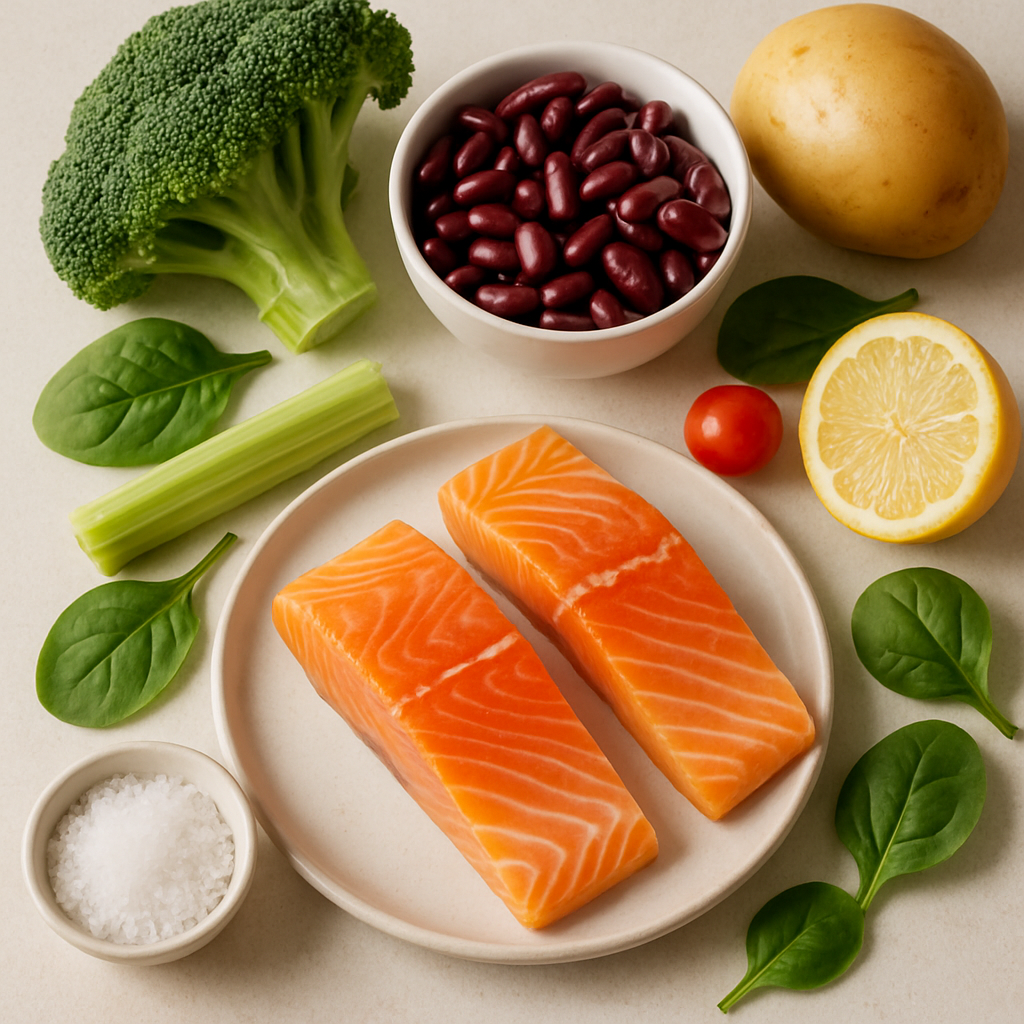
- Bring more potassium-rich foods into your meals. Beans, lentils, potatoes, spinach, and bananas all contribute to a more favourable sodium-to-potassium balance.
- Check in with your GP if you're in a higher-risk group. A simple urine test can detect early signs of kidney strain — it's the kind of thing worth knowing about sooner rather than later.
- Don't stress about occasional high-sodium meals. The research is about habitual intake patterns, not individual events. One salty takeaway isn't the issue; what you eat most of the time is what matters.
If you want to hit your nutrition targets while keeping sodium in check day to day, Macrology generates macro-perfect meal plans in seconds — https://macrology.app/signin
---
The picture emerging from UK research is less about fear and more about understanding: sodium affects the kidneys in real, measurable ways, the effects compound over time, and most of us are eating more than we realise. That's genuinely useful information — and the good news is that the most effective responses are also the most straightforward ones.
Want meals like this planned to your exact macros?
Macrology generates a personalised meal plan in seconds — breakfast, lunch, dinner and snacks, all hitting your daily targets.
Start your free 14-day trialMore from news
New Research: What UK Studies Reveal About the Link Between Food Delivery App Usage and Dietary Quality
7 min readNew Research: What UK Studies Reveal About the Link Between Food Environment at Home and Children's Eating Habits
7 min readNew Research: What UK Studies Reveal About the Link Between Cooking Frequency at Home and Overall Diet Quality
7 min read