New Research: What UK Studies Reveal About the Link Between Dietary Iron and Fatigue in Women
# New Research: What UK Studies Reveal About the Link Between Dietary Iron and Fatigue in Women
Most women have been told at some point that they're tired because of their iron levels. But the full picture is more complicated — and more interesting — than a simple fix of eating more red meat.
Recent UK research is sharpening our understanding of exactly who is most at risk of dietary iron inadequacy, why standard blood tests can miss the problem, and what actually helps. Here's what the evidence shows.
Why Iron and Fatigue Are So Closely Linked
Iron does a job that nothing else can replicate: it helps red blood cells carry oxygen around the body. Without enough of it, your muscles and brain receive less oxygen than they need, and the result is the kind of fatigue that sleep doesn't fix — a heavy, persistent tiredness that affects concentration and mood as well as physical energy.
What's less widely understood is that this can happen before full anaemia develops. A state called iron deficiency without anaemia — where stored iron (ferritin) is low but haemoglobin is still technically normal — can produce significant fatigue and cognitive symptoms. This is important, because standard GP blood tests often screen for anaemia specifically, which means iron depletion can go undetected until it becomes more severe.
What UK Data Actually Shows
The National Diet and Nutrition Survey (NDNS), which tracks eating habits and nutritional status across the UK population, consistently finds that iron intake is one of the most common dietary shortfalls among women. Data from recent NDNS rolling programme reports show that around 25% of women aged 19–64 have iron intakes below the Lower Reference Nutrient Intake — the point at which deficiency becomes likely.
Among teenage girls and women of reproductive age, the picture is even more striking. Menstruation increases iron requirements significantly, and UK surveys suggest that a substantial proportion of this group is not meeting the Reference Nutrient Intake (RNI) of 14.8mg per day.
A 2023 study published in the British Journal of Nutrition examined iron status in a cohort of UK premenopausal women and found that low ferritin was associated with significantly higher self-reported fatigue scores, even when haemoglobin levels remained within the normal range. The researchers noted that ferritin testing — not just full blood count — is likely to give a more complete picture of iron status in women experiencing unexplained tiredness.
What the Evidence Shows: Iron, Cognition, and Mood
The fatigue story doesn't end with physical tiredness. Iron is also involved in the synthesis of dopamine and serotonin, two neurotransmitters that regulate mood, motivation, and focus. This means that low iron status can show up as brain fog, low mood, or difficulty concentrating — symptoms that are easy to attribute to stress, poor sleep, or other causes.
A review published in Nutrients in 2022 looked at the relationship between iron deficiency (with and without anaemia) and cognitive function in women of reproductive age. The authors found consistent associations between low iron status and impaired attention, working memory, and processing speed, with some trials showing improvement in these measures following iron repletion.
This has practical implications: women experiencing mental fatigue or mood changes alongside physical tiredness may benefit from having their ferritin levels checked, not just their haemoglobin.
Why Dietary Iron Is Complicated
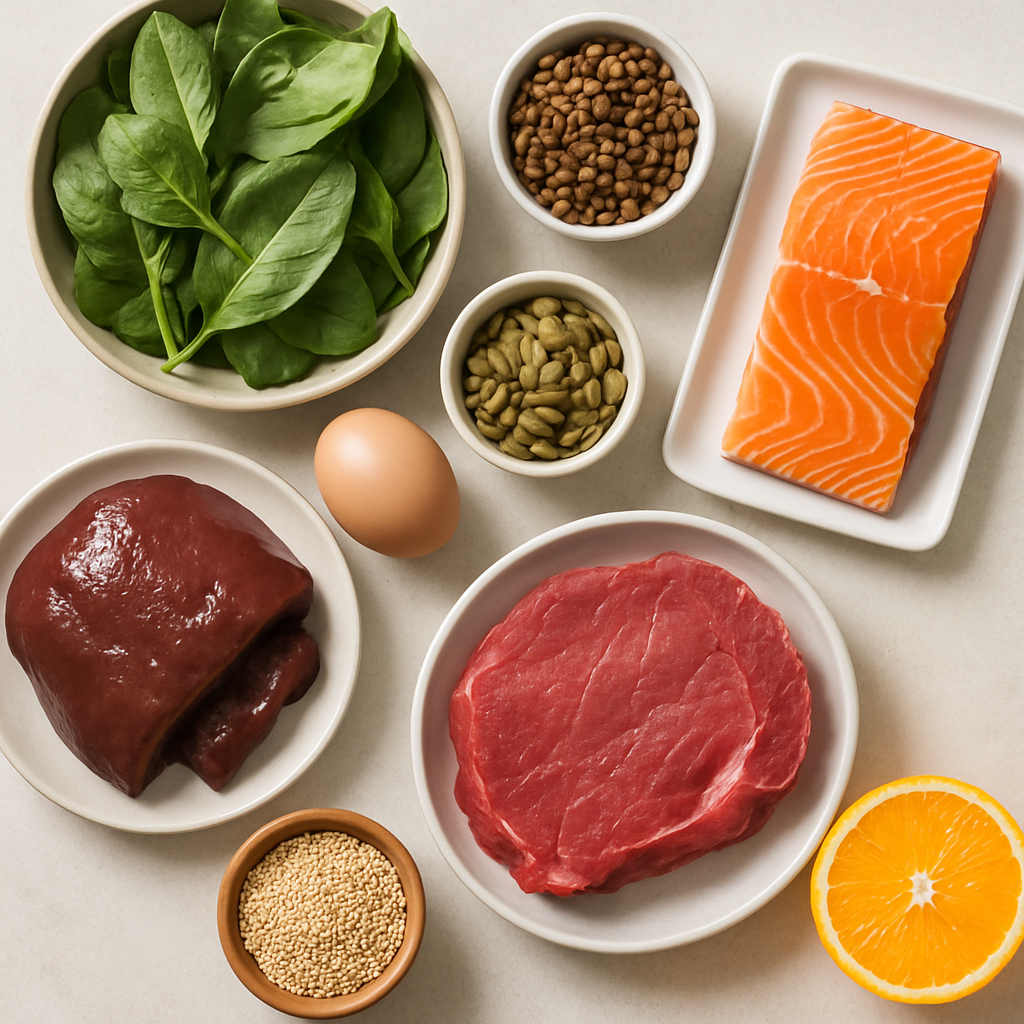
Not all iron is created equal, and this is where a lot of confusion creeps in. There are two forms of dietary iron: haem iron, found in meat and fish, which the body absorbs relatively efficiently (around 15–35%); and non-haem iron, found in plant foods like lentils, spinach, tofu, fortified cereals, and beans, which is absorbed far less efficiently (around 2–20%).
The wide range in non-haem iron absorption is significant, because it depends heavily on what else you eat at the same meal. Vitamin C dramatically increases non-haem iron absorption — pairing a lentil soup with a squeeze of lemon, or eating fortified cereal with a glass of orange juice, can make a meaningful difference. On the other hand, tannins in tea and coffee, calcium in dairy, and phytates in wholegrains can inhibit absorption when consumed at the same time as iron-rich foods.
This doesn't mean avoiding tea or dairy — it simply means the timing of these foods relative to iron-rich meals is worth thinking about. Leaving a gap of an hour or so between an iron-rich meal and a cup of tea is one of the more evidence-backed small adjustments available.
Who Is Most at Risk in the UK?
UK research points to several overlapping groups where dietary iron inadequacy is most common:
Women with heavy menstrual bleeding are at the highest risk. Monthly blood loss can exceed the body's ability to replenish iron stores even with a reasonable diet. UK gynaecology guidelines now increasingly recommend ferritin testing as part of the investigation for heavy periods.
Women following plant-based or vegetarian diets face a higher risk not because plant foods lack iron, but because of the absorption differences described above. The RNI for non-haem iron consumers is estimated to be significantly higher than the standard figure, though the UK government has not yet formally set a separate recommendation for this group.
Adolescent girls and young women consistently show the lowest iron intakes in NDNS data, often due to a combination of higher requirements, lower overall calorie intake, and dietary patterns that don't prioritise iron-rich foods.
Women during and after pregnancy have substantially increased needs, and postpartum iron deficiency is widely underdiagnosed. A 2021 NHS-funded study highlighted that postnatal fatigue is frequently attributed to sleep deprivation when iron status is not properly assessed.
Common Misconceptions Worth Addressing
One persistent myth is that spinach is one of the best sources of dietary iron. Popeye aside, spinach does contain iron, but it also contains oxalates that significantly reduce absorption — making it a less efficient source than lentils, fortified cereals, or red meat, gram for gram.
Another misconception is that iron supplementation is always the answer. Over-supplementing with iron is not harmless: high doses can cause gastrointestinal side effects and, in rare cases, more serious issues. Iron supplements are worth discussing with a GP or dietitian rather than starting independently, particularly because identifying and addressing the cause of deficiency (heavy periods, low intake, absorption issues) matters as much as the supplement itself.
Finally, it's worth noting that fatigue has many causes, and iron is just one of them. Vitamin D, B12, thyroid function, and sleep quality are all worth considering alongside iron status. Attributing all fatigue to iron without a proper assessment can mean other causes go unaddressed.
Practical Takeaways
Here's what translates from the research into everyday life:
- Ask for a ferritin test, not just a full blood count, if you're experiencing unexplained fatigue. You may need to specifically request this, as it isn't always included in standard panels.
- Pair non-haem iron sources with vitamin C — lemon juice on lentils, bell peppers with beans, orange juice with fortified cereal.
- Space out tea and coffee from iron-rich meals where you can. An hour's gap is a reasonable aim.
- Diversify iron sources across the day: red meat and oily fish if you eat them, plus lentils, chickpeas, tofu, pumpkin seeds, fortified breakfast cereals, and dried apricots.
- Track your intake if you're uncertain whether you're consistently hitting 14.8mg daily — most people significantly overestimate how much iron they're getting from their diet.
That last point is where meal planning can genuinely help. Knowing the iron content of what you're actually eating — not just guessing — takes the uncertainty out of it.
If you want to consistently hit your iron and macro targets without the mental load of calculating everything yourself, Macrology generates macro-perfect meal plans in seconds — https://macrology.app/signin
Want meals like this planned to your exact macros?
Macrology generates a personalised meal plan in seconds — breakfast, lunch, dinner and snacks, all hitting your daily targets.
Start your free 14-day trialMore from news
New Research: What UK Studies Reveal About the Link Between Food Delivery App Usage and Dietary Quality
7 min readNew Research: What UK Studies Reveal About the Link Between Food Environment at Home and Children's Eating Habits
7 min readNew Research: What UK Studies Reveal About the Link Between Cooking Frequency at Home and Overall Diet Quality
7 min read