Prawn and Sweetcorn Chowder with Crusty Bread
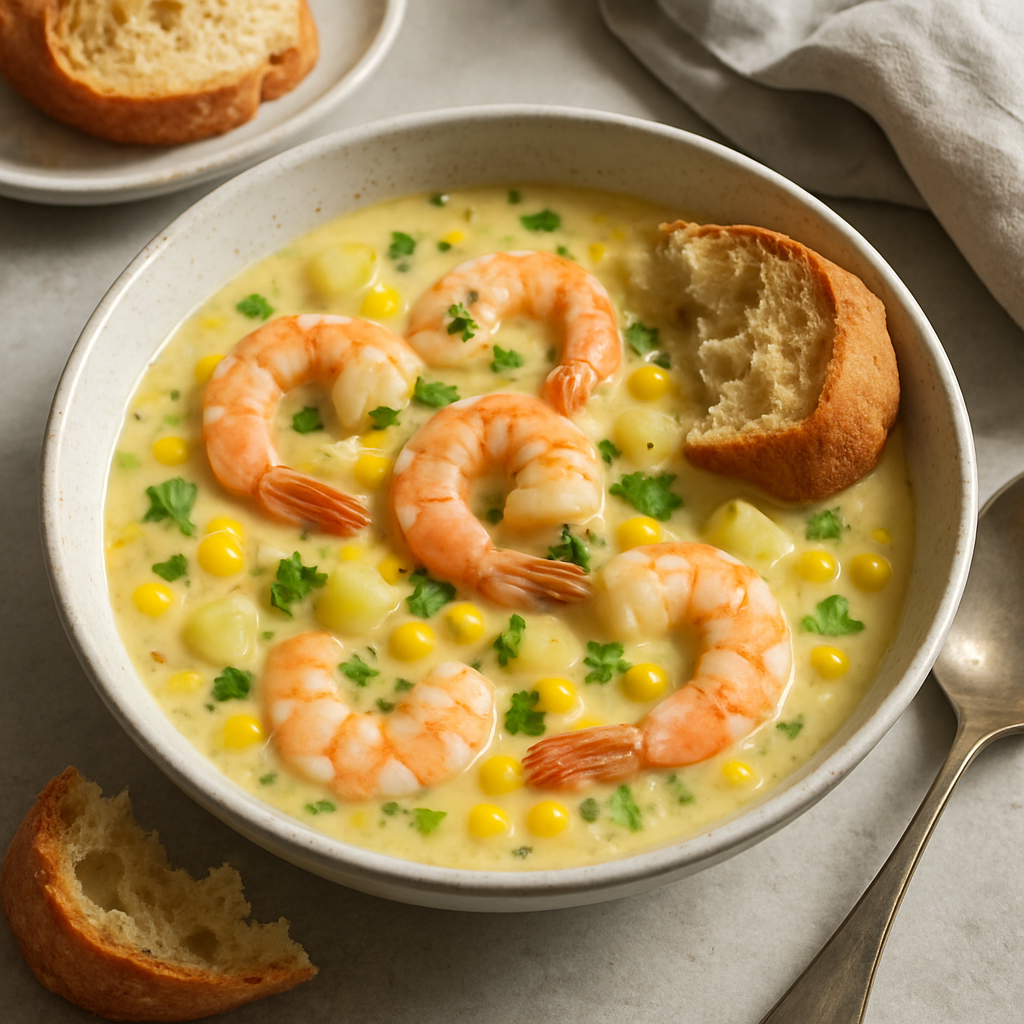
# Prawn and Sweetcorn Chowder with Crusty Bread
There's something quietly brilliant about a bowl of chowder. It sits somewhere between a soup and a stew — hearty enough to be a proper meal, but light enough that you don't feel weighed down afterwards.
This prawn and sweetcorn chowder is the kind of recipe that looks far more impressive than the effort it takes. It's on the table in under 30 minutes, packed with protein, and genuinely satisfying — the sort of thing that becomes a regular in the rotation without you even planning it.
---
Why This Recipe Works
Chowder has American and Atlantic roots — think New England clam chowder, or the thick, creamy versions served up in coastal diners. But the formula translates beautifully to prawns and sweetcorn, two ingredients that happen to be widely available in the UK, budget-friendly, and naturally well-suited to each other.
The sweetness of the corn plays off the savoury brininess of the prawns. A creamy, slightly thickened broth ties it all together. Add a chunk of crusty bread for dipping, and you've got a complete meal with real nutritional substance behind it.
---
Ingredients (Serves 4)
- 400g cooked, peeled king prawns (frozen and defrosted is absolutely fine)
- 2 x 198g tins of sweetcorn, drained (or 300g frozen sweetcorn)
- 1 large onion, finely diced
- 2 sticks of celery, finely sliced
- 2 medium potatoes (roughly 350g), peeled and cut into 1cm cubes
- 2 garlic cloves, minced
- 600ml fish or vegetable stock
- 200ml semi-skimmed milk
- 100ml single cream
- 1 tbsp plain flour
- 1 tbsp olive oil or a knob of butter
- ½ tsp smoked paprika
- Salt and black pepper to taste
- Small bunch of fresh chives or flat-leaf parsley, to serve
- 4 portions of crusty bread (sourdough or a simple white bloomer work well)
---
Method
Step 1 — Build the base. Heat the oil or butter in a large, deep saucepan over a medium heat. Add the onion and celery and cook gently for 6–8 minutes until soft and translucent. Stir in the garlic and cook for another minute.
Step 2 — Add the flour. Sprinkle the flour over the softened vegetables and stir well to coat everything. This is your thickener — cook it out for 1–2 minutes so it doesn't taste raw, then gradually add the stock, stirring continuously to avoid lumps.
Step 3 — Cook the potatoes. Add the diced potatoes and bring everything up to a gentle simmer. Cook for 10–12 minutes until the potatoes are just tender when pierced with a knife. Don't rush this step — undercooked potato in a chowder is a disappointment.
Step 4 — Add the dairy and sweetcorn. Reduce the heat and stir in the milk, cream, and drained sweetcorn. Season with smoked paprika, salt, and plenty of black pepper. Let everything warm through gently for 3–4 minutes — avoid a rolling boil here, which can cause the cream to split.
Step 5 — Add the prawns. Stir the prawns in at the very end. Since they're already cooked, they only need 2–3 minutes to heat through. Overcooking prawns turns them rubbery, so keep a close eye on this final stage.
Step 6 — Serve. Ladle into deep bowls, scatter with fresh chives or parsley, and serve alongside generously sized chunks of crusty bread.
---
What Makes This Work Nutritionally
This isn't just a recipe that tastes good — it's one that holds up reasonably well from a macronutrient perspective too.
Prawns are an exceptional protein source. A 100g serving provides roughly 20–24g of protein for only around 100 kcal. They're also a source of iodine, selenium, and vitamin B12 — nutrients that are easy to undereat on a typical Western diet. The iodine content in particular is worth flagging, given that UK surveys consistently show a large proportion of the population falls short of recommended intake.
Sweetcorn adds more than sweetness. It contributes a modest amount of fibre, alongside B vitamins and some antioxidants including lutein and zeaxanthin — compounds associated with eye health. It also bulks out the chowder in a way that helps with satiety without dramatically increasing the calorie count.
The potato base provides slow-release carbohydrate and contributes additional potassium, which supports healthy blood pressure. Using semi-skimmed milk rather than full-fat keeps the saturated fat content in check without sacrificing the creamy texture — the single cream does enough of that work on its own.
Per serving (approximate, without bread): around 380–420 kcal, 30–34g protein, 35g carbohydrate, 10–12g fat.
---
Common Mistakes and How to Avoid Them
Using raw prawns without adjusting the method. If you're starting with raw prawns instead of cooked, add them a couple of minutes earlier — around 4–5 minutes before serving — and remove from the heat as soon as they've turned fully pink and opaque.
Boiling the chowder once cream is added. High heat causes cream-based soups to separate and look grainy. Once the dairy goes in, keep the heat low and patient.
Cutting the potatoes too large. Big chunks mean uneven cooking and a texture that doesn't quite integrate into the chowder properly. Keep them small — roughly 1cm cubes — so they soften at the same rate as everything else and become part of the dish rather than an afterthought.
Under-seasoning. Chowder needs salt. The stock provides some, but taste and adjust before serving — especially if you're using low-sodium stock.
---
Practical Takeaways
A few things that make this recipe genuinely practical for everyday cooking:
- Frozen prawns are excellent here. They're often better quality than "fresh" prawns at the supermarket (which have usually been frozen and defrosted already). Buy a bag and keep it in the freezer — defrost overnight in the fridge or under cold running water.
- Make it ahead, but hold the prawns. The chowder base — everything up to the point of adding the prawns — keeps well in the fridge for 2 days. Reheat gently and add the prawns fresh to serve.
- Tinned sweetcorn is just as good as fresh. The canning process doesn't meaningfully reduce the nutritional value of sweetcorn, and the convenience factor is hard to argue with.
- Adjust the consistency to your preference. For a thicker chowder, remove a ladleful of potatoes before adding the cream, mash them roughly, and stir back in. For a brothier version, add an extra 100–150ml of stock.
- Bread choice matters more than you'd think. A proper crusty loaf — sourdough, a French stick, or a good bloomer — gives you the structural integrity to actually mop up the chowder. A soft sliced loaf will fall apart immediately and leave you eating soup-logged bread, which is its own kind of disappointment.
---
Macrology Tip
If you want macro-perfect meal plans built around recipes like this one, Macrology generates personalised plans in seconds — [https://macrology.app/signin](https://macrology.app/signin)
Track your protein, hit your targets, and spend less time thinking about what to cook next.
Want meals like this planned to your exact macros?
Macrology generates a personalised meal plan in seconds — breakfast, lunch, dinner and snacks, all hitting your daily targets.
Start your free 14-day trial