Peri-Peri Roasted Cauliflower Steaks with Herbed Couscous and Yoghurt
# Peri-Peri Roasted Cauliflower Steaks with Herbed Couscous and Yoghurt
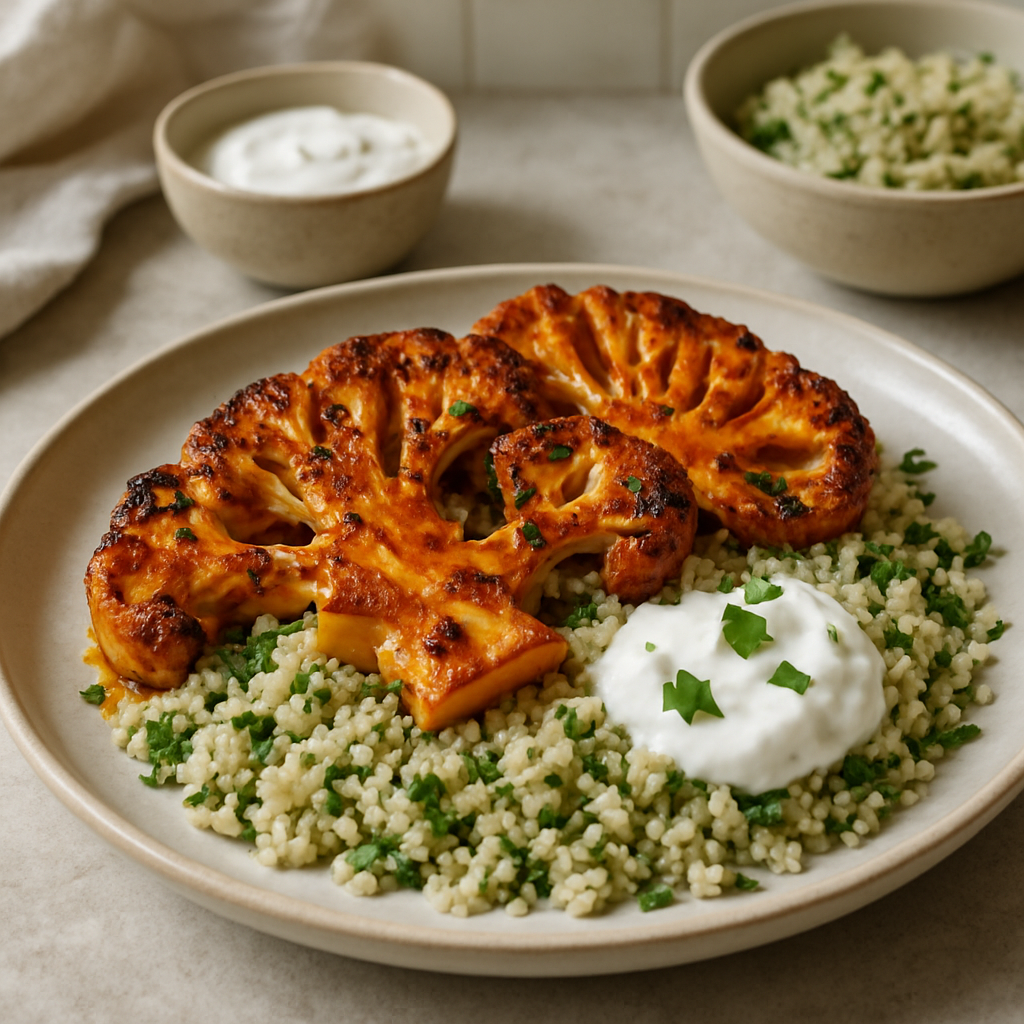
Cauliflower steaks have had a bit of a reputation problem — often arriving at the table pale, watery, and thoroughly underwhelming. This version is none of those things. Blasted with a proper peri-peri marinade and roasted until the edges are almost charred, these are bold, smoky, and genuinely satisfying.
What Is a Cauliflower Steak, Exactly?
A cauliflower steak is simply a thick slice cut straight through the centre of a whole cauliflower head, keeping the florets attached to the core. Cut it too thin and it falls apart; cut it too thick and the middle stays raw while the outside burns.
The sweet spot is around 2–2.5cm thick. You'll typically get two good steaks from one head, plus some loose florets that roast beautifully alongside them. Don't waste those — they catch the marinade brilliantly and go crispy in all the right ways.
The key to getting proper colour and texture is making sure the cauliflower is completely dry before it hits the marinade. Pat it down with kitchen paper. Any surface moisture will steam the cauliflower rather than roast it, and you'll end up with that sad, soggy result people expect.
---
The Peri-Peri Marinade
Peri-peri is a Portuguese-African sauce built on African bird's eye chillies, garlic, lemon, and smoked paprika. It's punchy, smoky, and slightly sour — and it works extraordinarily well with the natural sweetness of roasted cauliflower.
For this recipe, you're making a quick homemade version rather than reaching for a jar. It takes five minutes and the difference is noticeable — fresher, brighter, and you can control the heat.
You'll need:
- 2 tbsp olive oil
- 2 garlic cloves, minced
- 1 tsp smoked paprika
- ½ tsp hot chilli flakes (adjust to taste)
- 1 tsp dried oregano
- Juice of half a lemon
- ½ tsp red wine vinegar
- Salt and black pepper
Combine everything in a small bowl. It should smell aggressively good. Brush it generously over both sides of the cauliflower steaks, getting it into all the crevices.
If you have time, let the steaks sit in the marinade for 20–30 minutes at room temperature. If you don't, they'll still be excellent — the flavour penetrates quickly because cauliflower is porous.
---
How to Cook the Steaks
Roasting is the simplest method and gives excellent results, but you can also get a better crust by starting the steaks on a hot griddle or frying pan before finishing them in the oven.
Oven-only method: Preheat your oven to 220°C (200°C fan). Place the marinated steaks on a lined baking tray, making sure they're not crowded. Roast for 20–25 minutes, flipping once halfway through, until deeply golden and slightly charred at the edges.
Griddle + oven method: Heat a griddle or heavy frying pan over high heat until it's properly hot. Cook the steaks for 2–3 minutes per side until you get good char marks, then transfer to the oven at 200°C (180°C fan) for 15 minutes to cook through. This is the method worth using if you have an extra five minutes — the texture is noticeably better.
Either way, the cauliflower is done when a knife slides through the core without resistance.
---
The Herbed Couscous
Couscous is one of the most unfairly overlooked base ingredients — it's ready in five minutes, soaks up flavour like nothing else, and provides a light, fluffy contrast to the intensity of the peri-peri cauliflower.
Serves 2:
- 150g couscous
- 200ml hot vegetable stock (or just boiling water with a pinch of salt)
- 1 tbsp olive oil
- Zest of half a lemon
- Large handful of fresh flat-leaf parsley, roughly chopped
- Small handful of fresh mint, roughly chopped
- 2 spring onions, finely sliced
- Salt and pepper to taste
Pour the hot stock over the couscous in a bowl, add the olive oil, cover with a plate or cling film, and leave for five minutes. Fluff with a fork, then stir through the lemon zest, herbs, and spring onions. Season well.
The mint is not optional. It lifts the whole dish and cuts through the richness of the marinade. Fresh parsley adds a grassy brightness that dried herbs simply can't replicate here.
---
The Yoghurt
A cool, creamy yoghurt element isn't just finishing decoration — it balances the heat and acid of the peri-peri and adds a textural contrast that pulls the whole plate together.
Use full-fat Greek yoghurt if you can. The flavour is richer and it holds its texture on the plate rather than becoming watery.
Simple herbed yoghurt:
- 4 tbsp full-fat Greek yoghurt
- Small squeeze of lemon juice
- 1 small garlic clove, very finely grated or crushed
- Pinch of salt
- Optional: a few fresh mint leaves, finely chopped
Stir everything together and spoon it generously onto the plate before placing the steak on top, or serve it alongside for dipping. Both work.
---
What Makes This Work Nutritionally
This is a well-balanced plate that covers a lot of bases without being complicated about it.
Cauliflower is low in calories but high in fibre, vitamin C, and vitamin K. It also contains sulforaphane, a compound that has been studied for its potential anti-inflammatory properties, though the evidence in humans is still developing. What's clear is that cruciferous vegetables are consistently associated with positive health outcomes in large observational studies.
Couscous provides carbohydrates for energy alongside a modest amount of protein. It's not as high in fibre as wholegrain options like bulgur wheat or brown rice, but it's perfectly nutritious and the ease of preparation means you'll actually eat it rather than defaulting to something less considered.
Greek yoghurt adds a meaningful hit of protein — around 8–10g per 100g depending on the brand — along with calcium and gut-friendly live cultures if you choose a variety that contains them.
The olive oil in the marinade contributes monounsaturated fats, which are associated with cardiovascular health as part of a balanced diet.
The whole plate lands at roughly 420–480 kcal per serving depending on portion sizes, with a solid fibre contribution and a good spread of macronutrients — making it genuinely filling rather than just visually impressive.
---
Practical Takeaways
- Dry the cauliflower thoroughly before marinating — this single step is the difference between roasted and steamed
- Don't skip the flip halfway through roasting; both sides need direct heat contact for even caramelisation
- Make extra marinade and keep it in the fridge for up to three days — it's excellent on chicken, white fish, or roasted chickpeas
- Swap couscous for bulgur wheat if you want more fibre, or for quinoa if you'd like to boost the protein content of the base
- Add a handful of roasted chickpeas on top for extra texture and protein if you're particularly hungry or fuelling around exercise
---
If you want meal plans that balance flavour with your macro goals, Macrology generates macro-perfect meal plans in seconds — https://macrology.app/signin
> Macrology tip: Log this meal in Macrology to see exactly how it fits your daily targets. You can adjust portion sizes and swap the couscous base to hit your specific protein or carbohydrate goals without rebuilding the whole recipe from scratch.
Want meals like this planned to your exact macros?
Macrology generates a personalised meal plan in seconds — breakfast, lunch, dinner and snacks, all hitting your daily targets.
Start your free 14-day trial