Paneer Tikka Traybake with Spiced Rice and Minted Raita
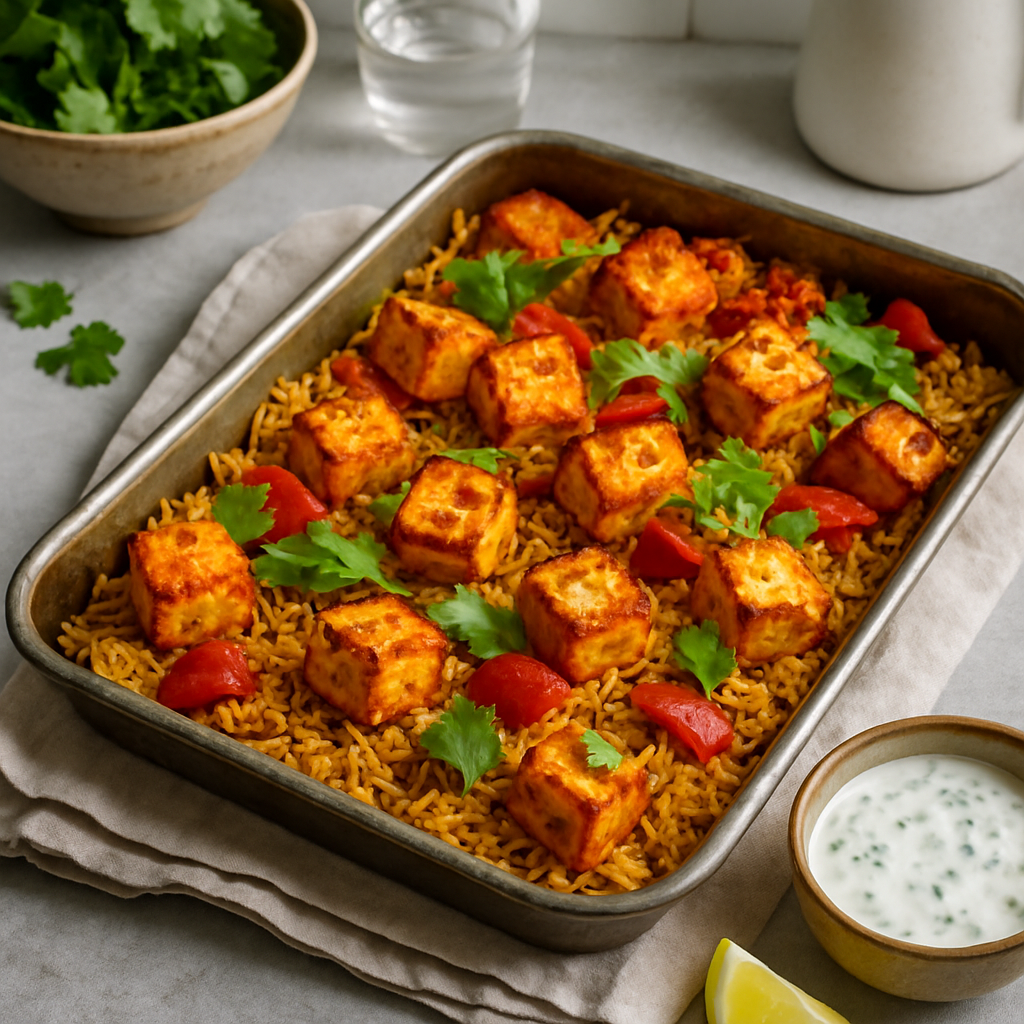
# Paneer Tikka Traybake with Spiced Rice and Minted Raita
There's something quietly brilliant about a meal that feels indulgent but takes less than an hour from fridge to table. This paneer tikka traybake does exactly that — bold tandoori flavours, charred edges, and a cooling raita that ties everything together.
What Is Paneer Tikka, and Why Does It Work So Well?
Paneer tikka is a classic North Indian dish where cubes of fresh cheese are marinated in spiced yoghurt and cooked at high heat — traditionally in a tandoor oven, though a hot oven or grill does the job brilliantly at home.
The magic is in the marinade. The yoghurt tenderises the paneer slightly and helps the spices cling, while the high heat creates those slightly charred, caramelised edges that make the dish so satisfying. It's one of those combinations that just works.
In this version, we're turning it into a traybake — which means less washing up, more time at the table, and the added bonus of your vegetables roasting in all those spiced juices alongside the paneer.
The Ingredients You'll Need
For the paneer tikka:
- 450g paneer, cut into 3cm cubes
- 200g full-fat Greek yoghurt
- 2 tbsp tomato purée
- 2 tsp garam masala
- 1 t½ tsp ground cumin
- 1 tsp smoked paprika
- 1 tsp ground coriander
- ½ tsp turmeric
- ½ tsp chilli powder (adjust to taste)
- 1 tbsp neutral oil
- Juice of ½ lemon
- 1 tsp salt
- 1 red pepper, cut into chunks
- 1 yellow pepper, cut into chunks
- 1 red onion, cut into wedges
For the spiced rice:
- 300g basmati rice
- 1 tsp cumin seeds
- 4 cardamom pods, lightly crushed
- 1 cinnamon stick
- 1 bay leaf
- 1 tbsp butter or ghee
- Salt to taste
For the minted raita:
- 200g full-fat Greek yoghurt
- A large handful of fresh mint, finely chopped
- ½ cucumber, grated and squeezed dry
- 1 small garlic clove, finely grated
- Pinch of ground cumin
- Salt and a squeeze of lemon
To serve:
- Fresh coriander
- Lemon wedges
- Optional: warm naan or flatbreads
How to Make It
Step 1 — Make the marinade and coat the paneer
Mix the yoghurt, tomato purée, all the spices, oil, lemon juice, and salt together in a large bowl until smooth. Add the paneer cubes, peppers, and onion wedges. Toss everything well so it's evenly coated.
Ideally, let it marinate for at least 30 minutes — or up to overnight in the fridge if you're prepping ahead. If you're short on time, even 10 minutes will do.
Step 2 — Roast the traybake
Preheat your oven to 220°C (200°C fan). Spread the marinated paneer and vegetables across a large baking tray in a single layer — don't crowd them or they'll steam rather than char.
Roast for 25–30 minutes, turning once halfway through. You're looking for golden, slightly charred edges on the paneer and softened, caramelised vegetables. For extra colour, switch to the grill for the final 3–4 minutes.
Step 3 — Cook the spiced rice
Rinse the basmati rice under cold water until it runs clear. In a saucepan, melt the butter or ghee over a medium heat and add the cumin seeds, cardamom, cinnamon stick, and bay leaf. Let them sizzle for 30–60 seconds until fragrant.
Add the drained rice and stir to coat in the spiced butter, then add water according to your packet instructions (usually around 550ml for 300g). Season with salt, bring to the boil, then cover and simmer on a low heat for 10–12 minutes until cooked through. Remove from the heat and let it steam with the lid on for 5 minutes before fluffing with a fork.
Step 4 — Make the raita
Grate the cucumber and squeeze out as much liquid as possible using a clean tea towel or your hands — this stops the raita going watery. Combine with the yoghurt, mint, garlic, cumin, salt, and lemon juice. Stir well and refrigerate until needed.
Step 5 — Bring it all together
Serve the spiced rice in bowls or on a large platter, topped with the paneer tikka and vegetables. Spoon over the raita, scatter with fresh coriander, and add lemon wedges on the side. Bring naan to the table if you fancy it.
What Makes This Work Nutritionally
Paneer is a high-protein, high-fat dairy food — a 100g serving contains roughly 18–20g of protein and 20–25g of fat, depending on the brand. That protein content makes it genuinely filling, which matters when you're building a balanced meal.
The yoghurt marinade and raita add additional protein while providing calcium and live cultures. Greek yoghurt in particular is a concentrated source of casein protein, which digests slowly and helps sustain fullness.
Basmati rice has a lower glycaemic index than many other white rices, meaning it causes a more gradual rise in blood sugar — useful context if that's something you're paying attention to. The addition of whole spices like cardamom and cumin contributes small amounts of antioxidants, though the real reason to include them is flavour.
The peppers and onion bring vitamin C, fibre, and a range of antioxidants to the tray. Red and yellow peppers in particular are among the richest vegetable sources of vitamin C — worth knowing given they're often overlooked in nutrition conversations.
Per serving (recipe serves 4), this meal comes in at approximately 620–680 kcal, with around 30–35g of protein, 65–70g of carbohydrate, and 22–25g of fat — though exact figures depend on your specific brands and portions.
Common Mistakes to Avoid
Don't crowd the tray. This is the single most common traybake mistake. If the paneer and vegetables are packed tightly together, they'll release steam and braise rather than roast. Use two trays if you need to.
Don't skip the marinade time. Even 20–30 minutes makes a noticeable difference to flavour depth and how well the marinade clings to the paneer during roasting.
Don't skip squeezing the cucumber. A watery raita won't cling to anything and loses most of its appeal — taking 30 seconds to squeeze out the moisture makes a real difference.
Don't use low-fat paneer. Lower-fat versions tend to dry out quickly under high heat and lack the creamy texture that makes paneer tikka satisfying.
How to Adapt This Recipe
This recipe is fairly flexible. Swap the paneer for chicken thighs or king prawns if you want a different protein — just adjust cooking times accordingly (chicken thighs will need 35–40 minutes; prawns will need just 8–10 minutes).
For a higher-protein version, add a tin of drained chickpeas to the tray — they'll crisp up nicely in the spiced marinade and add both protein and fibre.
The spiced rice can be simplified to plain boiled basmati if you're short on time — it still works. Or swap it for cauliflower rice if you're reducing carbohydrates.
Leftovers keep well in the fridge for up to 3 days. The paneer and vegetables reheat well in the oven at 180°C for 10–15 minutes — the microwave works too, though you lose the crispness.
Practical Takeaways
- Marinate ahead — even 30 minutes makes a difference, but overnight is best if you're prepping for a week of meals
- Use two trays if your oven tray is small — don't sacrifice those charred edges for the sake of convenience
- Make extra raita — it keeps for 2–3 days and works brilliantly as a dip, a jacket potato topping, or alongside grilled meat
- Double the batch — the paneer tikka reheats well and makes excellent lunchbox fodder the next day
- Check your paneer brand — protein and fat content vary more than you'd expect between supermarket own-brands and specialist brands
---
If you want to hit your macros without spending time calculating every meal, Macrology generates macro-perfect meal plans in seconds — https://macrology.app/signin
---
> Macrology tip: Pop your target calories and macros into Macrology and it'll build a full week of meals around recipes like this one — so you always know exactly where you stand nutritionally without the spreadsheet.
Want meals like this planned to your exact macros?
Macrology generates a personalised meal plan in seconds — breakfast, lunch, dinner and snacks, all hitting your daily targets.
Start your free 14-day trial