New Research: What UK Studies Reveal About the Link Between Vitamin C Intake and Immune Function
# New Research: What UK Studies Reveal About the Link Between Vitamin C Intake and Immune Function
There's a good chance you reached for orange juice or an effervescent tablet the last time you felt a cold coming on. But does vitamin C actually do what most of us assume it does — and are people in the UK getting enough of it in the first place?
Recent research paints a more nuanced picture than the classic "take vitamin C, dodge the cold" narrative. Here's what the evidence actually shows.
What Is Vitamin C Actually Doing in Your Body?
Vitamin C, or ascorbic acid, is a water-soluble vitamin that your body cannot produce on its own. That means it has to come entirely from what you eat and drink — every single day.
Its role in immune function is well established, but it goes well beyond the popular image of fighting off winter bugs. Vitamin C supports the production and function of white blood cells, particularly neutrophils and lymphocytes, which are the body's frontline responders to infection. It also acts as an antioxidant, protecting those immune cells from oxidative damage once they've been activated.
Beyond immunity, vitamin C is essential for collagen synthesis, iron absorption, and wound healing. It's doing a lot of quiet, unglamorous work in the background that rarely makes it onto the front of a supplement box.
What the Evidence Shows
The most cited — and frequently misunderstood — body of research on vitamin C and immunity comes from the Cochrane Reviews, a series of meta-analyses that have examined decades of trial data. The headline finding is often reported as "vitamin C doesn't prevent colds," but that's an oversimplification.
What the Cochrane data actually shows is that regular supplementation doesn't reduce the incidence of colds in the general population. However, in people under significant physical stress — marathon runners, soldiers, skiers — supplementation was associated with roughly a 50% reduction in cold incidence. For the general population, regular supplementation did modestly reduce the duration and severity of colds.
More recent UK-relevant research has shifted focus toward vitamin C status at the population level. Data from the National Diet and Nutrition Survey (NDNS), which is the UK government's ongoing rolling programme tracking what people actually eat, has shown that while outright deficiency is relatively rare, a meaningful proportion of the UK population — particularly older adults, smokers, and those with lower incomes — have intakes below the Reference Nutrient Intake (RNI) of 40mg per day.
That 40mg figure is itself worth scrutinising. Some researchers argue it represents the minimum needed to prevent deficiency disease (scurvy), not an optimal intake for immune support. Studies on immune function often use doses of 200mg or more — a figure far more achievable through food than most people realise, but harder to hit if your diet is low in fruit and vegetables.
How UK Diets Are Measuring Up
The NDNS data gives a reasonably honest picture of where things stand. Average vitamin C intakes in the UK are generally above the RNI, but averages mask significant variation. Older adults living alone, teenagers, and people in lower socioeconomic groups consistently show lower intakes.
Smoking is a particularly important factor. Smokers have significantly higher requirements for vitamin C because smoking accelerates its breakdown in the body — the recommendation for smokers is broadly accepted to be around 35mg higher per day than for non-smokers. Yet smokers are also statistically less likely to eat the fruit and vegetables that provide it.
The COVID-19 pandemic briefly renewed scientific interest in vitamin C's role in serious infection. A number of trials explored high-dose intravenous vitamin C in hospitalised patients, with mixed results. Most found no significant benefit in terms of mortality, though some suggested possible benefits in reducing time on mechanical ventilation. The take-home message is that vitamin C is not a treatment for serious illness, but maintaining adequate status as a baseline for general immune readiness is a different matter entirely.
Common Misconceptions Worth Clearing Up
The biggest misconception is that more is always better. Vitamin C is water-soluble, so the body excretes what it doesn't use — but very high doses (above 1,000mg per day) can cause digestive discomfort and, in susceptible individuals, increase the risk of kidney stones.
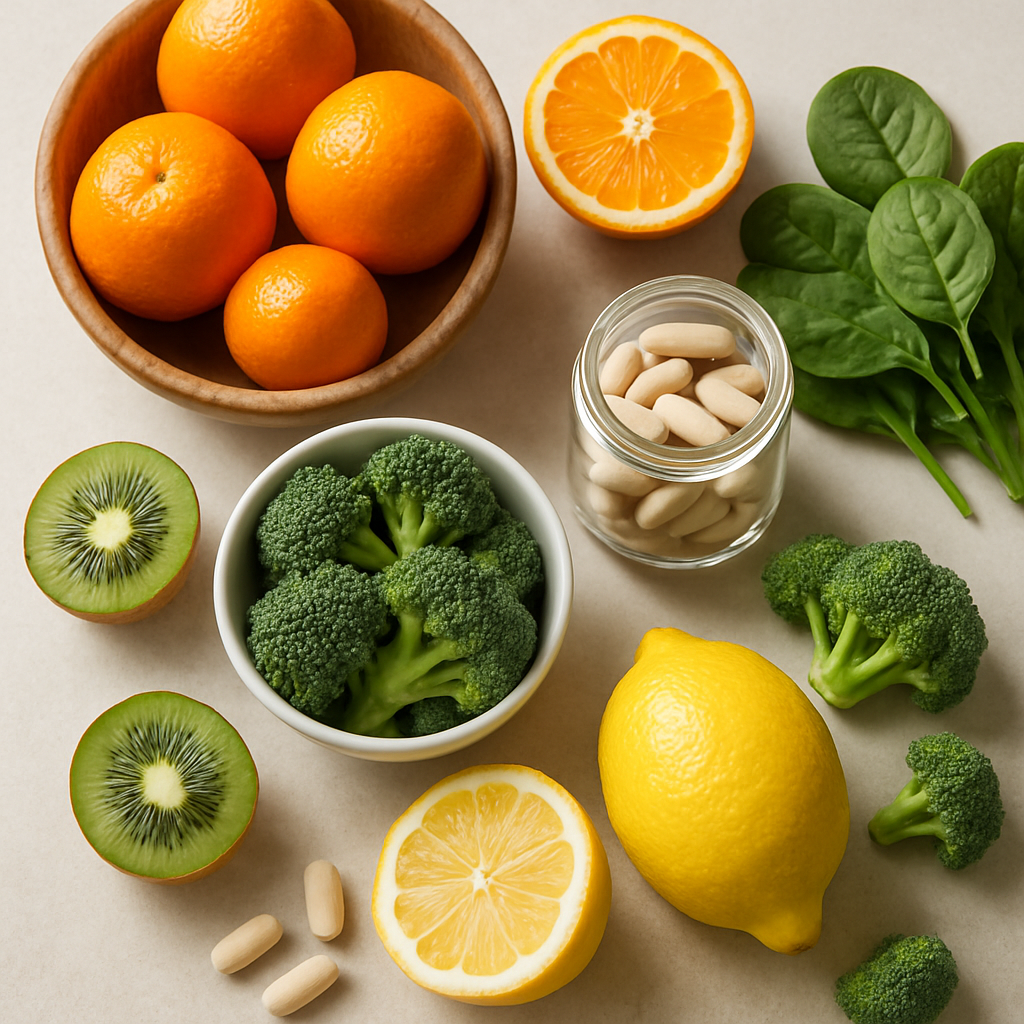
Another common assumption is that orange juice is the best source. It's a good one, but it's far from the only option. Red and yellow peppers contain more vitamin C per 100g than oranges. Kiwi fruit, blackcurrants, strawberries, broccoli, and Brussels sprouts are all excellent sources that often get overlooked.
The "I'll take a supplement just in case" approach is understandable, but for most people eating a reasonably varied diet, it isn't necessary. Where supplementation does make practical sense is during periods of high physiological stress, in winter when dietary variety sometimes drops, or for individuals whose diets genuinely lack fruit and vegetables.
What UK-Specific Research Adds to the Picture
Beyond the NDNS, researchers at UK institutions have contributed meaningfully to understanding vitamin C status in clinical populations. Studies from institutions including the University of Southampton and various NHS trusts have found that vitamin C deficiency is surprisingly common in hospitalised patients, including those admitted for conditions unrelated to nutrition. This isn't necessarily a dietary issue — illness, surgery, and physiological stress all increase the body's demand for vitamin C rapidly.
One area of emerging UK research interest is the relationship between vitamin C status and mental health. A 2020 study published in Nutrients, drawing on UK data, found associations between low vitamin C intake and increased odds of psychological distress. The mechanism is plausible — vitamin C is involved in the synthesis of neurotransmitters including noradrenaline — though the research is observational and causation hasn't been established. It's an area worth watching.
There's also growing interest in the interaction between vitamin C and iron absorption, which is directly relevant to a UK population where iron deficiency anaemia remains one of the most common nutritional deficiencies. Eating vitamin C-rich foods alongside iron-rich plant foods (like lentils, spinach, or fortified cereals) meaningfully improves absorption of non-haem iron.
Seasonal Intake: A Practical Reality
One thing that doesn't get discussed enough is how much vitamin C intake can fluctuate seasonally. In summer, people tend to eat more fresh fruit and salads. In winter, particularly for lower-income households, access to fresh produce can become more limited and dietary patterns often shift toward more processed, shelf-stable foods.
This seasonal dip in intake coincides exactly with the period when the immune system is under greatest pressure from circulating viruses. That's not to say vitamin C is the whole story — sleep, physical activity, and overall dietary quality all matter — but it's a reminder that maintaining fruit and vegetable intake through autumn and winter is practically worthwhile, not just theoretically sound.
Frozen fruit and vegetables are worth mentioning here. They're often cheaper, have a long shelf life, and retain their vitamin C content well because they're frozen quickly after harvest. A bag of frozen berries blended into porridge or a smoothie in January is genuinely a good option.
Practical Takeaways
Getting enough vitamin C doesn't require supplements for most people — it mostly requires a bit of consistency with fruit and vegetables. Here are some straightforward ways to make that easier:
- Add a kiwi or a handful of strawberries to breakfast — both will get you close to or above the RNI in a single serving
- Use peppers freely in stir-fries, salads, and pasta dishes — they're one of the best sources going and relatively cheap
- Keep frozen berries, peas, and broccoli in the freezer as a low-effort, year-round option
- Pair vitamin C-rich foods with plant-based iron sources — a squeeze of lemon over lentil soup isn't just for flavour
- If you do use supplements, a standard 200–500mg daily dose is sufficient; there's no meaningful evidence for megadosing in healthy adults
- Smokers and older adults may have genuinely higher needs and are worth paying closer attention to dietary intake
The evidence doesn't support treating vitamin C as a magic bullet — but it does support treating it as a genuinely important, often overlooked part of everyday eating.
If you want to make sure your diet is consistently hitting key micronutrients like vitamin C without having to think too hard about it, Macrology generates macro-perfect meal plans in seconds — https://macrology.app/signin
Want meals like this planned to your exact macros?
Macrology generates a personalised meal plan in seconds — breakfast, lunch, dinner and snacks, all hitting your daily targets.
Start your free 14-day trialMore from news
New Research: What UK Studies Reveal About the Link Between Food Delivery App Usage and Dietary Quality
7 min readNew Research: What UK Studies Reveal About the Link Between Food Environment at Home and Children's Eating Habits
7 min readNew Research: What UK Studies Reveal About the Link Between Cooking Frequency at Home and Overall Diet Quality
7 min read