New Research: What UK Studies Reveal About the Link Between Dietary Diversity and Longevity
# New Research: What UK Studies Reveal About the Link Between Dietary Diversity and Longevity
Eating a wider variety of foods might add years to your life — and UK researchers are starting to map out exactly why. It sounds almost too straightforward, but the science behind dietary diversity is turning out to be more nuanced, and more compelling, than anyone expected.
What Do We Mean by Dietary Diversity?
Dietary diversity isn't just about eating lots of different things for the sake of it. In nutrition research, it's typically measured using tools like the Dietary Diversity Score (DDS) or the Food Variety Score (FVS) — essentially counts of how many distinct food groups or individual foods someone consumes over a set period, usually a week.
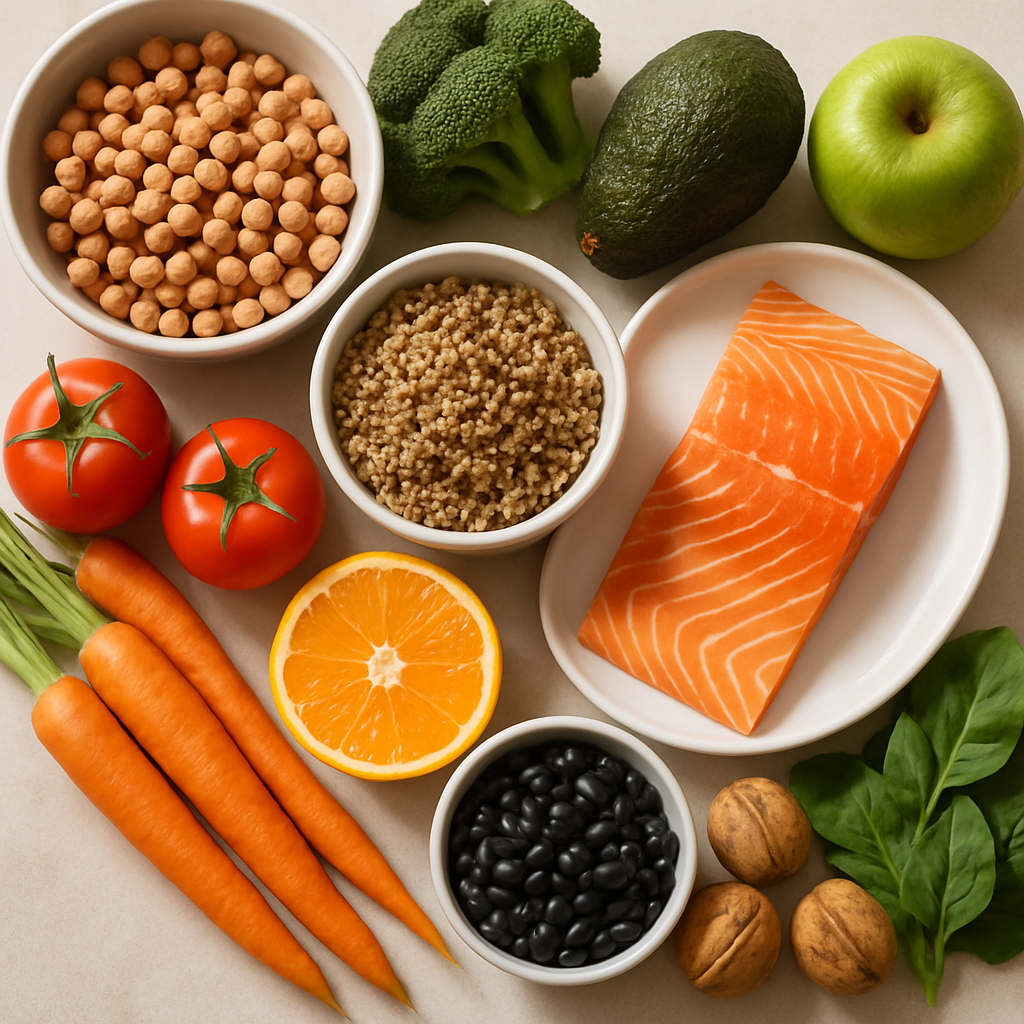
The distinction matters because eating 10 different types of biscuit doesn't count in the way eating 10 different vegetables does. Most research focuses on diversity across food groups — proteins, wholegrains, dairy, fruits, vegetables, legumes, nuts — rather than within a single category.
This framing is important because it shifts the focus away from restriction and towards addition. Rather than cutting things out, dietary diversity is fundamentally about what you're bringing in.
What the Evidence Shows
Some of the most relevant data for UK populations comes from large cohort studies that have tracked eating habits over decades. The UK Biobank, one of the largest biomedical databases in the world, has been particularly valuable here. With data from over 500,000 participants, researchers have used it to explore how food variety relates to mortality risk, chronic disease, and biological ageing markers.
A 2023 analysis drawing on UK Biobank data found that people with higher dietary diversity had a significantly lower risk of all-cause mortality compared to those with more monotonous diets — even after adjusting for factors like physical activity, smoking, and socioeconomic status. The association held across age groups, though it was particularly pronounced in adults over 60.
Separate work published in BMC Medicine examined the relationship between dietary variety and telomere length — a biological marker often used as a proxy for cellular ageing. Participants with greater food variety tended to have longer telomeres, suggesting that eating diversely may slow certain processes associated with ageing at a cellular level. It's early-stage research, and telomere length is an imperfect measure, but it points in a consistent direction.
What's also worth noting is that UK dietary data consistently shows most adults fall well short of meaningful diversity. The National Diet and Nutrition Survey (NDNS) has repeatedly found that a large proportion of UK adults get the majority of their calories from a narrow cluster of ultra-processed foods — and that fruit and vegetable variety, in particular, is low across all age groups.
Why Diversity Might Matter More Than Any Single Food
It's tempting to chase the latest "superfood" — blueberries one year, kefir the next. But the diversity research suggests the overall pattern may matter more than any individual ingredient.
One reason is nutrient complementarity. Different foods contain different combinations of vitamins, minerals, phytonutrients, and fibre types that interact in complex ways. Eating a wide range means you're more likely to cover gaps and benefit from synergies that a narrow diet — however carefully constructed — can miss.
Another reason is the gut microbiome. Research from the British Gut Project, which has collected data from tens of thousands of UK participants, consistently shows that people who eat 30 or more different plant foods per week have significantly more diverse gut bacteria than those eating fewer than 10. Microbial diversity is increasingly linked to immune function, mental health, inflammation, and metabolic health — all factors that feed into long-term disease risk.
It's also worth addressing a common misconception: that eating diversely is expensive or complicated. The British Gut Project data specifically found that diversity didn't correlate strongly with income bracket — small additions like rotating between two or three types of grain, or swapping between different tinned legumes, made a measurable difference without requiring a dramatic overhaul of the weekly shop.
The Longevity Connection — and Where the Research Gets Complicated
The word "longevity" gets thrown around loosely in nutrition journalism, so it's worth being precise about what the studies are actually measuring.
Most UK research in this area looks at all-cause mortality (the risk of dying from any cause during the study period) or disease incidence (whether someone develops a specific condition like type 2 diabetes or cardiovascular disease). These are meaningful outcomes, but they're not the same as predicting exactly how long someone will live.
The challenge with dietary research is also that it's almost always observational. People who eat more diversely tend to have other health-promoting behaviours — they may exercise more, smoke less, and have higher health literacy. Researchers do their best to control for these confounders, but it's impossible to fully untangle them. No one is randomising people to eat 5 versus 30 different plant foods for 20 years and tracking what happens.
That said, the consistency of findings across multiple large UK datasets, and the biological plausibility of the mechanisms involved (microbiome diversity, nutrient sufficiency, reduced reliance on ultra-processed foods), gives researchers reasonable confidence that the relationship is real and meaningful — not just a statistical artefact.
What This Means Practically for UK Eaters
The UK context matters here. British food culture has some specific quirks — a heavy reliance on bread, pasta, and potatoes as staple carbohydrates; relatively low legume consumption compared to Mediterranean populations; and a snack food market dominated by ultra-processed options.
None of that is a moral failing — it reflects food environments, cost pressures, time constraints, and cultural norms. But it does mean that for many UK adults, dietary diversity is lower than it could be with relatively modest changes.
Interestingly, research suggests that variety within meals matters less than variety across a week. You don't need a different breakfast every morning or an elaborate dinner every night. A few deliberate swaps or additions spread across the week — a different grain here, an extra legume there, a new vegetable in the Friday stir-fry — can meaningfully shift your diversity score over time.
The 30 plants a week target, popularised partly by the British Gut Project, is a useful heuristic. It sounds daunting until you start counting herbs, spices, nuts, and seeds alongside vegetables and fruits — a tablespoon of mixed seeds on porridge, a handful of walnuts in a salad, fresh coriander in a curry — all of which count.
Practical Takeaways
Here's what you can actually do with this information today:
Audit your week, not your day. Jot down every distinct plant food you've eaten in the past seven days. Most people are surprised by how short the list is — and that awareness alone tends to prompt small, easy changes.
Rotate your staples. If you always buy the same loaf, the same rice, the same tin of chickpeas — try swapping one of them for something different each week. Lentils instead of chickpeas. Brown rice instead of white. Rye bread instead of white. The swap itself matters more than which specific alternative you choose.
Use herbs and spices strategically. Dried herbs and spices count as plant foods and are one of the lowest-effort ways to add to your weekly tally. Cumin, turmeric, paprika, oregano — a well-stocked spice rack is genuinely useful from a dietary diversity standpoint, not just for flavour.
Think about your protein sources. Rotating between different proteins — eggs, fish, chicken, beef, lentils, tofu, Greek yoghurt — adds both variety and nutritional breadth, since different protein sources carry different micronutrient profiles.
Don't let perfect be the enemy of practical. A consistent modest increase in diversity is more valuable than an unsustainable overhaul. Adding five new plant foods a week across a month is more useful than a perfect diet for one week followed by reverting to old patterns.
If you want to hit meaningful dietary diversity without spending hours planning every meal, Macrology generates macro-perfect meal plans in seconds — https://macrology.app/signin
The research won't tell you exactly how many years a varied diet adds to your life. But it does tell us, fairly clearly, that the breadth of what you eat matters — and that most of us have more room to expand that breadth than we might think.
Want meals like this planned to your exact macros?
Macrology generates a personalised meal plan in seconds — breakfast, lunch, dinner and snacks, all hitting your daily targets.
Start your free 14-day trialMore from news
New Research: What UK Studies Reveal About the Link Between Food Delivery App Usage and Dietary Quality
7 min readNew Research: What UK Studies Reveal About the Link Between Food Environment at Home and Children's Eating Habits
7 min readNew Research: What UK Studies Reveal About the Link Between Cooking Frequency at Home and Overall Diet Quality
7 min read