New Research: What UK Studies Reveal About the Link Between Resistant Starch and Blood Sugar Control
# New Research: What UK Studies Reveal About the Link Between Resistant Starch and Blood Sugar Control
There's a type of carbohydrate quietly sitting in your kitchen right now that your body doesn't fully digest — and researchers are increasingly convinced it plays a meaningful role in how your blood sugar behaves. It's called resistant starch, and UK-based science is starting to paint a clearer picture of what it actually does.
What Is Resistant Starch, and Why Does It Behave Differently?
Unlike regular starch, which breaks down quickly into glucose in the small intestine, resistant starch passes through largely intact, arriving in the large intestine where it acts more like a dietary fibre than a carbohydrate.
There are four main types, but the one most relevant to everyday eating is RS3 — the kind that forms when starchy foods like potatoes, rice, and pasta are cooked and then cooled. Yes, cold pasta and yesterday's leftover rice genuinely behave differently in your body than their freshly cooked equivalents.
This distinction matters because the speed at which carbohydrates are digested and absorbed directly influences the size and shape of your blood sugar response. Slower digestion typically means a more gradual rise in blood glucose, which is generally easier for the body to manage.
What the Research Says
Several significant studies have emerged from UK institutions that are worth paying attention to. Researchers at the University of Glasgow, as part of broader work examining dietary fibre and metabolic health, have explored how fermentable fibres — including resistant starch — affect glucose regulation and gut hormone responses.
A notable area of investigation has been the second meal effect: the observation that eating resistant starch at one meal can improve blood sugar control not just after that meal, but after the following meal too. This was first identified by researchers including David Jenkins (of glycaemic index fame), but UK scientists have continued to build on this foundation with more mechanistic work.
The proposed mechanism involves the gut microbiome. When resistant starch reaches the large intestine, bacteria ferment it and produce short-chain fatty acids (SCFAs), particularly butyrate, propionate, and acetate. These SCFAs appear to influence the release of gut hormones like GLP-1 and PYY, both of which help regulate glucose metabolism and appetite.
Research published in journals including Gut — one of the world's leading gastroenterology journals, published by the BMJ Group in the UK — has consistently linked higher SCFA production with improved insulin sensitivity markers, though most researchers are careful to note that the picture is still developing.
The Cooling Effect: Does It Really Work?
This is one of the most common questions, and it's a fair one — it sounds almost too convenient that cooking and cooling your rice could meaningfully change its nutritional profile.
The evidence here is reasonably solid. When starchy foods are cooked, their starch granules gelatinise and become highly digestible. Cooling causes a process called retrogradation, where the starch molecules reassociate into a more crystalline structure that resists digestive enzymes.
A study from the University of Surrey, which received considerable media attention, tested the effect of eating cold, reheated, and freshly cooked pasta on blood glucose responses. The results suggested that cooling and reheating pasta led to a significantly smaller blood sugar spike compared to eating it freshly cooked — with reheated pasta performing best of all in that particular trial.
Importantly, reheating didn't fully reverse the process. Some of the resistant starch formed during cooling survives reheating, which is encouraging news for anyone who wasn't planning to eat cold pasta for lunch.
The effect size in individual studies is often modest, and researchers consistently call for larger, longer-term trials. But the direction of the evidence is consistent.
Who Might Benefit Most?
The honest answer is that everyone's blood sugar response to food is individual, and this is an area where the science of personalised nutrition is genuinely advancing.
That said, the populations where resistant starch research has shown the most pronounced effects include people with type 2 diabetes, those with insulin resistance or prediabetes, and people whose dietary patterns tend to be high in rapidly digestible carbohydrates. For these groups, even modest improvements in post-meal glucose responses can have meaningful cumulative effects over time.
For people without any glucose regulation concerns, the benefits are less dramatic but not absent. Resistant starch still feeds beneficial gut bacteria, contributes to feelings of fullness, and may support a healthier gut microbiome composition over the long term — all of which have downstream effects on metabolic health.
It's also worth noting that resistant starch content varies significantly between individuals' microbiomes. Two people eating identical meals can produce quite different amounts of SCFAs, which partly explains why study results don't always translate neatly from population averages to individual experience.
Common Misconceptions Worth Addressing
One misconception is that resistant starch makes carbohydrates "safe" in unlimited quantities. That's not what the research shows. The effect is real but proportional — adding resistant starch sources to your diet isn't a mechanism that neutralises the glucose impact of a large plate of white bread.
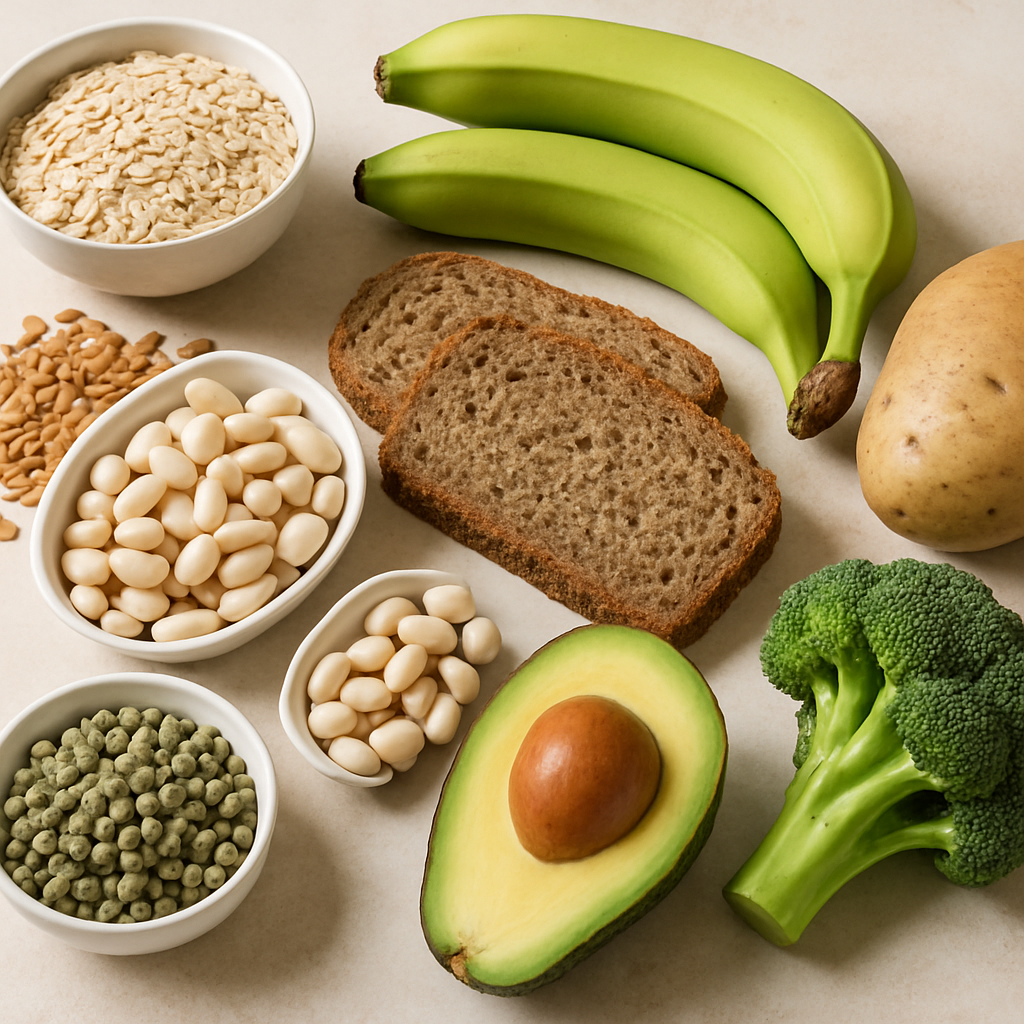
Another is that you need to eat cold food to get the benefit. As the cooling and reheating research suggests, you don't. Naturally resistant starch-rich foods — legumes, green bananas, oats, and cooked-and-cooled grains — provide meaningful amounts regardless of temperature.
There's also a tendency in popular health media to frame resistant starch as a "hack", which somewhat overstates the current evidence. It's a genuinely interesting area of nutrition science, but it works best when understood as one component of a varied, fibre-rich diet rather than a standalone fix.
What the Evidence Shows: Key Takeaways from the Research Landscape
Pulling together the current UK and international evidence, here's where things stand:
The effect on post-meal blood sugar is real and reproducible. Multiple randomised controlled trials have shown that meals higher in resistant starch produce lower and slower blood glucose rises compared to matched meals with less resistant starch.
The gut microbiome mechanism is well-supported. The pathway from resistant starch → SCFA production → improved insulin sensitivity is biologically plausible and backed by a growing body of mechanistic research.
Long-term effects need more investigation. Most studies are short-term. Whether the glycaemic benefits of higher resistant starch intake translate into meaningful long-term outcomes — reduced HbA1c, lower diabetes risk — is still being established.
Individual variation is substantial. Gut microbiome composition, baseline insulin sensitivity, overall diet quality, and genetics all influence how much benefit any individual will see.
Practical Ways to Increase Resistant Starch in Your Diet
The good news is that getting more resistant starch doesn't require supplements or significant lifestyle overhaul. A few straightforward shifts make a real difference.
Cook and cool your grains and potatoes. Prepare rice, pasta, or potatoes the night before and refrigerate them. You can eat them cold or reheat them — both options retain more resistant starch than freshly cooked equivalents.
Eat more legumes. Lentils, chickpeas, kidney beans, and butter beans are among the richest natural sources of resistant starch. They're also high in protein and fibre, making them genuinely versatile additions to everyday meals.
Add green (unripe) banana or plantain. These contain significantly more resistant starch than ripe versions. They work well in smoothies or as a cooking ingredient, though their flavour is quite neutral compared to sweet ripe bananas.
Include oats regularly. Rolled oats, particularly when prepared as overnight oats (cooked, cooled, and eaten cold), provide a useful hit of resistant starch alongside their well-documented beta-glucan fibre.
Don't overthink individual meals. The cumulative effect of eating more resistant starch-rich foods across the week matters more than optimising any single meal.
If you want a meal plan that builds resistant starch-rich foods into your weekly eating without the mental load of working it out yourself, Macrology generates macro-perfect meal plans in seconds — https://macrology.app/signin
Want meals like this planned to your exact macros?
Macrology generates a personalised meal plan in seconds — breakfast, lunch, dinner and snacks, all hitting your daily targets.
Start your free 14-day trialMore from news
New Research: What UK Studies Reveal About the Link Between Food Delivery App Usage and Dietary Quality
7 min readNew Research: What UK Studies Reveal About the Link Between Food Environment at Home and Children's Eating Habits
7 min readNew Research: What UK Studies Reveal About the Link Between Cooking Frequency at Home and Overall Diet Quality
7 min read