New Research: What UK Studies Reveal About the Link Between Fibre Intake and Bowel Cancer Prevention
# New Research: What UK Studies Reveal About the Link Between Fibre Intake and Bowel Cancer Prevention
Bowel cancer is the fourth most common cancer in the UK, yet researchers believe a significant proportion of cases could be influenced by something as straightforward as what we eat. The fibre-cancer connection has been studied for decades, but recent UK-focused research is sharpening our understanding of just how strong that relationship really is.
Why Fibre and Bowel Cancer Keep Coming Up Together
The idea that dietary fibre might protect against bowel cancer isn't new — it dates back to the 1970s when surgeon Denis Burkitt observed dramatically lower rates of colorectal cancer in rural African populations eating high-fibre diets compared to Western populations. What's changed is the quality and precision of the evidence.
Modern studies can now distinguish between different types of fibre, track dietary patterns over decades, and account for confounding factors like smoking, physical activity, and alcohol intake. The picture that's emerging is more nuanced than the original hypothesis, but also more compelling.
What the Evidence Shows
The most comprehensive UK-relevant data comes from two major sources: the EPIC (European Prospective Investigation into Cancer and Nutrition) study, which recruited over 500,000 people across Europe including a large UK cohort, and Cancer Research UK's ongoing analysis of modifiable risk factors.
The EPIC study, published across several papers in journals including The Lancet and International Journal of Epidemiology, found that people in the highest fifth of dietary fibre intake had a roughly 25–30% lower risk of colorectal cancer compared to those in the lowest fifth. Crucially, this association held up even after adjusting for other lifestyle factors.
A 2023 analysis published in BMC Medicine, drawing on UK Biobank data — one of the largest health datasets in the world with over 500,000 UK participants — reinforced this finding. It found that total dietary fibre intake was inversely associated with colorectal cancer risk, with wholegrains appearing to offer the strongest protective effect within the fibre category.
It's worth being honest about the limits of this evidence. These are largely observational studies, meaning they show association rather than direct causation. People who eat more fibre also tend to have other health-positive habits, and even sophisticated statistical models can't fully remove that complexity. That said, the consistency of the finding across dozens of independent studies, different populations, and different methodologies is hard to dismiss.
How Fibre Is Thought to Protect the Bowel
The biological mechanisms are reasonably well understood, which gives the observational data more credibility. Fibre does several things in the large intestine that appear to be protective.
Fermentation by gut bacteria is perhaps the most important. When soluble fibre reaches the colon, bacteria ferment it and produce short-chain fatty acids (SCFAs), particularly butyrate. Butyrate is essentially fuel for the cells lining the colon wall, and research suggests it has anti-inflammatory and anti-tumour properties — it can actually trigger apoptosis (programmed cell death) in abnormal cells before they develop into cancer.
Fibre also speeds up transit time — how quickly food moves through the bowel. This reduces the amount of time potential carcinogens (including some compounds produced from red and processed meat digestion) spend in contact with the bowel wall. There's also evidence that fibre binds to bile acids in the gut, reducing their conversion to secondary bile acids, which at high concentrations may promote tumour growth.
Where Most UK Adults Are Falling Short
The recommended intake of dietary fibre in the UK, set by the Scientific Advisory Committee on Nutrition (SACN), is 30g per day for adults. The average UK adult consumes around 18–20g — a meaningful gap.
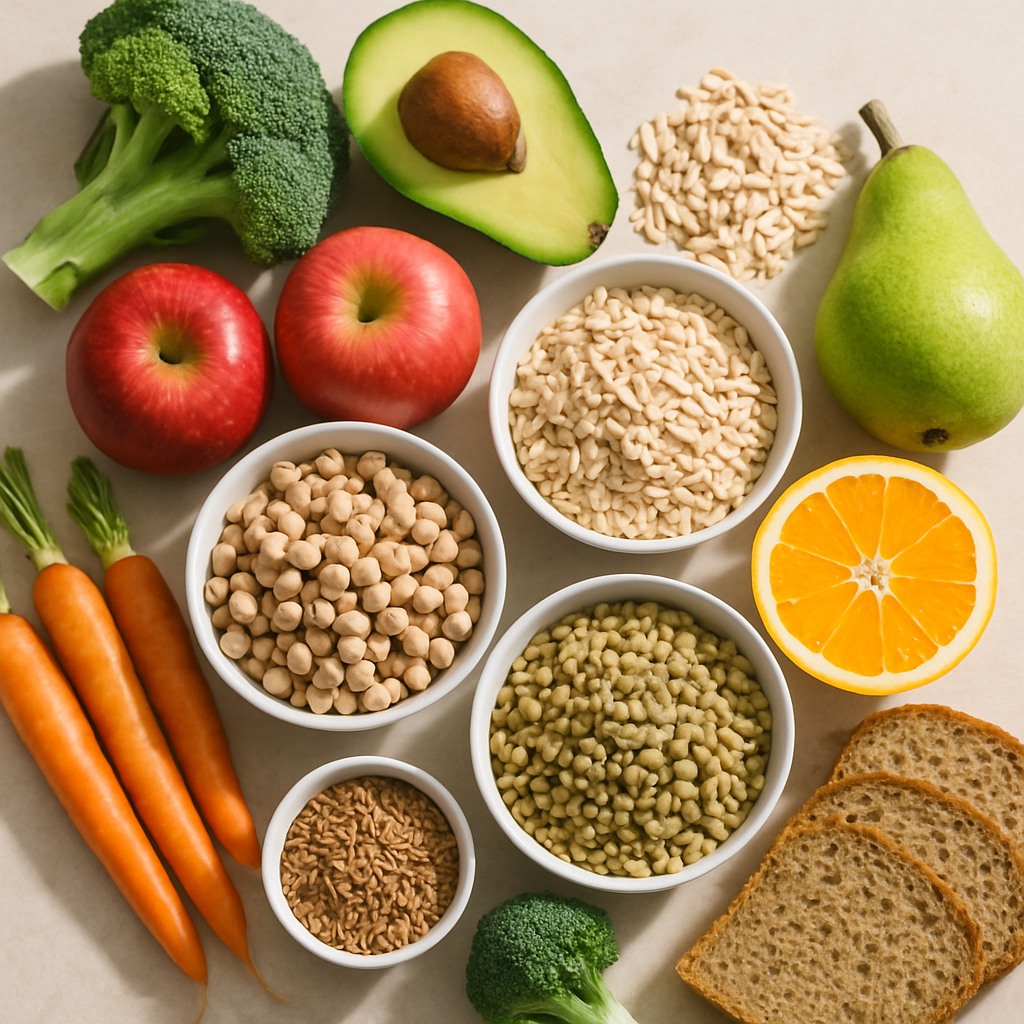
To put 30g in context: a bowl of porridge made with oats gives you around 3–4g, a medium apple around 2g, a portion of lentils around 8–9g, and two slices of wholegrain bread around 4–5g. Getting to 30g is genuinely achievable, but it requires consistent effort across multiple meals rather than a single "high-fibre food" added to an otherwise low-fibre diet.
It's worth noting that teenagers and young adults in the UK tend to have the lowest fibre intakes of any age group, according to National Diet and Nutrition Survey data. Given that colorectal cancer can take 10–20 years to develop from early cellular changes, habitual dietary patterns over a lifetime matter more than short-term spikes.
Does the Type of Fibre Matter?
This is where the research gets interesting. Fibre isn't a single thing — it's a broad category that includes soluble fibre (found in oats, legumes, and some fruits), insoluble fibre (found in wholegrains, wheat bran, and vegetables), and more recently studied fermentable fibres like resistant starch.
The UK Biobank analysis and several meta-analyses suggest that wholegrains appear to be particularly protective, beyond what you'd expect from fibre alone. Wholegrains contain a package of nutrients — fibre, phytochemicals, vitamins, and minerals — that may work synergistically. This is a useful reminder that isolating a single nutrient and supplementing it doesn't always replicate what you get from eating whole foods.
Fibre supplements like psyllium husk do increase total intake, and some research supports their role in digestive health, but the evidence for cancer prevention specifically is stronger for food sources than supplemental fibre. The current scientific consensus leans towards eating a varied, plant-rich diet rather than relying on supplements to close the gap.
What This Means Alongside Other Risk Factors
Fibre intake doesn't exist in isolation, and it would be misleading to suggest that eating more fibre is a simple solution to bowel cancer risk. The evidence is clear that processed meat, alcohol, obesity, and physical inactivity all independently increase colorectal cancer risk.
What's interesting is that some of these factors interact with fibre intake in complex ways. Higher fibre diets tend to support a more diverse gut microbiome, which in turn is associated with lower chronic inflammation — and inflammation is a common thread running through multiple cancer risk factors. Some researchers argue that the "fibre effect" is partly a proxy for overall dietary pattern quality rather than fibre alone.
That said, population-level data from Cancer Research UK estimates that around 13% of bowel cancer cases in the UK are attributable to low fibre intake, making it one of the more significant modifiable dietary risk factors. That's not a trivial figure.
Practical Takeaways
Getting more fibre doesn't require a dietary overhaul. A few consistent swaps and additions across the day make a genuine difference.
Swap refined carbohydrates for wholegrain versions. White bread, white pasta, and white rice can all be replaced with wholegrain equivalents without dramatically changing how meals taste or cook.
Build legumes into your regular rotation. Lentils, chickpeas, kidney beans, and butter beans are among the most fibre-dense foods available — and relatively inexpensive. Adding them to soups, stews, or salads a few times a week can meaningfully shift your daily fibre intake.
Don't peel vegetables unnecessarily. A significant portion of fibre in vegetables like potatoes, courgettes, and carrots is in or just under the skin.
Eat fruit rather than drinking it. Whole fruit retains the fibre that juice processing removes. A glass of orange juice contains virtually no fibre; the orange itself contains about 2–3g.
Make breakfast count. Oats, wholegrain cereals with a decent fibre content (check the label — aim for 6g per 100g or more), or wholegrain toast can contribute 5–8g before you've even started the working day.
The goal here isn't perfection — it's consistency over time. Even a modest, sustained increase in fibre intake from current UK average levels towards the 30g recommendation has been associated in modelling studies with a meaningful reduction in population-level colorectal cancer risk.
If you want a meal plan that takes the guesswork out of hitting your fibre targets alongside your other nutritional goals, Macrology generates macro-perfect meal plans in seconds — https://macrology.app/signin
Want meals like this planned to your exact macros?
Macrology generates a personalised meal plan in seconds — breakfast, lunch, dinner and snacks, all hitting your daily targets.
Start your free 14-day trialMore from news
New Research: What UK Studies Reveal About the Link Between Food Delivery App Usage and Dietary Quality
7 min readNew Research: What UK Studies Reveal About the Link Between Food Environment at Home and Children's Eating Habits
7 min readNew Research: What UK Studies Reveal About the Link Between Cooking Frequency at Home and Overall Diet Quality
7 min read