New Research: What UK Studies Reveal About the Link Between Choline Intake and Brain Health
# New Research: What UK Studies Reveal About the Link Between Choline Intake and Brain Health
Most people have never heard of choline. Yet this essential nutrient plays a role in everything from how your brain forms memories to how your liver processes fat — and new research suggests a significant proportion of the UK population isn't getting enough of it.
That's worth paying attention to, particularly as scientists dig deeper into the relationship between what we eat and long-term cognitive health.
What Is Choline, and Why Does It Matter?
Choline is a water-soluble nutrient that sits in a slightly awkward category — it's not quite a vitamin, not quite a mineral, but it's considered an essential nutrient because your body can only produce small amounts of it on its own. The rest has to come from food.
It plays several important roles in the body. It's a key building block of acetylcholine, a neurotransmitter involved in memory, mood, and muscle control. It's also needed to make phosphatidylcholine, a major component of cell membranes throughout the body — including in the brain.
Beyond the nervous system, choline supports liver function and helps transport fat out of the liver. Without adequate intake, fat can accumulate in liver cells — a process linked to non-alcoholic fatty liver disease.
The UK Intake Problem
Here's where things get interesting. Unlike the United States, the UK does not have an official recommended daily intake for choline. The European Food Safety Authority (EFSA) set an Adequate Intake of 400mg per day for adults, but there's no equivalent guidance embedded in UK dietary recommendations, which means choline largely flies under the radar for both consumers and healthcare professionals.
Data from the National Diet and Nutrition Survey (NDNS) — the UK's primary rolling survey of food consumption — has highlighted that choline is consistently underconsumed across age groups. Research published using NDNS data has found that a large proportion of UK adults fall below the EFSA adequate intake, with women of childbearing age and older adults appearing particularly at risk.
This matters because choline deficiency doesn't typically cause dramatic, obvious symptoms in the short term. The effects tend to be slower and more systemic — which makes it easy to overlook.
What the Evidence Shows
The most compelling emerging research centres on choline's relationship with cognitive ageing and dementia risk. A 2019 study published in the British Journal of Nutrition found that higher dietary choline intake was associated with better cognitive performance and lower levels of white matter hyperintensities — small lesions in the brain associated with cognitive decline — in a large cohort of older adults.
Separately, a growing body of research has examined the role of choline in early brain development. Studies have consistently shown that choline intake during pregnancy is critical for foetal brain formation. The brain develops rapidly in the third trimester, and choline is heavily involved in neural tube formation and the development of brain regions responsible for memory and learning. Some researchers have described adequate gestational choline as one of the most underappreciated factors in child cognitive outcomes.
UK research has also looked at the link between choline and mental health. Because acetylcholine is involved in mood regulation and choline is a precursor to it, lower choline status has been explored as a potential contributing factor in depression and anxiety. The evidence here is less conclusive than for cognitive ageing, but the biological plausibility is solid enough that it's an active area of investigation.
It's worth noting what the evidence does not yet show: there's currently no strong clinical trial evidence that choline supplementation in people with adequate baseline intake improves cognitive performance. As with most nutrition science, the picture is clearer at the deficiency end than the optimisation end.
Who Is Most at Risk of Low Choline Intake?
Certain groups are more likely to have lower choline intakes, and it's useful to understand why.
Pregnant women have higher choline requirements — EFSA recommends 480mg per day during pregnancy — but dietary guidance in the UK doesn't routinely flag this, and choline isn't included in standard prenatal supplements.
People following plant-based diets are another group worth mentioning, not because plant-based eating is inherently problematic, but because the richest dietary sources of choline are animal-derived. Eggs, liver, and fish sit at the top of the choline rankings, and those avoiding these foods need to be more deliberate about where their choline comes from.
Older adults may also be more vulnerable, both because dietary variety often narrows with age and because choline's role in cognitive maintenance becomes increasingly relevant over time.
People with the PEMT gene variant — a variant that affects the body's limited ability to synthesise choline internally — are thought to have higher dietary requirements. This is an area where nutrigenomics is beginning to offer interesting, if still early, insights.
Where to Find Choline in Food
The good news is that choline is found across a reasonably wide range of everyday foods, so improving intake doesn't require dramatic dietary changes.
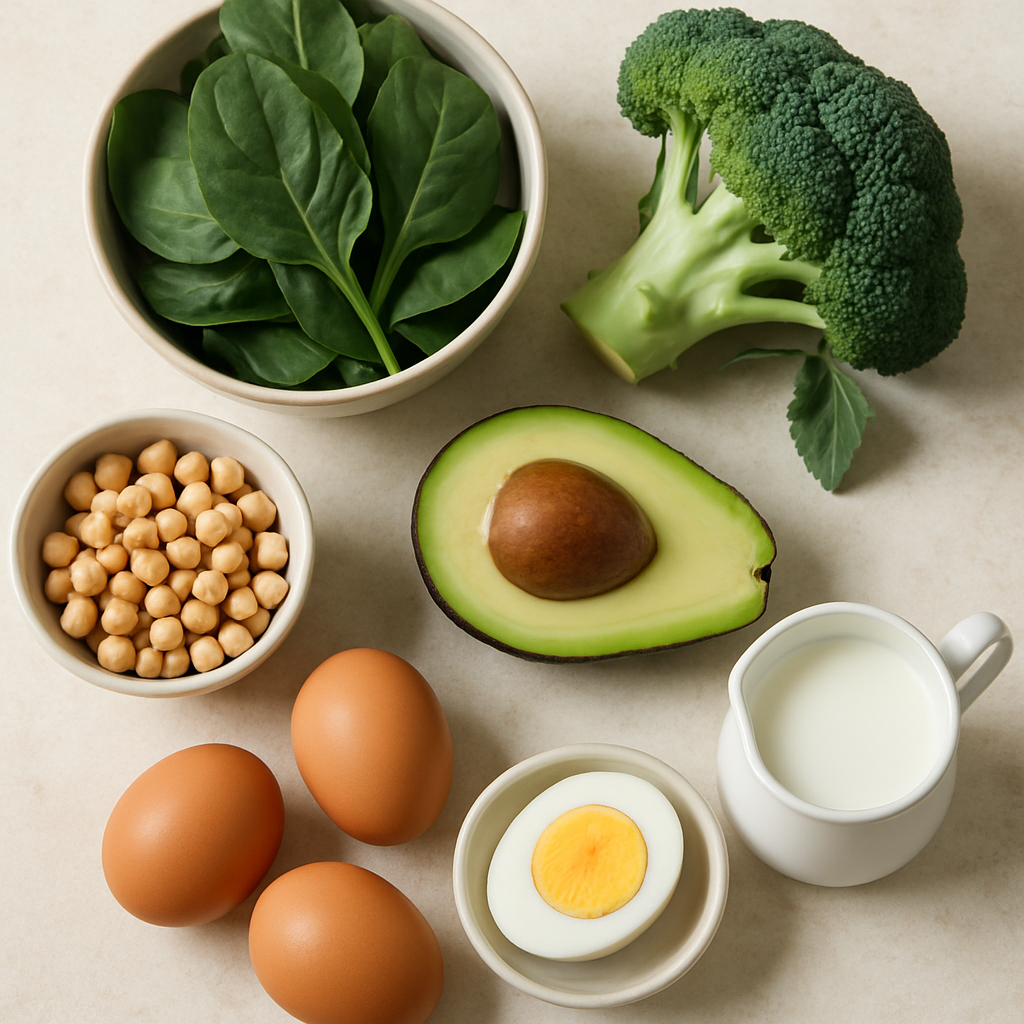
Eggs are the standout source — a single large egg contains roughly 150mg of choline, primarily in the yolk. Two eggs at breakfast gets you well on your way to the EFSA adequate intake without any special effort.
Other strong sources include:
- Beef liver — one of the most concentrated food sources of choline available, though not everyone's first choice
- Fish — particularly salmon and cod
- Chicken and turkey
- Milk and dairy products
- Soybeans and edamame — the most notable plant-based sources
- Potatoes, broccoli, and Brussels sprouts — useful contributions, though lower concentrations than animal sources
- Kidney beans and chickpeas — worthwhile additions for plant-forward diets
The variation between sources is significant. You'd need to eat considerably more broccoli than eggs to reach the same choline level, which is why those relying entirely on plant sources need to be more considered in their approach.
Common Misconceptions Worth Addressing
One misconception worth addressing is the idea that eating egg yolks is harmful because of cholesterol. For decades, eggs were treated with suspicion on cardiovascular grounds, which led many people to discard the yolk — exactly the part where virtually all the choline lives. Current evidence does not support restricting egg intake for most healthy adults on cardiovascular grounds, and the NDNS data reflects that egg avoiders are more likely to have lower choline intakes as a result.
Another misconception is that a multivitamin will cover your bases. Most standard multivitamins contain little or no choline. If you're relying on a daily supplement to cover nutritional gaps, it's worth checking the label — choline is frequently absent.
Finally, some people assume that because the body can synthesise some choline, dietary intake is optional. This is technically true in very small amounts, but the body's synthesis capacity is nowhere near sufficient to meet daily needs, particularly in groups with higher requirements.
Practical Takeaways
If you want to take something actionable from this article, here are a few straightforward starting points:
Include eggs regularly. Two eggs a day provides roughly 300mg of choline — 75% of the EFSA adequate intake in a single meal, without much effort or expense.
If you eat fish, lean on it. Salmon and cod are solid contributors and come with additional nutritional benefits.
Plant-based eaters: prioritise soy. Edamame, tofu, and soya milk are the most meaningful plant sources. Combining them with beans and cruciferous vegetables builds a more complete picture.
Check your prenatal supplement if you're pregnant. Choline is rarely included, and this is one context where intake genuinely matters — it may be worth discussing a separate choline supplement with your midwife or GP.
Don't rely on a standard multivitamin to cover choline. Check the label, and don't assume it's there.
If you want to build a diet that hits your macro and micronutrient targets — including nutrients like choline that often get missed — Macrology generates macro-perfect meal plans in seconds — https://macrology.app/signin
As the research on choline and brain health continues to develop, it's becoming increasingly clear that this overlooked nutrient deserves a place in mainstream nutritional conversations. The UK's lack of formal dietary guidance on choline is a gap that researchers are beginning to push back on — and for good reason.
Want meals like this planned to your exact macros?
Macrology generates a personalised meal plan in seconds — breakfast, lunch, dinner and snacks, all hitting your daily targets.
Start your free 14-day trialMore from news
New Research: What UK Studies Reveal About the Link Between Food Delivery App Usage and Dietary Quality
7 min readNew Research: What UK Studies Reveal About the Link Between Food Environment at Home and Children's Eating Habits
7 min readNew Research: What UK Studies Reveal About the Link Between Cooking Frequency at Home and Overall Diet Quality
7 min read