How the UK's Sugar Tax Has Changed What We Drink
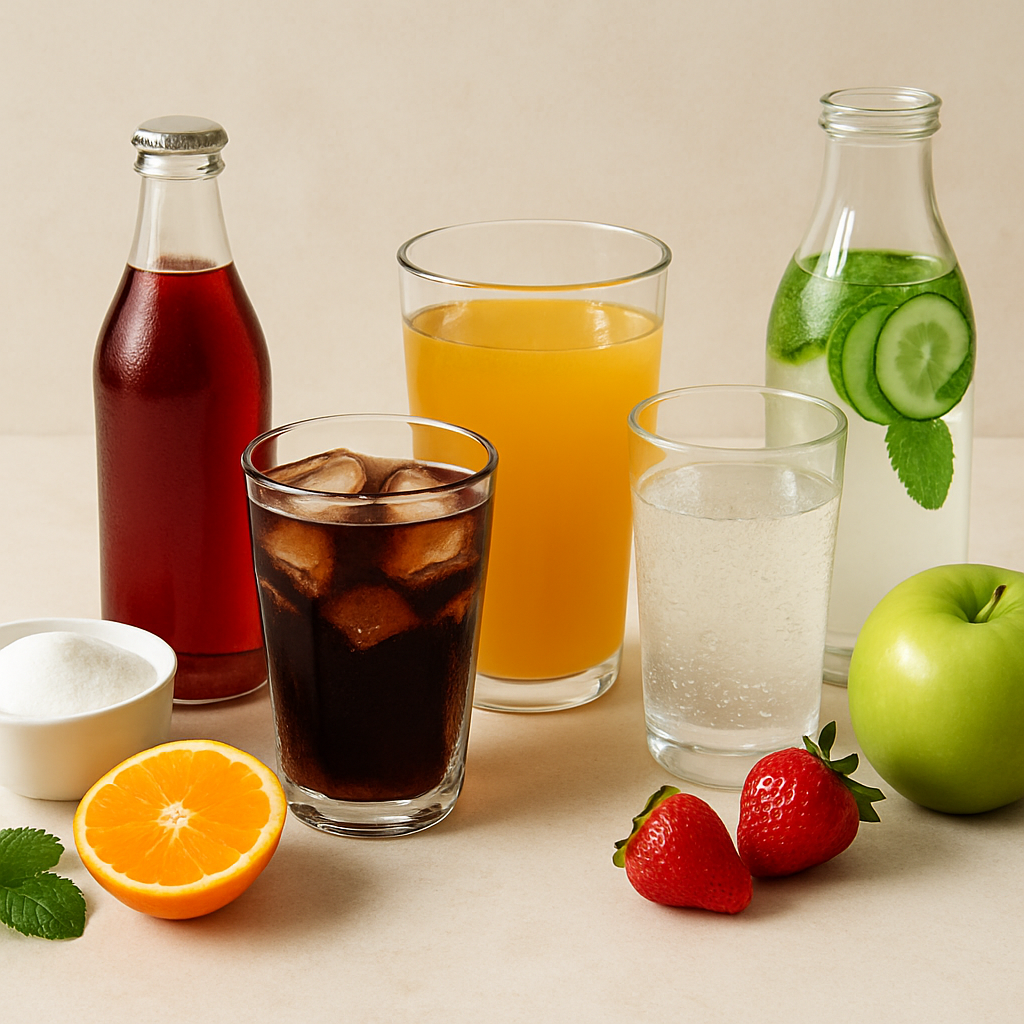
# How the UK's Sugar Tax Has Changed What We Drink
The UK introduced a tax on sugary soft drinks back in 2018, and at the time the headlines were pretty divided — some called it a public health triumph in the making, others dismissed it as nannying at its worst. Six years on, there's enough evidence to take a proper look at what actually happened.
What the Sugar Tax Actually Is
The Soft Drinks Industry Levy — to give it its proper name — came into force in April 2018. It targets manufacturers, not consumers directly, and it works in two tiers.
Drinks containing 5–8g of sugar per 100ml fall into the lower tier, which currently adds around 18p per litre to the cost of production. Drinks with more than 8g per 100ml hit the higher tier at around 24p per litre. Pure fruit juices, milk-based drinks, and drinks with a very low sugar content are exempt.
The idea was straightforward: make it more expensive to produce high-sugar drinks, and manufacturers will either reformulate their recipes or pass the cost on to consumers — ideally both. It wasn't designed to ban anything. It was designed to shift incentives.
How Manufacturers Responded
This is where the story gets genuinely interesting. Many manufacturers didn't wait for the levy to arrive — they started cutting sugar before it even came into force.
Lucozade reduced the sugar content of its original formula by around 50%. Ribena reformulated. Fanta, Sprite, and a number of other well-known brands quietly adjusted their recipes to dip below the tax thresholds. According to Public Health England, the sugar content of drinks subject to the levy fell by around 43.7% between 2015 and 2019 — a substantial shift driven largely by reformulation rather than reduced sales.
This matters because it means millions of people continued drinking the same products without really noticing a change. The sweetness was maintained using lower-calorie sweeteners, so the experience at the point of consumption stayed largely familiar. Whether that's a perfect solution is a separate debate — but from a sugar reduction standpoint, the numbers are striking.
What the Evidence Shows
The levy has attracted serious academic attention, and the findings are largely positive — though not without nuance.
A major study published in PLOS Medicine in 2021 found that the levy was associated with a reduction in sugar purchased from soft drinks of around 10% among households in Great Britain. Importantly, this wasn't simply because people swapped to bottled water — purchases of reformulated drinks (now lower in sugar) accounted for a significant chunk of that reduction.
Research from the University of Cambridge looked specifically at the impact on childhood obesity. A 2023 study found that the levy was associated with an 18.4% reduction in obesity prevalence among Year 6 girls (aged 10–11) compared to what was projected without the levy. The effect in boys was smaller and less statistically clear. These findings have generated real excitement in public health circles, though researchers have been careful to note that isolating a single policy's effect on obesity is methodologically complex — diet is influenced by dozens of variables simultaneously.
On the revenue side, the levy raised around £335 million in 2021–22 alone, with funds directed toward school sports and breakfast clubs in England. That's a secondary benefit that often gets overlooked in the debate.
The Counterarguments Worth Taking Seriously
It would be too neat to declare the sugar tax an unqualified success, and the honest picture involves some genuine complications.
One criticism is that the levy is regressive — lower-income households tend to spend a higher proportion of their income on food and drink, so if prices rise, they bear a disproportionate burden. This is a legitimate concern, and it's one reason reformulation matters so much. If manufacturers cut sugar rather than raise prices, the regressive effect is blunted.
Another critique is that sweeteners used in reformulated drinks aren't nutritionally neutral. The science on non-sugar sweeteners is genuinely mixed — the World Health Organisation released guidance in 2023 suggesting long-term use of sweeteners for weight management may not be as beneficial as assumed. That said, the WHO guidance was primarily aimed at habitual use as a weight-loss tool rather than as a reformulation ingredient in context of a broader diet. The picture is still developing.
There's also the question of substitution. Did people simply switch to other sugary products — biscuits, confectionery, juice — when their fizzy drinks got reformulated? Some research suggests partial substitution does occur, which is why industry-wide approaches tend to work better than targeting one category in isolation.
What Changed on the Shelves
Walk into any supermarket today and the soft drinks aisle looks genuinely different to how it did a decade ago. The proliferation of "zero" and "no sugar" variants has been dramatic — not just from the major brands but across the own-label ranges too.
This isn't purely the result of the levy. Consumer preferences were already shifting, and there's a growing market for drinks that are lower in sugar regardless of tax policy. But the levy accelerated a trend that might otherwise have moved much more slowly.
Smaller and craft brands have also had to navigate the levy carefully. For some, it created a genuine competitive challenge — reformulating a recipe is easier for a multinational with a dedicated R&D team than for a small producer with a loyal customer base built around a specific taste. A number of smaller drinks companies argued the levy hit them disproportionately hard.
Where the UK Sits Globally
The UK wasn't the first country to introduce a sugary drinks levy — Mexico, France, and several other countries moved earlier — but the UK's version is frequently cited as one of the better-designed examples.
The tiered structure, in particular, is seen as smart policy. By creating a threshold rather than a flat rate, it gives manufacturers a clear incentive to reformulate to below 5g per 100ml rather than just to below 8g. A flat tax would have removed that second tier of incentive.
Countries including Australia and the United States have debated similar measures, with mixed political outcomes. In the US, local city-level levies in places like Philadelphia and Berkeley have shown promising results but also faced significant industry pushback. The UK experience is regularly referenced as a case study in how to design a levy that works with market behaviour rather than simply penalising it.
Practical Takeaways
So what does any of this actually mean for you day-to-day?
Check the sugar content of your usual drinks. Many brands have reformulated over the past few years, meaning what you're drinking now may be quite different to what it was in 2016. It's worth flipping the label over — you might be surprised.
The reformulated versions of popular drinks are generally lower in sugar, but they often contain sweeteners. If you're trying to reduce your sweetener intake as well, sparkling water with a splash of fruit juice or a slice of citrus is an easy swap that doesn't involve any sweeteners at all.
If you're tracking your macros or overall sugar intake, soft drinks are worth paying attention to — not because they're inherently off-limits, but because the sugar content across similar-looking products can vary a lot. A standard Coca-Cola and a Coke Zero sit at very different points nutritionally, and knowing that lets you make a straightforward, informed choice.
The levy revenue going to schools matters too. Breakfast clubs supported by that funding have a real impact on children's ability to concentrate and learn, which is a benefit that rarely makes it into the debate about whether the tax is justified.
If you want to stay on top of your sugar intake without obsessing over every label, Macrology generates macro-perfect meal plans in seconds — https://macrology.app/signin
The UK's sugar tax won't fix everything — no single policy does. But the evidence suggests it's done more than its critics predicted and possibly about as much as its architects hoped. That's a rarer outcome in public policy than it might seem.
Want meals like this planned to your exact macros?
Macrology generates a personalised meal plan in seconds — breakfast, lunch, dinner and snacks, all hitting your daily targets.
Start your free 14-day trialMore from news
New Research: What UK Studies Reveal About the Link Between Food Delivery App Usage and Dietary Quality
7 min readNew Research: What UK Studies Reveal About the Link Between Food Environment at Home and Children's Eating Habits
7 min readNew Research: What UK Studies Reveal About the Link Between Cooking Frequency at Home and Overall Diet Quality
7 min read