Honey and Mustard Roasted Chicken Thighs with Root Vegetables and Thyme
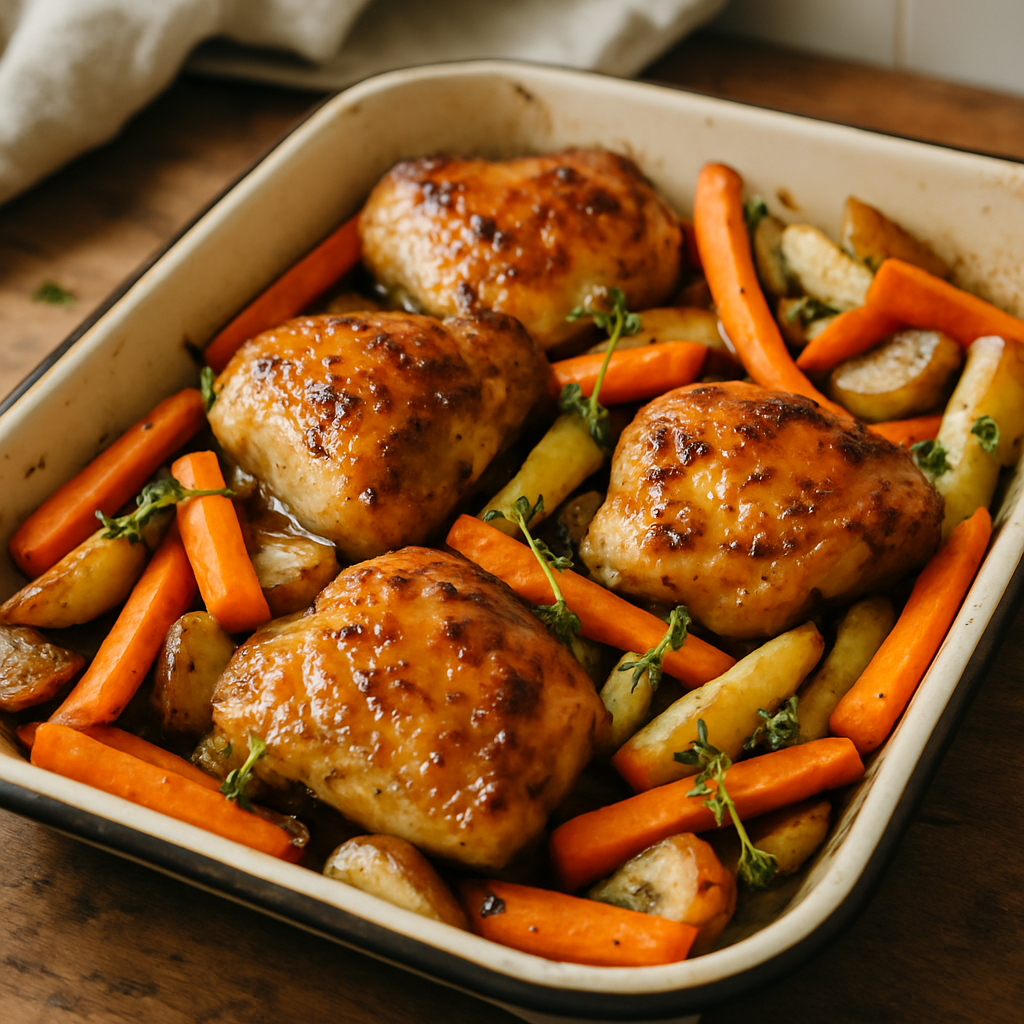
# Honey and Mustard Roasted Chicken Thighs with Root Vegetables and Thyme
There's a reason honey and mustard has been a beloved combination in British kitchens for generations — the sharpness of the mustard cuts through the sweetness of the honey to create something that tastes far more complex than the sum of its parts. Add a tray of caramelised root vegetables and a handful of fresh thyme, and you've got a one-tray dinner that looks like you made a real effort, even on a Tuesday.
This recipe is the kind of thing that earns a permanent spot in your weekly rotation. It's straightforward enough for a weeknight but impressive enough to serve to guests — and it delivers on protein, fibre, and flavour all at once.
Why Chicken Thighs Are the Right Call Here
Chicken breast gets all the attention in high-protein cooking, but thighs are genuinely underrated. They're cheaper, harder to overcook, and — crucially for this recipe — they stay moist and flavourful during the longer roasting time needed to cook root vegetables through.
Thighs contain slightly more fat than breast meat, but that fat is what carries flavour and keeps the meat juicy. Bone-in, skin-on thighs in particular act almost like a self-basting mechanism in the oven. The skin renders down, bastes the meat, and crisps up beautifully in the final minutes of cooking.
From a nutrition standpoint, chicken thighs still deliver a solid hit of protein — around 25g per 100g of cooked meat — along with iron, zinc, and B vitamins, particularly B6 and B12. They're a genuinely nutritious cut, not a compromise.
Choosing Your Root Vegetables
Root vegetables are doing a lot of work in this dish beyond just filling out the tray. They absorb the honey mustard glaze as it drips from the chicken, caramelise at the edges, and add natural sweetness and body to the whole thing.
Parsnips bring a nutty, slightly sweet flavour that pairs beautifully with mustard. Carrots add colour and hold their texture well under high heat. Celeriac is slightly less common but worth using if you can find it — it has an earthy, almost celery-like flavour that works brilliantly with thyme. Swede is another excellent option, especially in autumn and winter when it's at its best.
The key is to cut everything to a similar size — roughly 3–4cm chunks — so it cooks evenly. Cut too small and it'll turn to mush; too large and it won't be cooked through when the chicken is done.
What Makes This Work Nutritionally
This is a genuinely well-balanced plate without needing to overthink it. Here's what's happening under the bonnet.
Protein comes primarily from the chicken thighs, which supports muscle maintenance and keeps you feeling satisfied after eating. A standard portion of two thighs provides roughly 40–50g of protein depending on size, making this a strong option if you're tracking macros.
Fibre and micronutrients come from the root vegetables. Parsnips and carrots are good sources of dietary fibre, which supports gut health and helps with steady energy levels. Carrots are rich in beta-carotene (a precursor to vitamin A), while celeriac provides vitamin C and potassium.
The glaze — honey, wholegrain mustard, olive oil, garlic — adds minimal calories in the quantities used but makes a big contribution to flavour. Wholegrain mustard contains glucosinolates, compounds associated with anti-inflammatory properties, though the amounts in a typical serving are modest. The olive oil helps fat-soluble vitamins from the vegetables absorb more effectively.
The whole dish comes in at roughly 500–600 kcal per serving depending on portion size, with a macro split that sits comfortably around 40g protein, 45g carbohydrate, and 18g fat.
What the Evidence Shows
Diets built around lean proteins, vegetables, and minimally processed carbohydrates are consistently associated with better long-term health outcomes in the research. A 2019 review published in The Lancet highlighted that increasing vegetable and legume intake while maintaining adequate protein was one of the most robust dietary patterns for reducing chronic disease risk.
Root vegetables specifically are often overlooked in favour of leafy greens, but they bring meaningful nutritional value. A 2020 study in Nutrients found that root and tuberous vegetables contributed significantly to fibre and micronutrient intake in UK adults, yet were frequently underrepresented in dietary guidance compared to their actual nutritional contribution.
Honey, in small amounts, has a slightly lower glycaemic impact than refined sugar and contains trace antioxidants, though the quantities used in cooking are too small to make a significant clinical difference. Its real value here is culinary — it helps the glaze caramelise and brown in a way that sugar alone doesn't quite achieve.
The Recipe
Serves: 4 Prep time: 15 minutes Cook time: 45–50 minutes
Ingredients
- 8 bone-in, skin-on chicken thighs
- 3 medium carrots, cut into 3–4cm chunks
- 2 parsnips, cut into 3–4cm chunks
- ½ celeriac (or 1 small swede), peeled and cut into 3–4cm chunks
- 1 red onion, cut into wedges
- 3 tbsp wholegrain mustard
- 2 tbsp clear honey
- 2 tbsp olive oil
- 3 garlic cloves, minced
- 1 tsp smoked paprika
- Small bunch of fresh thyme (around 8–10 sprigs)
- Salt and black pepper
Method
1. Preheat your oven to 200°C / 180°C fan / gas 6.
2. In a small bowl, mix together the wholegrain mustard, honey, olive oil, minced garlic, and smoked paprika. Season generously with salt and pepper.
3. Place all the root vegetables and red onion wedges into a large roasting tin. Drizzle with a little olive oil, season, and toss to coat. Scatter half the thyme sprigs over the top.
4. Nestle the chicken thighs skin-side up on top of the vegetables. Spoon the honey mustard glaze generously over each thigh, ensuring the skin is well coated.
5. Roast for 40 minutes, then check the vegetables are tender and the chicken skin is deeply golden. If the skin needs more colour, increase the heat to 220°C for a final 5–10 minutes.
6. Rest for 5 minutes before serving. Scatter with fresh thyme leaves and serve straight from the tray.
Serving suggestion: Works well with a simple green salad or some wilted greens to add freshness. If you want more carbohydrates, a portion of crusty bread to mop up the tray juices is hard to beat.
Tips for Getting It Right
A few things make the difference between a good result and a great one.
Don't crowd the tin. If the vegetables are packed too tightly, they'll steam rather than roast and won't caramelise properly. Use the largest roasting tin you have, or split across two tins if needed.
Pat the chicken dry before glazing. Moisture on the skin prevents it from crisping up. A quick pat with kitchen paper before you add the glaze makes a noticeable difference.
Add the glaze generously. This isn't a situation for restraint. Make sure every inch of skin is coated, and if there's glaze left in the bowl, drizzle it over the vegetables too.
Rest the chicken. Five minutes under a loose piece of foil after the tray comes out allows the juices to redistribute. It's a small step but it keeps the meat noticeably more tender.
Practical Takeaways
- Use bone-in, skin-on thighs — they're more forgiving than breast meat and caramelise better under the glaze
- Cut all root vegetables to a similar size for even cooking
- Pat the chicken skin dry before glazing for maximum crispness
- Don't overcrowd the roasting tin — caramelisation needs space
- The recipe scales easily: halve it for two, or double the tray for meal prep through the week
- Leftovers keep well in the fridge for up to three days and reheat nicely, making it a solid meal prep option
---
> Macrology tip: If you want to hit your protein and macro targets without guessing, Macrology generates macro-perfect meal plans in seconds — [https://macrology.app/signin](https://macrology.app/signin)
Want meals like this planned to your exact macros?
Macrology generates a personalised meal plan in seconds — breakfast, lunch, dinner and snacks, all hitting your daily targets.
Start your free 14-day trial